
 EN
EN
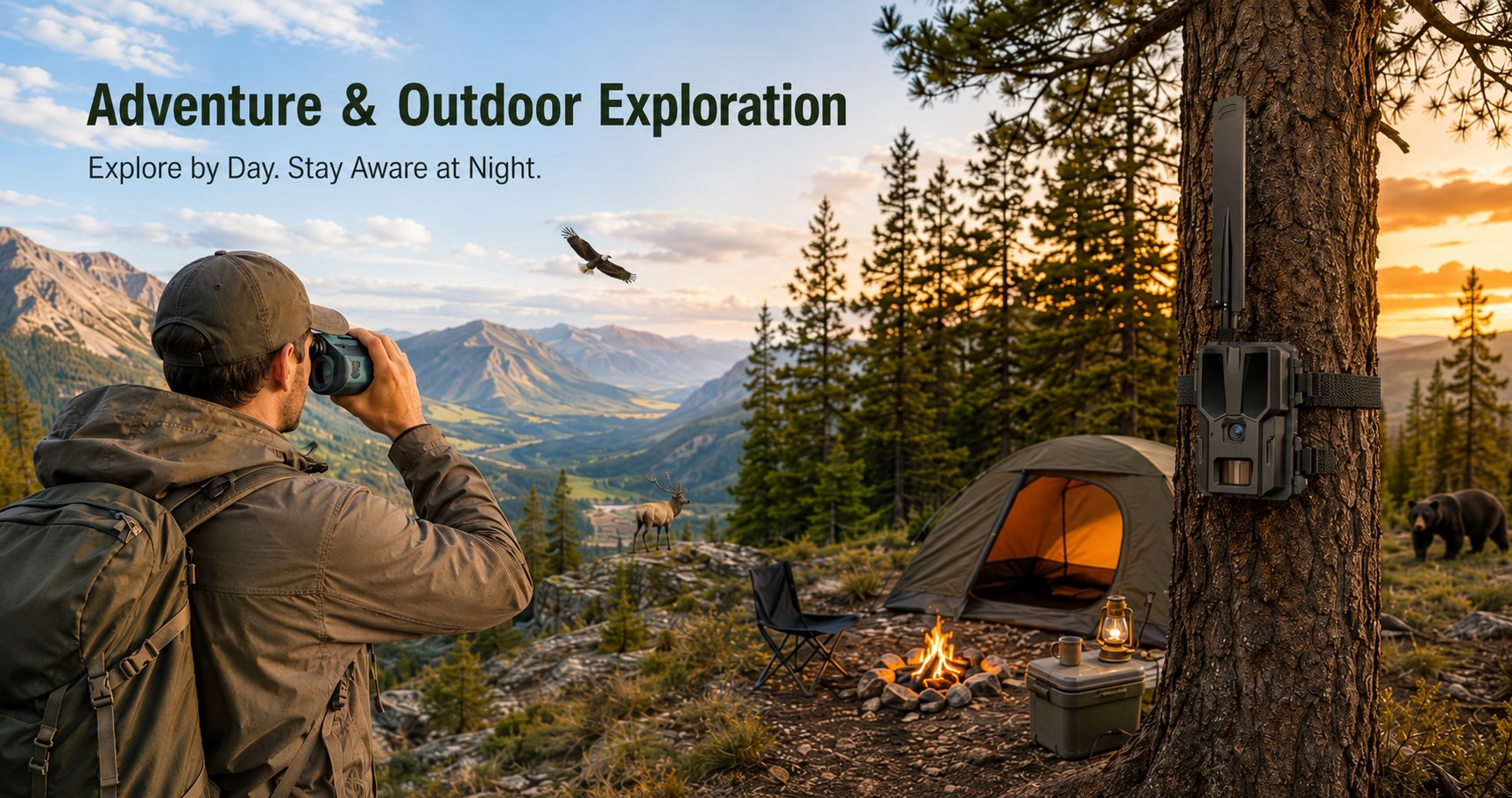
Ideal for Hiking, Camping, Expeditions, and Outdoor Journeys Where Observation and Awareness Matter Most.
Two Roles. One Platform.
Most outdoor gear solves one problem at a time. A headlamp illuminates. A compass orients. A tent shelters. The product category defines the function, and the function ends there.
The outdoor explorer's relationship with observation technology has historically followed the same logic. Binoculars let you see farther. A trail camera guards a location. These are separate tools for separate moments, managed independently and packed separately.
Willfine's outdoor platform breaks that separation — not by combining hardware into a single device, but by recognizing that observation and awareness in the outdoors serve two fundamentally different purposes that require two different product architectures.
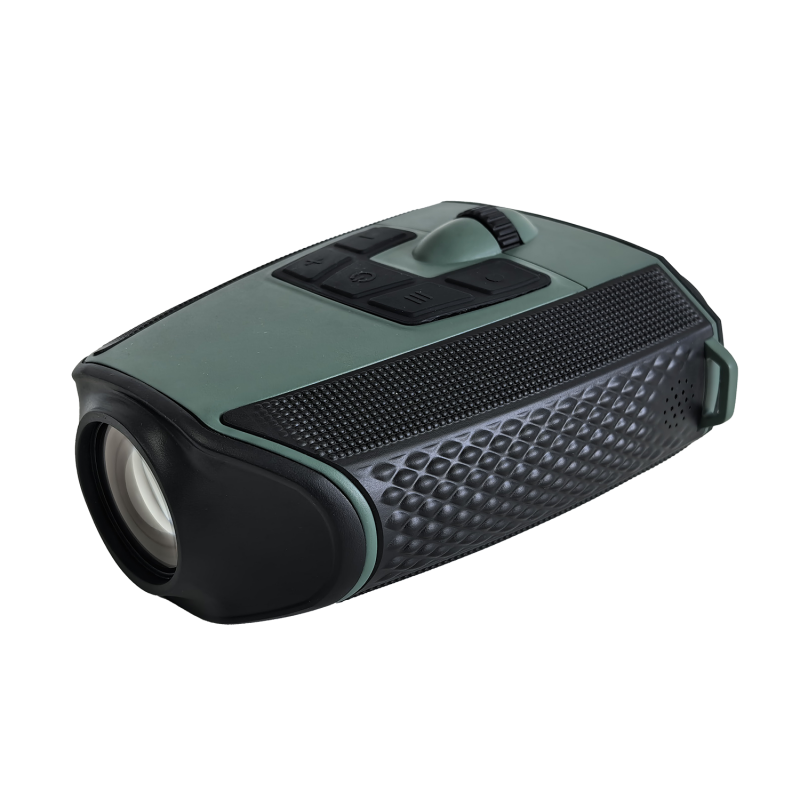
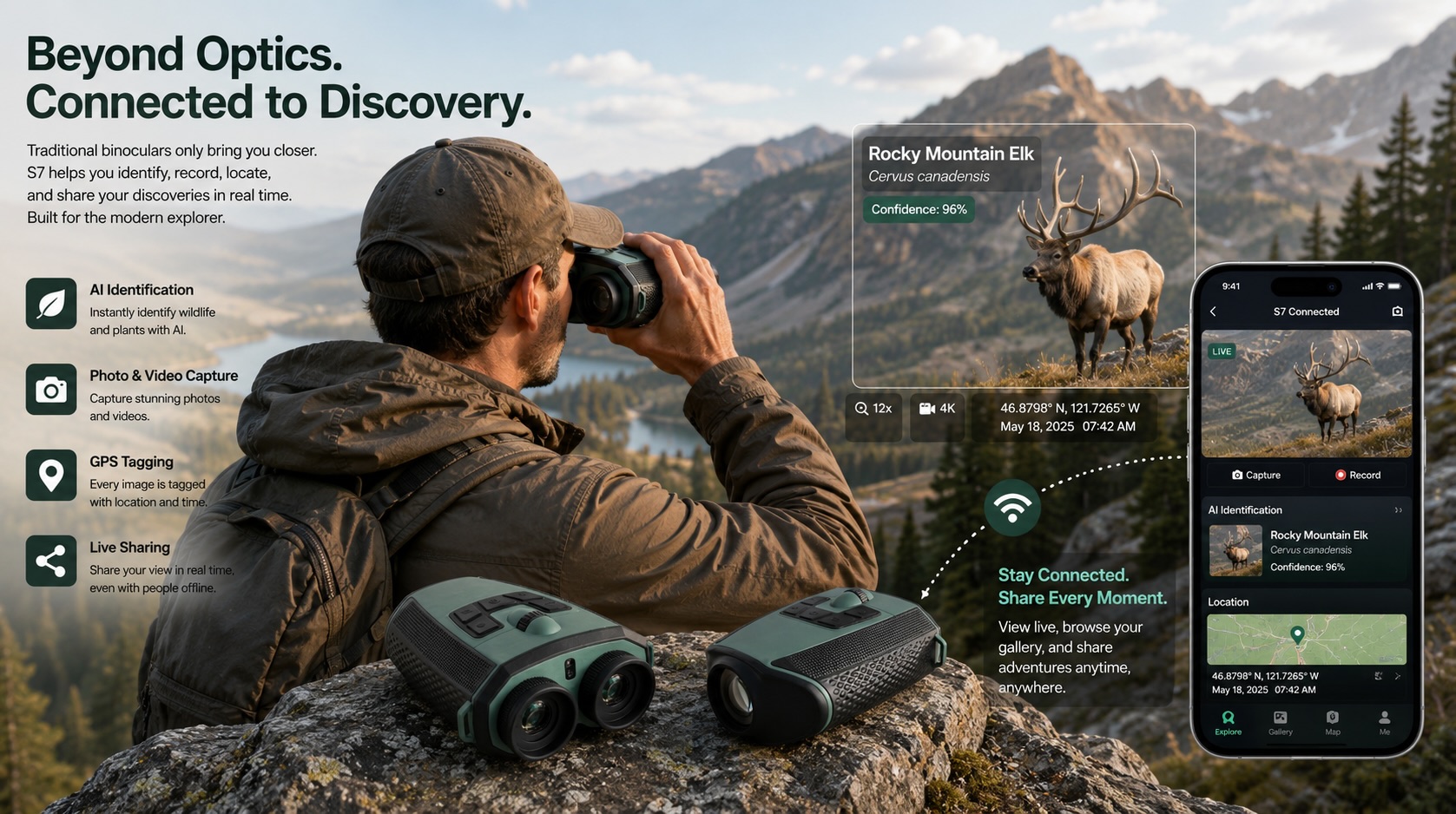
The first is active exploration — the moment a hiker crests a ridge and wants to identify the raptor circling the valley below, document the elk herd at the tree line, navigate toward a distant landmark, or share what they are seeing with someone who isn't there. This is the S7's territory: a 25× stabilized optical instrument with AI identification, GPS positioning, live streaming, and 2.7K video capture — everything an active explorer needs to engage with what they are observing in real time.
The second is passive awareness — the moment a group makes camp for the night in bear country, in a remote canyon with no phone signal, in a location where knowing what is approaching from the dark tree line is the difference between a safe night and a dangerous one. This is the trail camera's territory: a weatherproof, battery-powered detection system that monitors the perimeter while the camp sleeps, and alerts when something worth waking up for is moving in.
For OEM brands serving the outdoor and adventure market — adventure gear retailers, hiking and trekking equipment brands, outdoor lifestyle companies — this dual-role architecture covers a product need that no single device currently addresses completely.
The Explorer's Problem with Conventional Binoculars
Serious hikers and outdoor enthusiasts who carry binoculars understand their limitations. A conventional optical instrument does one thing: it makes distant objects appear closer. What it cannot do is identify what it sees, record what it shows, tag where it was when it showed it, or share the view with anyone who isn't looking through the eyepiece at that exact moment.
These limitations matter more as the outdoor experience has evolved. Today's hiker carries a smartphone that identifies plants by photograph, navigates by GPS, and streams video to followers in real time. Conventional binoculars sit in that context as unchanged optical instruments — valuable, but isolated from the connected layer of the outdoor experience in a way that feels increasingly anachronistic.
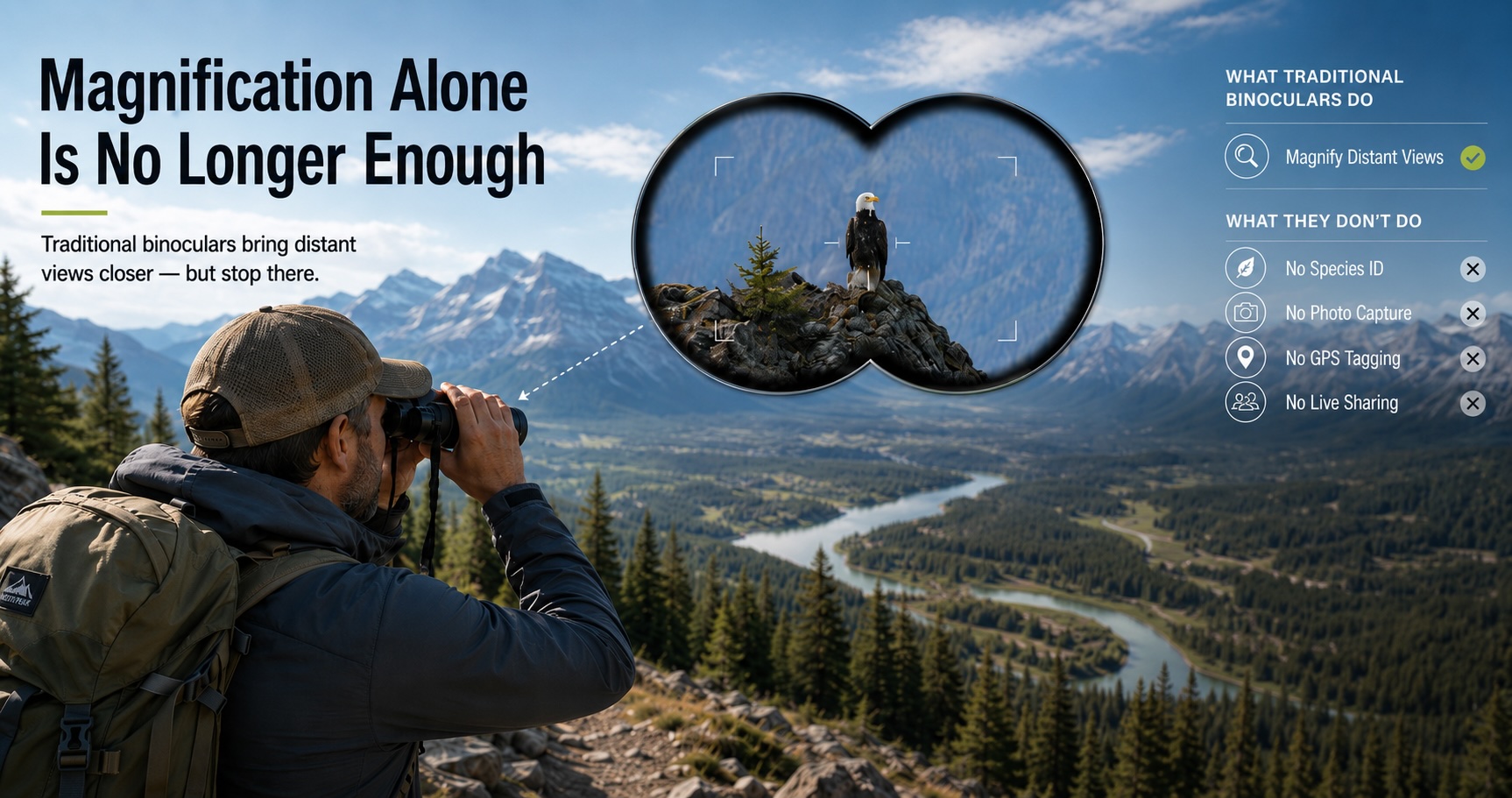
The S7 is not conventional binoculars with a camera added. It is a rethinking of what a high-magnification optical instrument should do when the person using it is also carrying a smartphone, expects AI assistance on identification questions, and wants to document what they observe with the same quality standard they apply to other aspects of their outdoor experience.
S7 Smart Long-Range Optical Device: Upgraded Field Performance
Long-distance terrain tracking without visual shake.
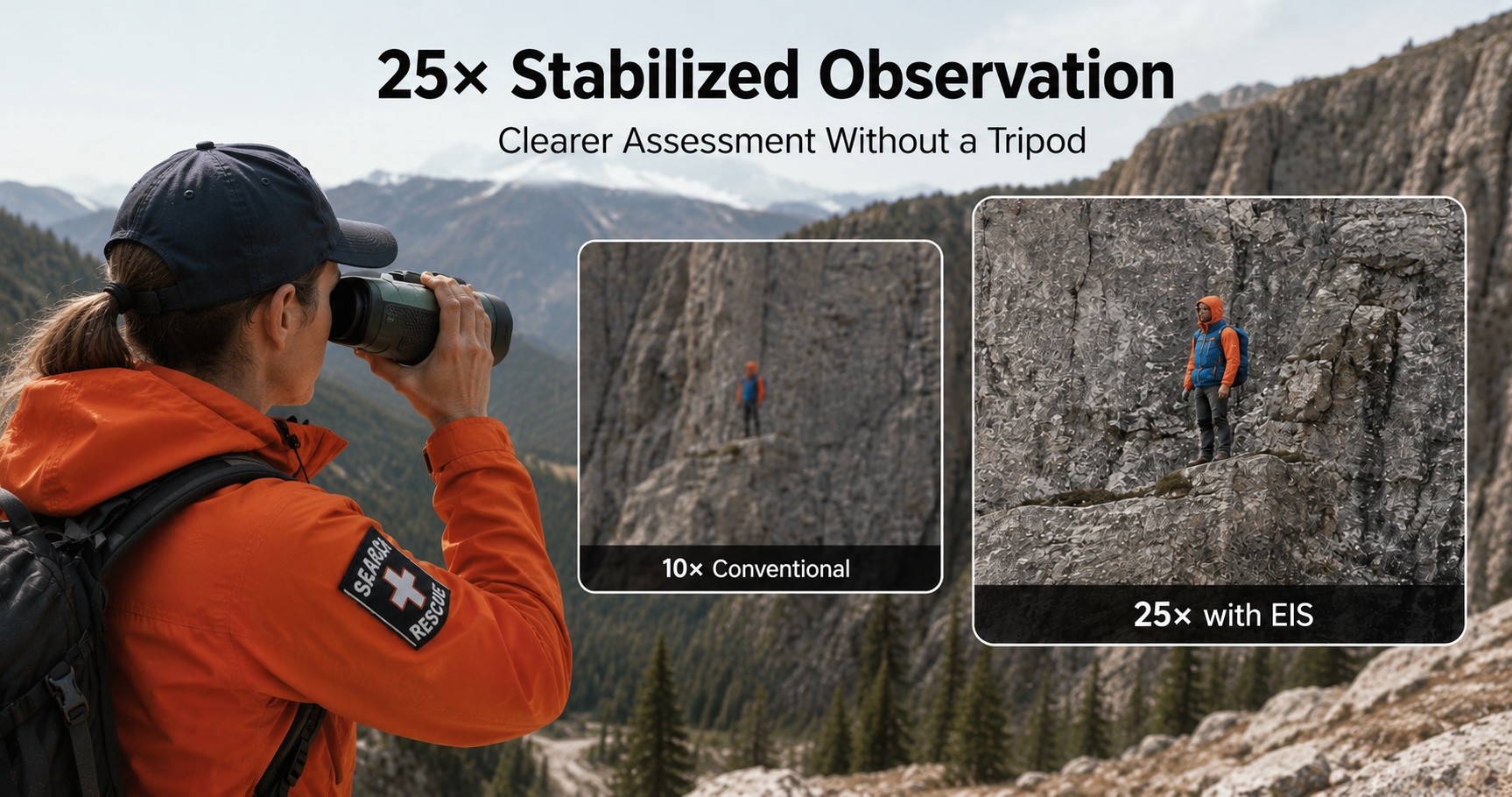
25x long-distance optical range hits a threshold where natural human body movement — breathing, pulse, minor muscle tremor — makes handheld optical gear hard to operate steadily. At this 25x range, traditional binoculars create an unstable optical view that makes long-term tracking of stationary wildlife difficult, while tracking moving creatures becomes almost unworkable.
The S7's Electronic Optical Stabilization system eliminates this drawback. At full long-range optical range, the optical view stays steady enough to distinguish clear wing motion of flying birds, tell apart antler structural features of elk from far distances, and capture the fine features needed to confirm exact wildlife categories without extra support stands.
For outdoor field surveyors, this greatly expands field tracking capabilities. A bird of prey 400 meters away can have its exact wildlife category confirmed with the S7; the same task would demand a fixed-mount observation scope with traditional optics. A herd of hooved wildlife at the far valley edge can be analyzed for group makeup — age brackets, gender proportion, unique animal feature differences — without getting close enough to frighten the animals.
Knowing what you're looking at.
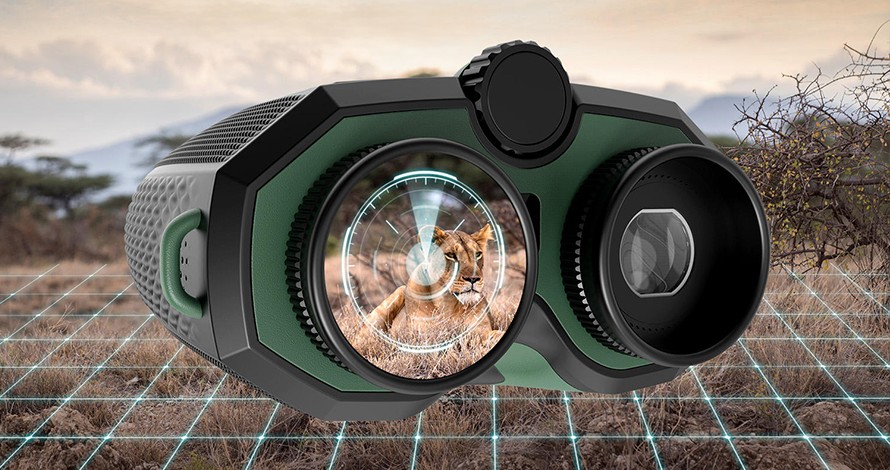
The S7's AI recognition system covers 10,000+ bird species and 30 mammal categories at 95% accuracy. In Bird Mode and Animal Mode, the system frames the subject, triggers identification, and overlays the species name on the dual AMOLED display — in the moment of observation, without interrupting it.
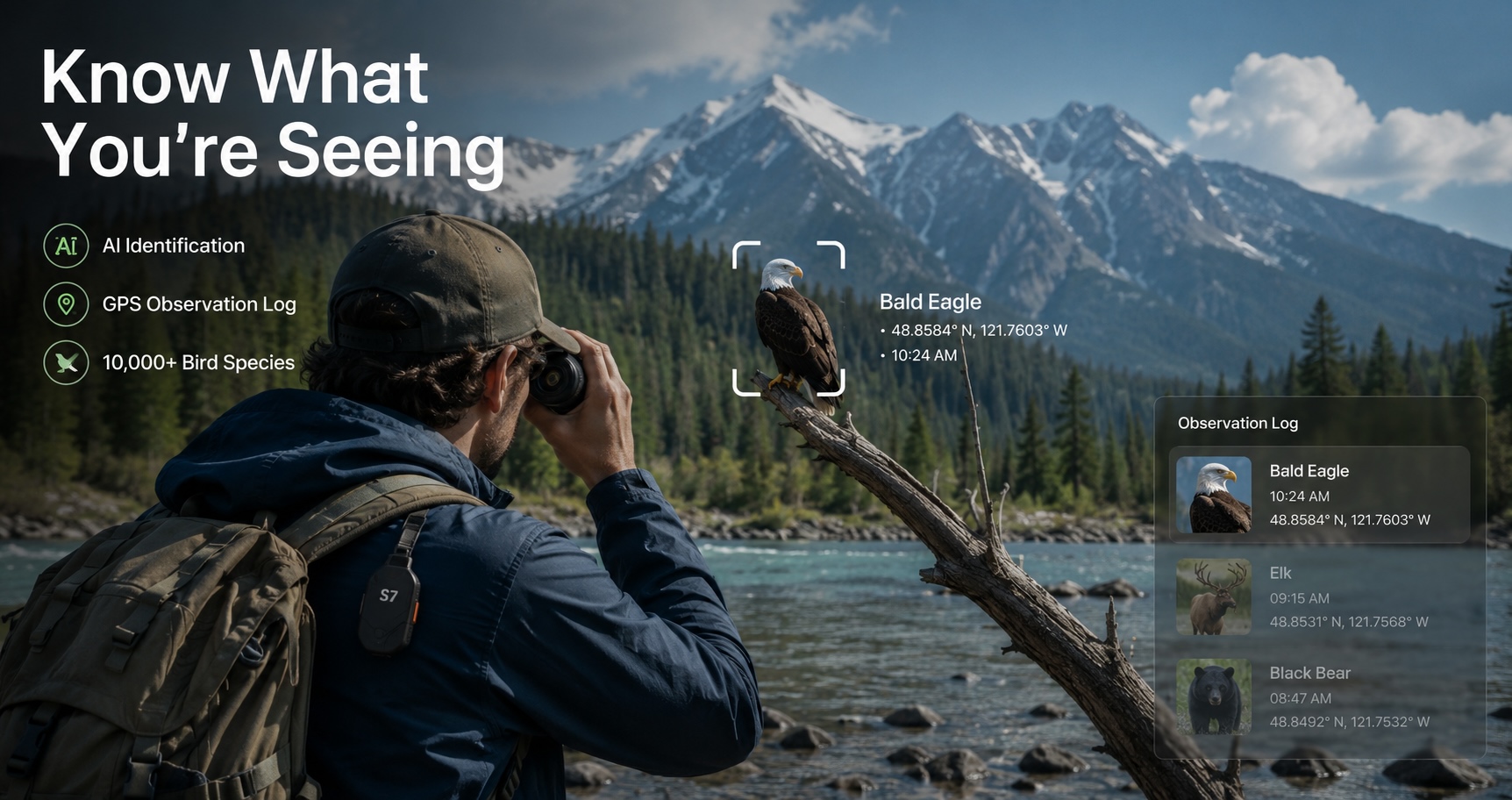
For experienced naturalists, this supplements knowledge they already have — confirming a tentative identification, providing the scientific name for documentation, flagging an unusual species that warrants closer attention. For less experienced outdoor enthusiasts, it converts a distant unidentified animal into a named encounter — a qualitatively different experience that connects the observer to the ecosystem they are moving through in a way that unaided observation rarely achieves.
The identification event is also a documentation event. The S7 records the species, timestamp, and GPS location automatically at the moment of identification — building a log of observed species across a trip that can be reviewed, exported, and shared without requiring manual note-taking in the field.
Knowing where you are, and where that was.
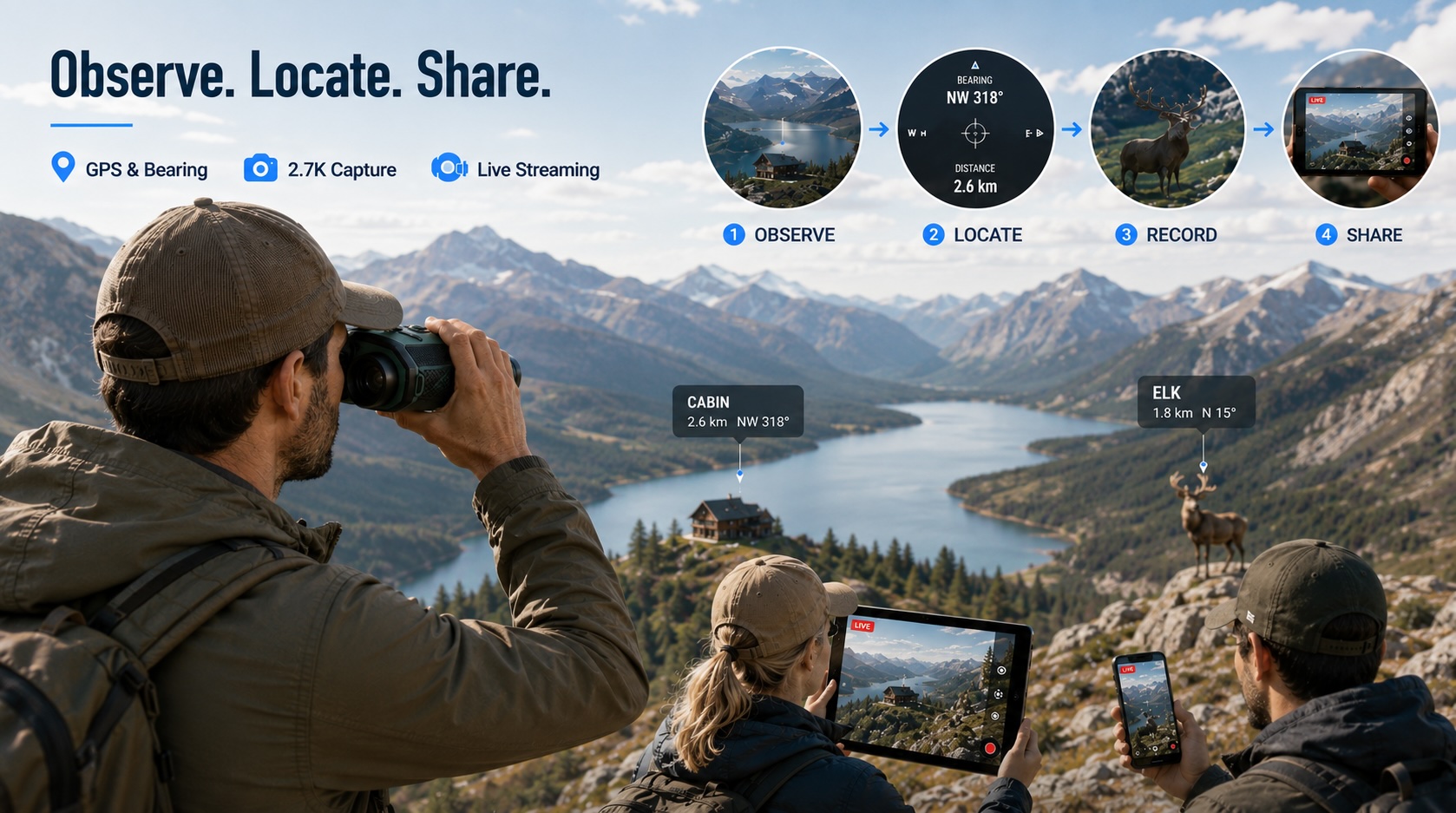
The S7's integrated GPS and gyroscope-based compass system provides positioning data that goes beyond what GPS alone can deliver. GPS tells you where you are. The gyroscope tells you which direction you are facing and, by extension, the bearing from your position to the subject you are observing — enabling precise location tagging of observed wildlife, landmarks, or points of interest without requiring the observer to physically reach those locations.
For hikers navigating unfamiliar terrain, the ability to identify a distant landmark, tag its GPS coordinates, and use that bearing as a navigation reference changes route planning in the field. A lake visible from a ridge can be precisely located and navigated toward. A distant structure — a hut, a cairn, a trail junction — can be identified optically and geolocated before committing to the approach.
The gyro compass functions independently of magnetic interference — relevant in geological environments where rock formations affect magnetic compass reliability, and in the increasingly common situation where a hiker's other metal gear affects compass accuracy at close range.
Documenting what you see.
The S7 captures photo and video at 2688×1520 resolution — 2.7K quality that exceeds what most smartphone cameras deliver at equivalent zoom levels, and substantially exceeds what any conventional binocular with a bolt-on camera adapter can produce.
For the outdoor enthusiast who documents their experiences — for personal records, for social media, for naturalist communities, for wildlife photography — this is a single device that replaces the combination of binoculars and a telephoto lens camera that serious wildlife photographers currently carry. The image quality is not equivalent to a dedicated wildlife photography setup, but it is meaningfully better than what a smartphone camera delivers at 25× digital zoom, and the optical stabilization produces usable footage at magnification levels where smartphone cameras produce unusable blur.
Live streaming via the companion app adds a social layer that conventional optics cannot provide: sharing a real-time view with remote participants — a partner at base camp, a family member following the expedition remotely, a guide coordinating with a group spread across a large area.
Built for the conditions where it will be used.
IP66 weatherproofing covers the rain, stream crossings, and condensation exposure that outdoor equipment encounters. The -25°C to 55°C operating temperature range covers alpine conditions and desert heat within a single device specification. Six hours of battery life on a single charge covers a full day's hiking without recharging — relevant in backcountry contexts where power access does not exist.
At 980g, the S7 is heavier than conventional binoculars — a trade-off that the added capabilities justify for serious outdoor users, and a weight that positions the product clearly in the expedition and serious naturalist segment rather than the casual day-hiker market.
The tripod mount enables stationary observation sessions — at a base camp, from a blind, during a rest stop — where the full 25× stabilized optical capability can be used without the fatigue of extended handheld use.
Trail Cameras: The Campsite Awareness System
The second half of the outdoor adventure platform addresses a different moment entirely — not active exploration, but passive overnight awareness.
Camping in wildlife habitat — which describes most meaningful outdoor adventure destinations — involves a period of vulnerability that experienced outdoor users manage through a combination of food storage discipline, campsite selection, and situational awareness. What it has historically lacked is any technological layer between the camper and what approaches in the dark.
A trail camera deployed at the perimeter of a campsite before nightfall provides that layer. It is not a deterrent — it does not prevent a bear from approaching. It is an early warning system that converts an invisible approaching threat into a known, timestamped event that allows a response before contact.
How campsite monitoring works in practice:
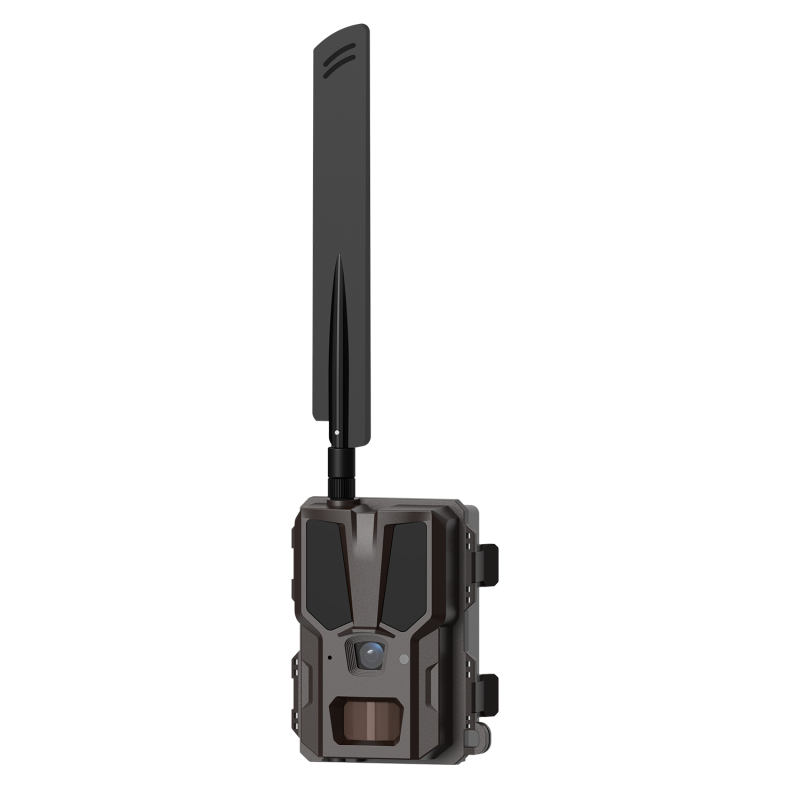
A compact trail camera — the 5.8CG or 5.8CS in Willfine's lineup — is mounted on a tree at the primary approach to a campsite before dark. Detection range is 20 meters. Trigger time is 0.4 seconds. The 940nm no-glow infrared illumination is invisible to animals and does not disturb the camp environment.
When a large animal — bear, mountain lion, wolf — approaches within detection range overnight, the camera triggers, captures the approach, and either stores the image locally or, where cellular coverage exists, transmits it to the camper's phone with an alert. In a backcountry location without cellular coverage, the camera operates as a local alarm trigger — a physical disturbance alert that can be connected to a simple audio alarm — or the image record is reviewed in the morning to understand what moved through the campsite perimeter.
The value in a cellular coverage area is immediate: a push notification at 2am that shows a black bear approaching from the east, 20 meters out, gives the campers time to make noise, activate deterrents, and be alert before the animal reaches the tent — rather than waking to contact.
Why the compact trail camera format fits the outdoor context:
The 5.8CS and 5.8CG at 128×96×76mm and 260g on 8 AA batteries represent the smallest and lightest configuration in Willfine's lineup — meaningfully more packable than the larger 4.0 series bodies. For backpackers and expedition teams where every gram is a considered trade-off, the compact format is the enabling specification that makes campsite monitoring practical to carry rather than theoretical to consider.
IP66 weatherproofing across both models covers the rain exposure that camping equipment routinely encounters. The 940nm night vision performs in complete darkness — the condition that defines the campsite monitoring use case — without the red glow that low-glow cameras produce and that would be disruptive in a dark campsite environment.
For multi-night expeditions where battery replacement is not practical, the 5.8T-CG's approximately 10-month standby extends the operational window to the point where a set of batteries loaded at the trailhead will last the duration of any realistic expedition deployment.
The Combined Platform: What It Looks Like in Practice
The S7 and a compact trail camera are not redundant in an outdoor kit — they serve entirely different moments in the same trip.
Day: The S7 is active. The hiker uses it for species identification on the trail, GPS landmark tagging at viewpoints, wildlife documentation at distance, and navigation reference across unfamiliar terrain. The trail camera is packed — it weighs 260g and adds negligible pack volume.
Evening camp setup: The trail camera is deployed at the primary campsite approach. Setup time is under two minutes. The camera covers the overnight perimeter while the S7 is stowed.
Night: The trail camera monitors passively. Any approach within 20 meters triggers the camera. In cellular coverage, the alert goes to the camper's phone. In backcountry, the image record is available for morning review.
Morning: The trail camera is retrieved, the image record reviewed, the camera repacked. The S7 resumes its role for the day's travel.
For OEM brands building an outdoor adventure product line, this dual-role architecture supports a product bundle narrative — two devices with distinct, complementary functions — that is commercially more interesting than either product sold independently. The S7 as a standalone product competes in the smart binoculars category. The trail camera as a standalone product competes in the trail camera category. Together, they represent an outdoor awareness system that neither category currently addresses as a complete offering.
Product Specification Summary
S7 Smart Binoculars
| Parameter | Specification |
| Magnification | Optical 1–25× |
| Objective lens | 40.8mm |
| Shortest focusing distance | 3m |
| Video resolution | 2688×1520 (2.7K) · 60Hz |
| Display | Dual 0.49" AMOLED · 1920×1080 |
| Autofocus | ✓ |
| Image stabilization | EIS |
| AI recognition | 10,000+ bird species · 30 mammal categories · 95% accuracy |
| Viewing modes | Bird Mode · Animal Mode · Free Mode |
| GPS | ✓ |
| Compass | ✓ |
| Gyroscope | ✓ |
| Live streaming | ✓ |
| Memory | 32GB / 64GB |
| WiFi | 2.4G |
| Bluetooth | ✓ |
| Interface | USB Type-C |
| Tripod mount | ✓ |
| LRF | Customizable |
| Battery | 6 hours |
| Waterproof | IP66 |
| Operating temperature | -25°C to 55°C |
| Dimensions | 178×145×90mm |
| Weight | 980g |
Trail Cameras — Recommended for Outdoor & Expedition Use
| 5.8CG | 5.8CS | 5.8T-CG | |
| Best for | Campsite monitoring, no app | Campsite monitoring + app alerts | Multi-night expedition deployment |
| Connectivity | Cat.4 + SMTP/FTP | Cat.4 + Trailcam Ace | Cat1 bis + SMTP/FTP |
| Photo | 24MP | 24MP | 32MP |
| Trigger | 0.4s | 0.4s | 0.4–0.5s |
| Night vision | 60pc 940nm / 20m | 60pc 940nm / 20m | 60pc IR / 20m |
| PIR angle | 80° | 80° | — |
| Battery | 8 AA · 6 mo | 8 AA · 6 mo | 8 AA · ~10 mo |
| GPS | ✓ | ✓ | ✓ |
| App / OTA | Remote control | Trailcam Ace + OTA | TrailCamera App |
| Waterproof | IP66 | IP66 | IP66 |
| Operating temp | -20°C to 55°C | -20°C to 55°C | -20°C to 55°C |
| Body | 128×96×76mm · 260g | 128×96×76mm · 260g | 128×96×76mm · 260g |
Who Builds on This Platform
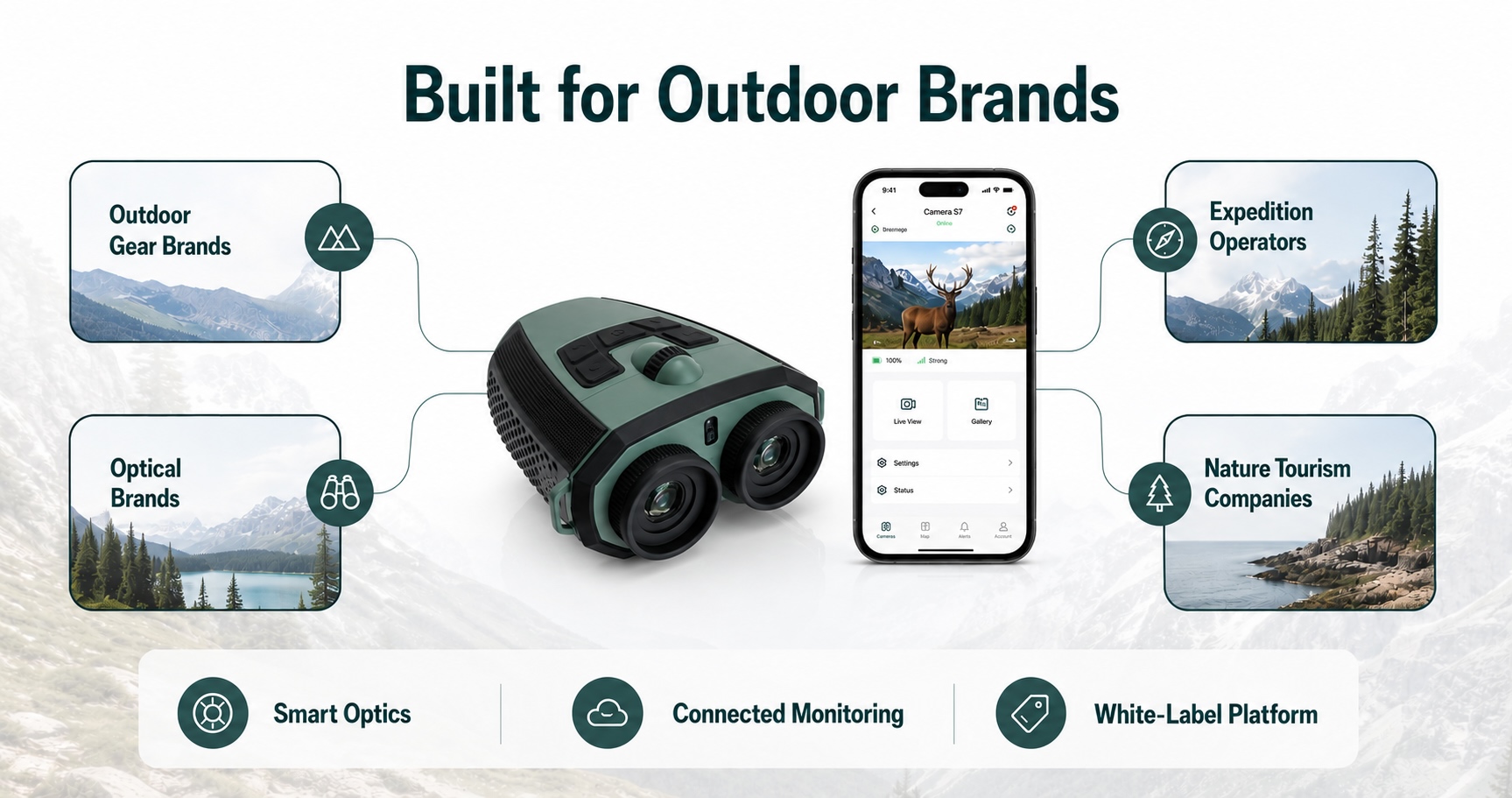
Willfine's outdoor adventure OEM program is suited to brands that bring distribution into the hiking, trekking, camping, expedition, or nature tourism categories — and want a manufacturing partner who can deliver the hardware and platform infrastructure for both the active observation and passive awareness sides of the outdoor product brief.
The program is most relevant for outdoor and adventure gear brands looking to extend into smart optics and connected monitoring without building hardware development programs for two separate product categories; nature tourism and expedition operators building curated gear packages for guided programs where AI species identification and campsite safety are both program differentiators; optical brands with existing binocular or spotting scope distribution who want to move into the AI-connected smart optics segment without starting from a blank hardware specification; and outdoor lifestyle brands building product lines for the growing segment of nature-connected consumers who want technology that enhances rather than replaces direct engagement with the natural environment.
Request the Outdoor Adventure Platform Brief
OEM evaluation begins with a technical consultation, S7 and trail camera sample units, and app platform demonstration covering both the S7 companion app and Trailcam Ace. White-label deployment terms and OEM pricing are provided under NDA for qualified buyers.
Contact Willfine to request the outdoor adventure platform brief.