
 EN
EN
Built for Scouting Game Movement, Tracking Activity Patterns, and Making Faster, More Informed Decisions in the Field.
The Scouting Decision
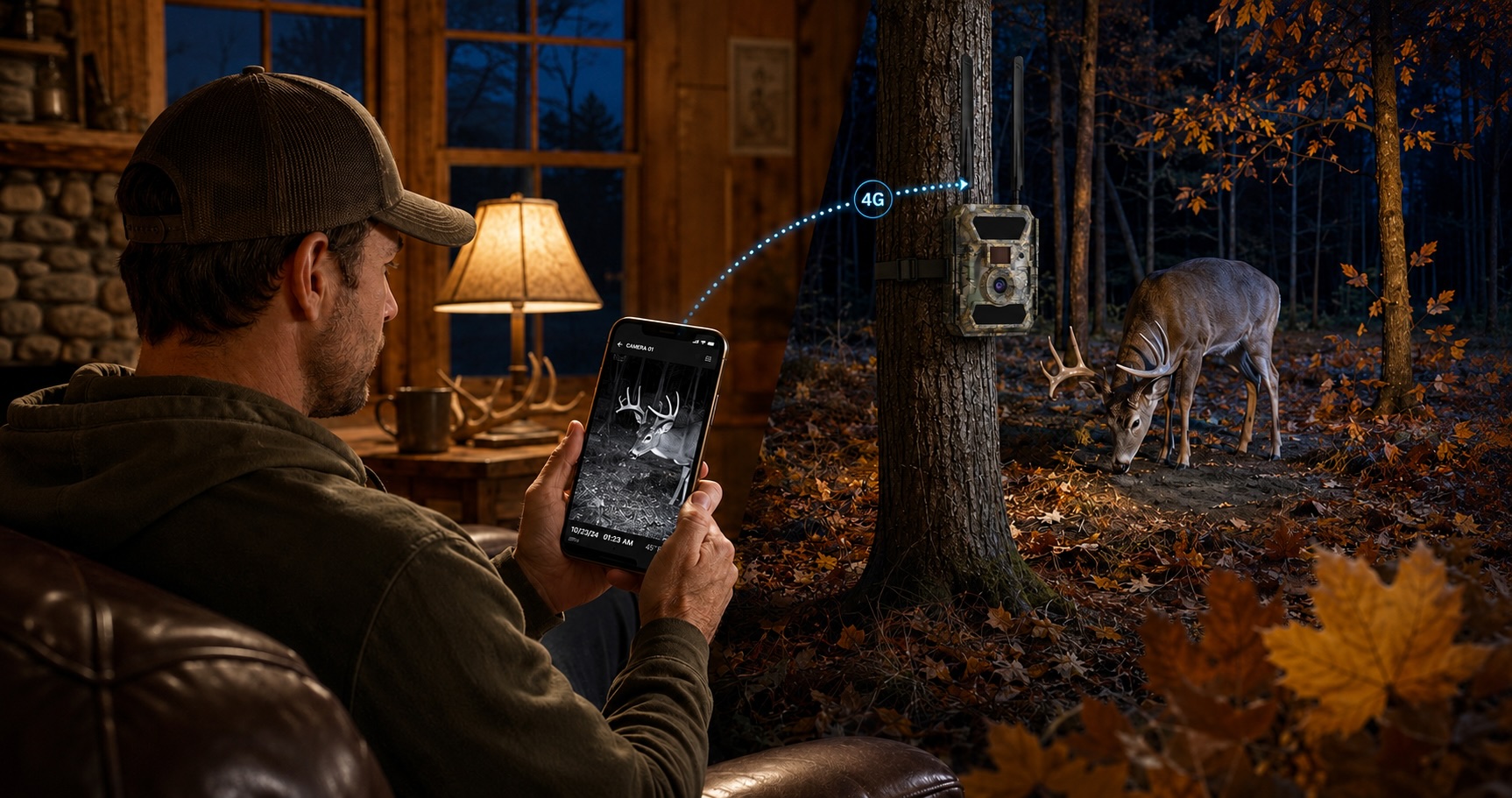
It's 9pm on a Tuesday in October. A hunter is sitting at home, not in the woods. His phone buzzes. A trail camera image comes through — a mature buck, working a scrape, the kind of animal he's been looking for all season. He knows the wind direction for Thursday morning. He knows the stand location. He now knows the deer is actively using that location at night.
He didn't have to walk in and check the camera. He didn't disturb the area. He didn't burn the stand. He just made a better hunting decision from his couch than most hunters could make after three days in the field.
That is what a cellular trail camera actually sells. Not megapixels. Not night vision range. Not waterproofing. It sells the decision — and the confidence to act on it.
For OEM brands entering or expanding in the hunting camera category, understanding this changes how you evaluate hardware. The question is not which camera has the best specification sheet. The question is which platform most reliably delivers the information that makes that decision possible — every time, from any location, across a full season of deployment.
That is the standard Willfine's trail camera lineup is built against.
Where Current Products Break Down
The cellular trail camera market has grown fast enough that buyer expectations are now significantly ahead of what most products reliably deliver. The gap between what is marketed and what is experienced in the field is one of the most consistent themes in the public review record — on Amazon, on hunting forums like ArcheryTalk, in the YouTube comparison videos that serious hunters watch before every purchase.
Four specific breakdown points account for the majority of negative reviews and returns in this category:
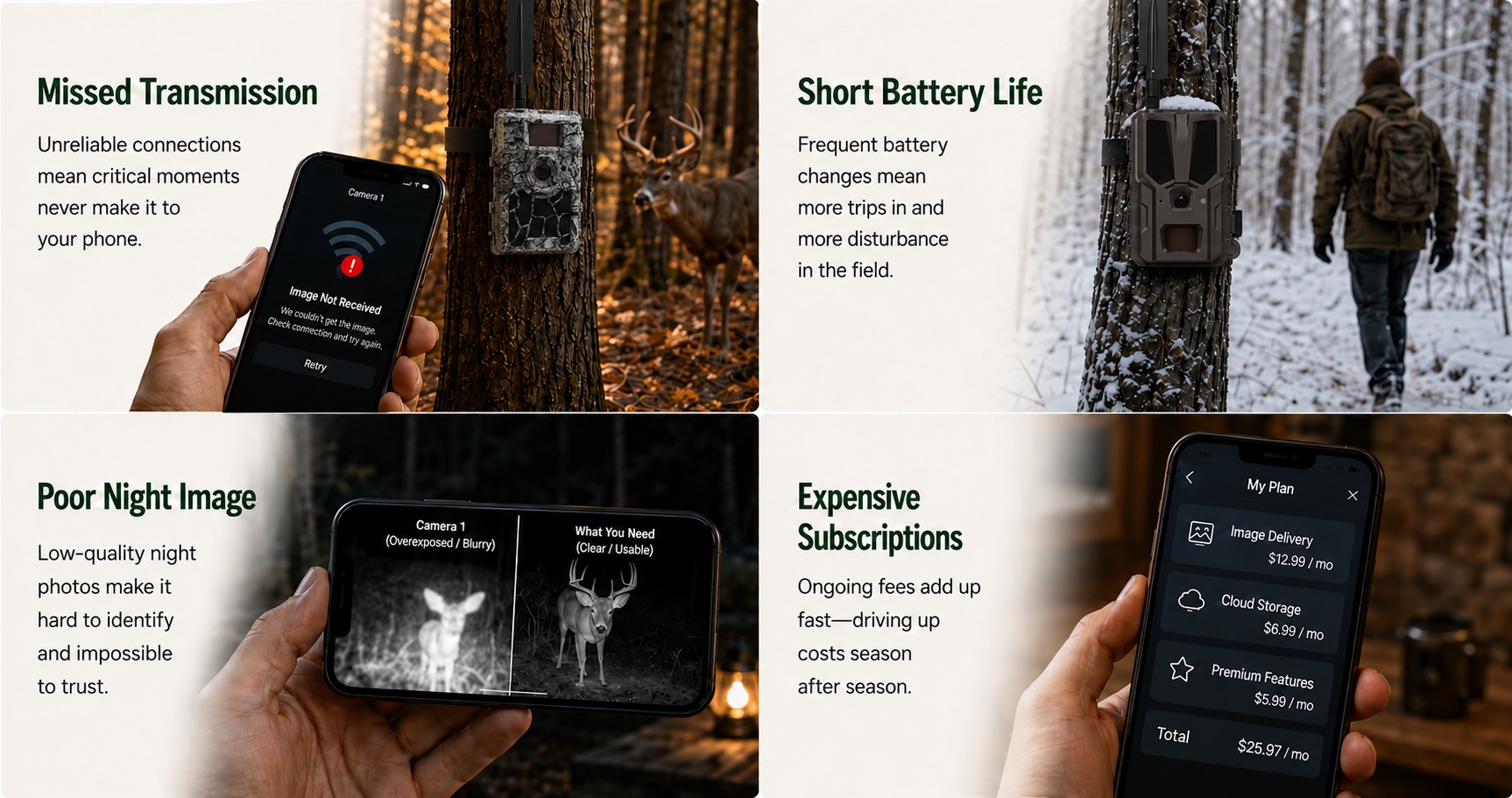
Breakdown 1: The image that never arrived. Cellular transmission failure is the single most discussed variable across hunting camera reviews. Not occasional failures in genuine dead zones — hunters understand geography. Failures in areas with adequate signal, during normal operating conditions, for no visible reason. A camera that misses 15% of its transmissions is, in practice, a camera that missed the buck that mattered. That image doesn't come back. The stand decision gets made without it. The review gets written with one star.
Transmission reliability is not a specification that appears on a box. It is a function of how the cellular modem is integrated, how the antenna is positioned, which carrier bands are supported, and how the firmware handles reconnection after signal interruption. It is where cheap and expensive cellular cameras actually diverge — and where brand reputation is built or destroyed across a season.
Breakdown 2: The battery that didn't last. Every cellular camera claims a standby figure. Most of those figures are calculated under conditions that do not reflect how hunters actually deploy cameras — frequent triggering in active areas, regular cellular check-ins, cold temperatures in late-season November and December. A camera rated for six months that delivers two months on a busy food plot generates specific, memorable frustration, especially when AA batteries cost real money across a multi-camera setup.
Battery endurance is a system-level engineering question, not a battery-count question. The cellular modem's power consumption profile, the PIR sensor's duty cycle, and the firmware's sleep-state management determine real-world battery life more than the number of AAs in the compartment.
Breakdown 3: The night image that told them nothing. More than half of meaningful game activity — particularly mature buck movement — happens in the low-light windows around dawn and dusk, and at night. A cellular camera that delivers blurry, grainy, or overexposed night images is failing at the exact moment its primary use case is concentrated. The shift from low-glow to 940nm no-glow infrared has become a baseline expectation in the mid-to-premium segment — both because 940nm is less likely to spook game, and because hunters who have seen the difference in image quality will not accept the alternative.
Breakdown 4: The app that costs too much to use. Monthly subscription fees for basic image delivery are the category's most structurally problematic pain point. When a hunter buys a camera for $150 and discovers that receiving images requires a $10/month subscription on top of a cellular data plan, the resentment attaches to the brand — not to the carrier, not to the app store. OEM brands that do not control their own app monetization structure are exposed to this problem regardless of how good the hardware is.
The Infrastructure Behind Every Model
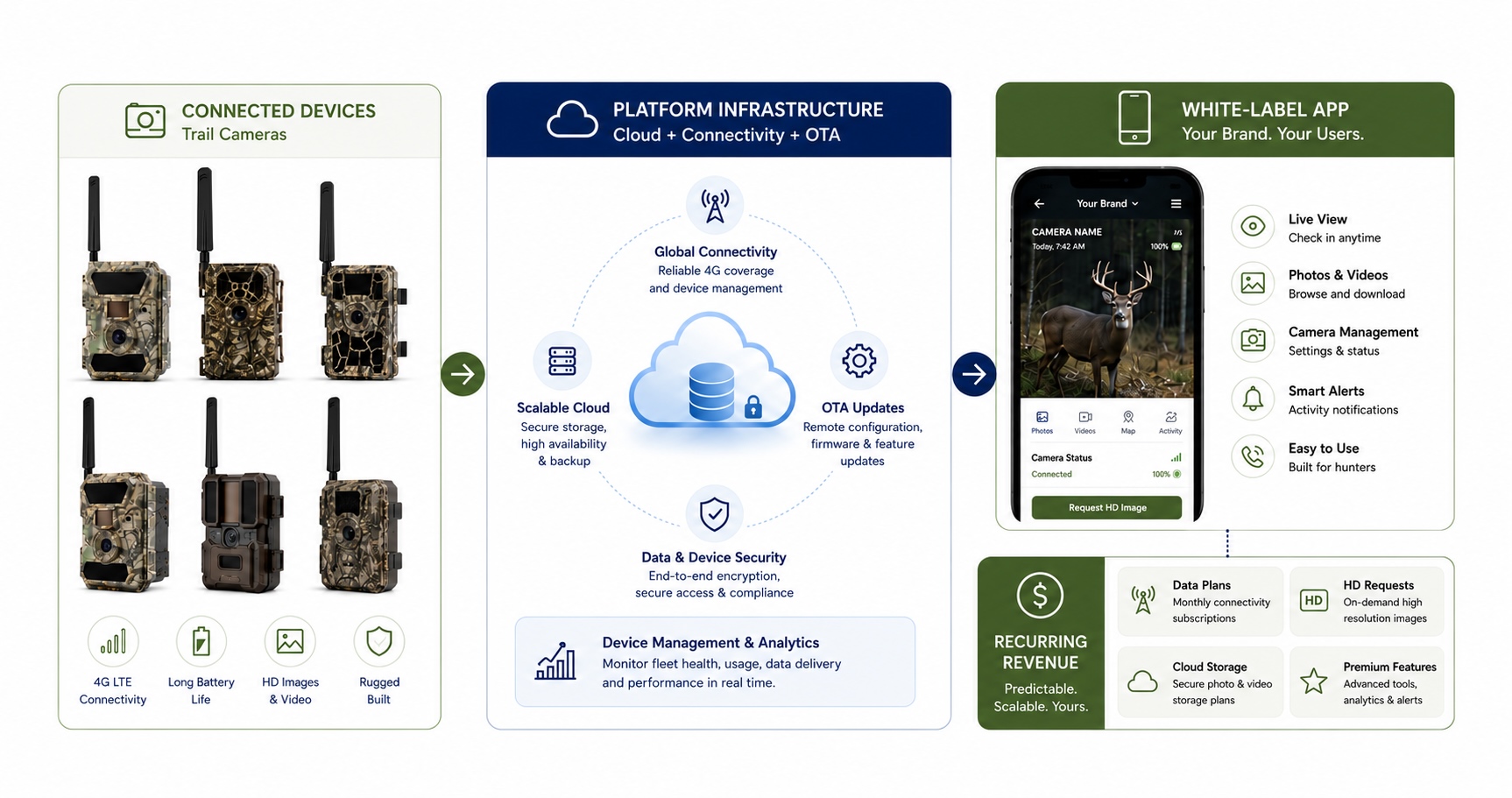
Willfine's trail camera lineup is not eight independent products. It is one platform — a shared hardware and software infrastructure — with eight configurations optimized for different scouting workflows and market positions.
Every model in the lineup is built on the same core:
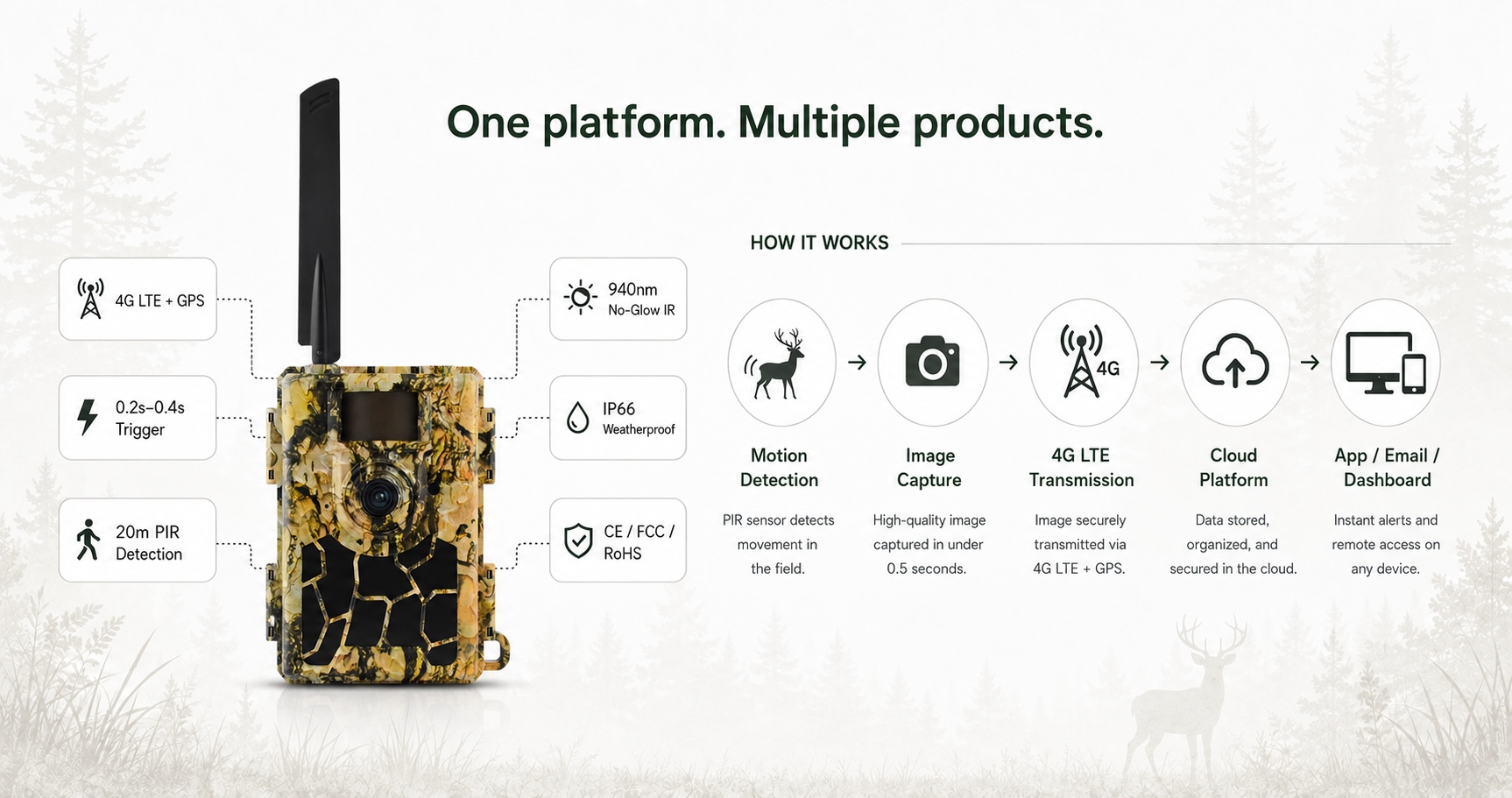
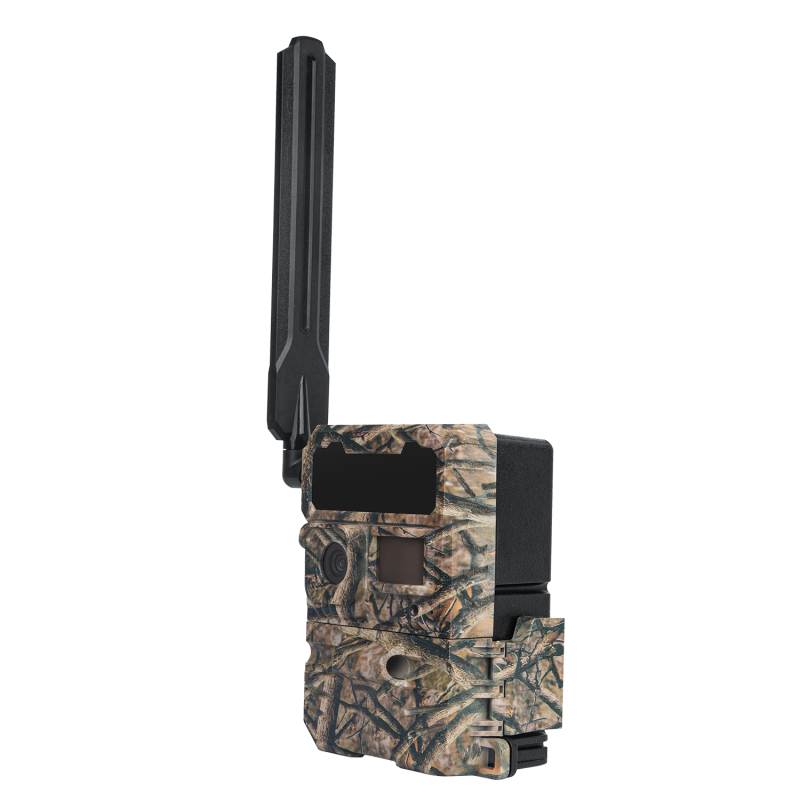
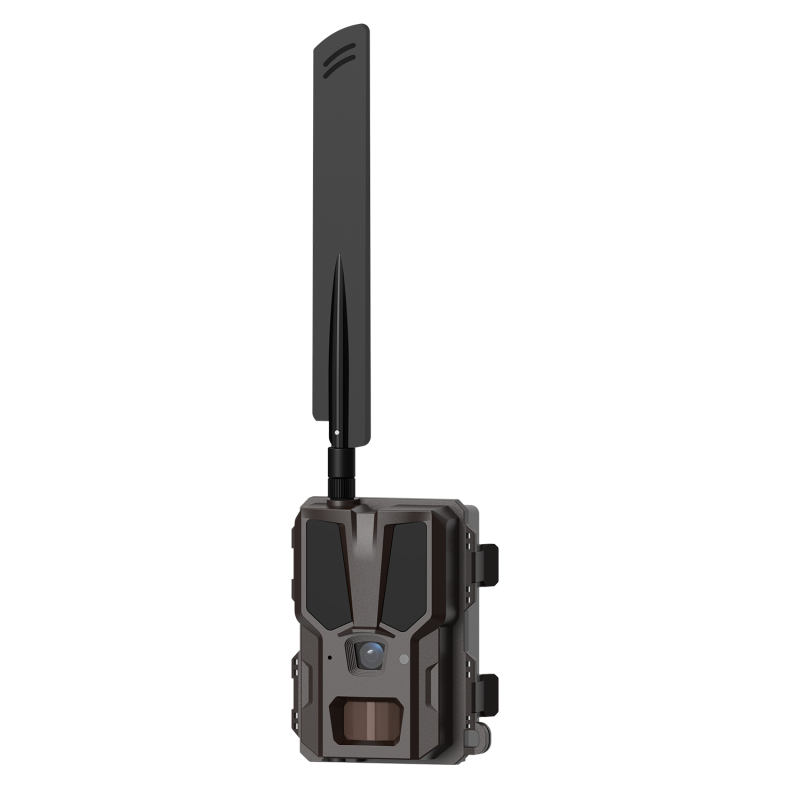
Transmission: 4G LTE cellular connectivity with GPS across all models. The antenna design, modem integration, and firmware transmission management are consistent across the platform — the variable that most directly determines whether the image arrives is not something that differs between a budget model and a flagship.
Trigger: 0.2 to 0.4 seconds across the lineup. At that speed, a deer moving at a walking pace through a 20-meter detection zone is captured centered in the frame, not as a blur at the edge. Trigger speed is where the difference between capturing a usable identification image and capturing a departing hindquarter is determined.
Night vision: 940nm no-glow infrared at 20 meters across all models. Invisible to game. No red glow that educated hunters and mature animals associate with camera presence. This is not a premium feature on Willfine's platform — it is the floor.
Detection: PIR motion detection at 20 meters across all configurations, with adjustable sensitivity on digital PIR models. The detection range determines how early the camera begins to respond to approaching game — and therefore how much of the approach is captured rather than just the departure.
Weatherproofing: IP66 across all models. Rated for continuous outdoor exposure through rain, snow, and the temperature range from -20°C to 55°C that covers the full North American hunting season from early velvet through late rut.
Certification: CE, FCC, RoHS across the lineup. Market entry requirements for North American and European markets are in place — the OEM buyer does not manage a separate certification process before launch.
The differentiation across models happens at two layers above this foundation: connectivity architecture (how the image gets from the camera to the user) and intelligence (what the platform does with the image before and after transmission). Those two dimensions define the four scouting workflow tiers.
Matching the Camera to the Scouting Workflow
Hunters do not all use trail cameras the same way. A landowner managing 600 acres of timber ground in Missouri has a different workflow than a weekend hunter with two cameras on a suburban property edge. A hunting operation running 40 cameras across a commercial lease has different requirements than a solo hunter scouting public land. The camera that fits one workflow is not automatically the right choice for another.
Willfine's lineup is structured around four distinct scouting workflows. For OEM buyers building a product line, these four tiers translate directly into four addressable buyer segments.
Workflow 1: Set, Transmit, Retrieve — Protocol-Based Remote Delivery
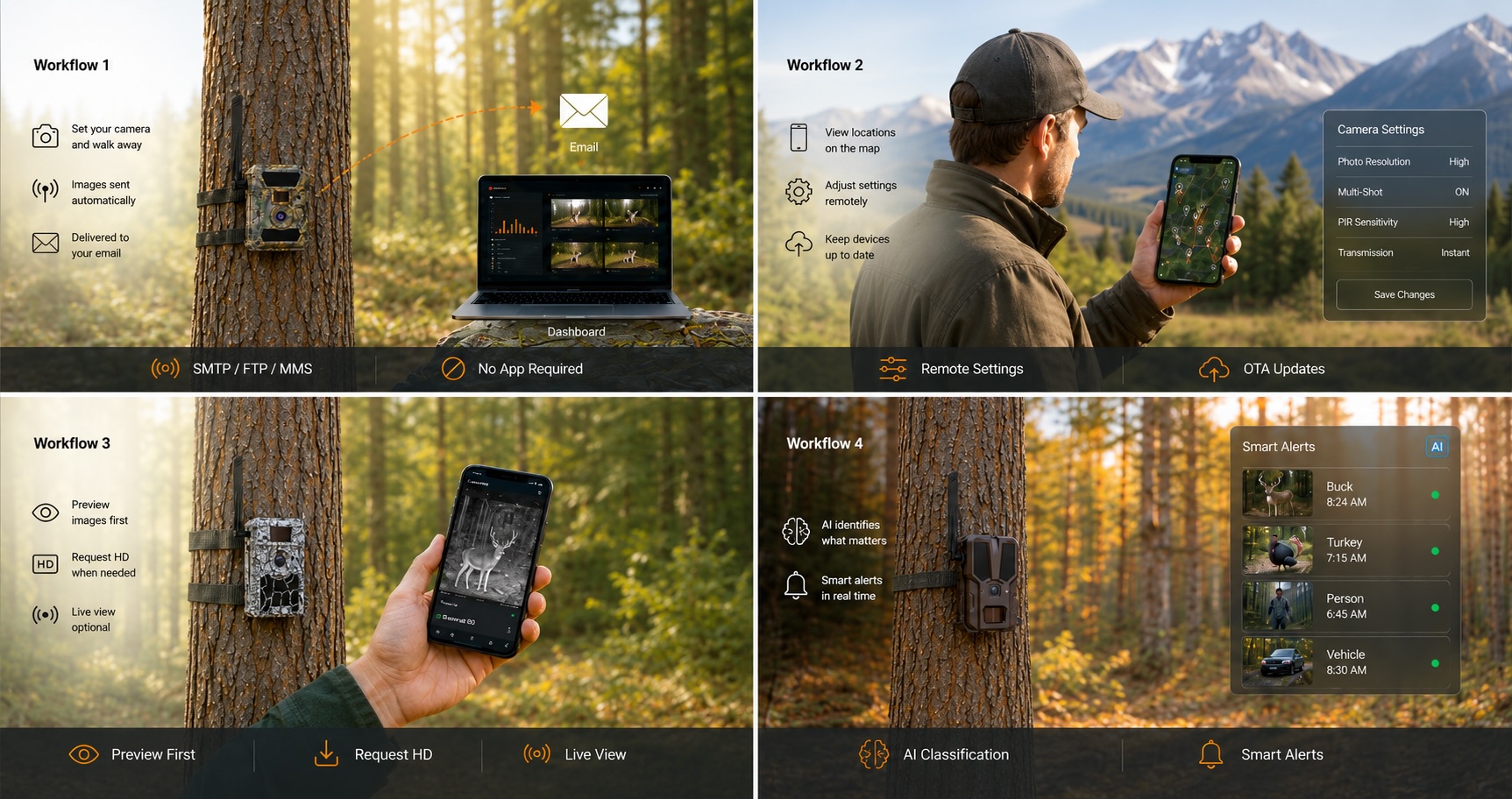
The foundational cellular camera workflow. Camera detects motion, captures image, transmits via cellular to a server or email address, user receives image. No app required. No subscription ecosystem. Images arrive via SMTP, FTP, or MMS — compatible with any email client or custom monitoring dashboard.
This workflow serves buyers who want reliable remote image delivery without app dependency: traditional hunters who prefer a simple setup, institutional buyers integrating cameras into existing monitoring infrastructure, and landowners or agricultural operators who want images pushed to an email address without managing a separate app platform.
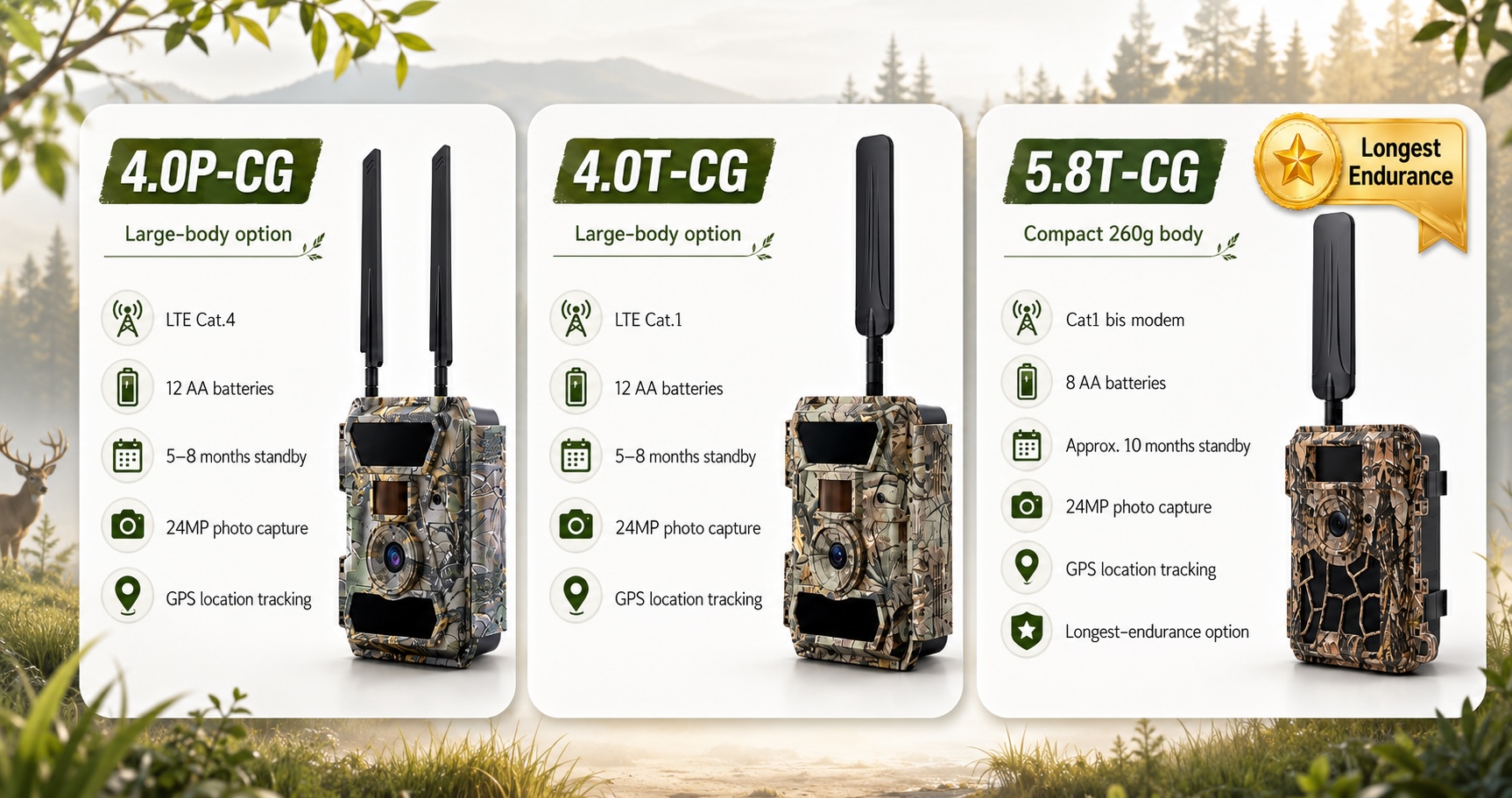
The 4.0P-CG and 4.0T-CG are the large-body options in this tier — 12 AA battery configurations enabling 5–8 months standby with LTE Cat.4 and Cat1 respectively, 24MP photo capture, and GPS location tracking. The 5.8CG and 5.8T-CG bring the same core specification in compact 260g bodies running on 8 AA batteries — the 5.8T-CG's Cat1 bis modem optimized specifically for low-power consumption pushes standby to approximately 10 months, making it the longest-endurance option in the lineup for remote deployment where battery access is infrequent.
For OEM buyers, this tier supports the broadest distribution — it requires no app infrastructure, no subscription setup, and no ongoing platform management from the brand.
Workflow 2: App-Connected Scouting — Remote Management and OTA Control
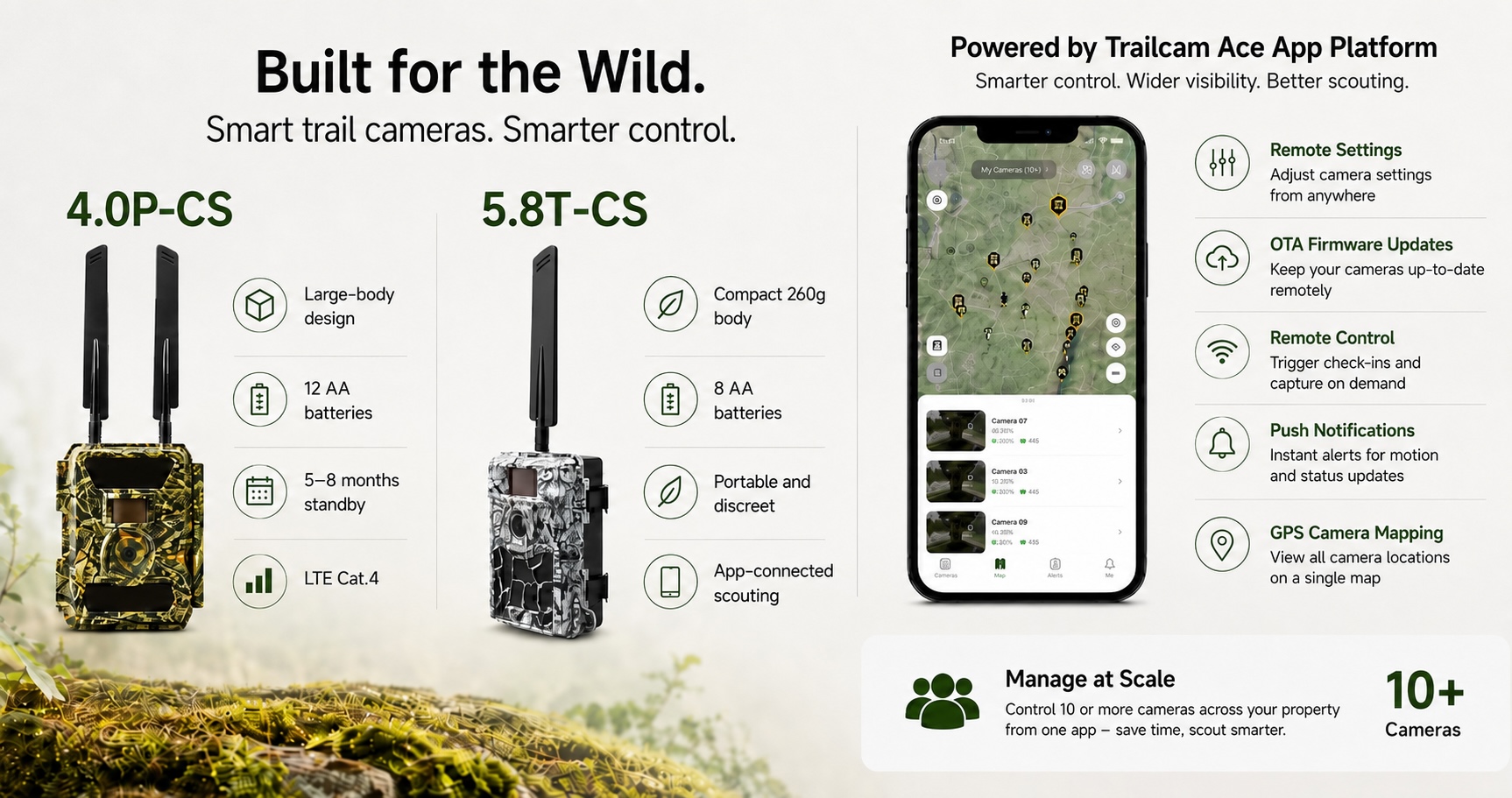
The connected evolution of the protocol-based workflow. Same sensor hardware and imaging specifications as their CG counterparts, but with the Trailcam Ace app platform added: remote camera settings adjustment, OTA firmware updates, remote control functions, push notifications, and GPS camera location mapping across a multi-camera setup.
The meaningful addition over protocol-based transmission is management at scale. A hunter running 10 cameras across a large property can adjust sensitivity settings, change transmission schedules, update firmware, and review all camera locations on a single interface — without visiting a single camera. For OEM brands targeting active hunters with multiple cameras, the app layer is what converts the product from a single-purpose device into a scouting management platform.
The 4.0P-CS runs on 12 AA batteries with a 5–8 month standby estimate and LTE Cat.4 connectivity — the larger body accommodating the battery count that enables extended deployment. The 5.8CS brings app connectivity in the compact 260g form factor on 8 AA batteries, optimized for buyers who prioritize portability and discreet placement across a property.
Workflow 3: On-Demand HD Intelligence — Pull What You Need, When You Need It
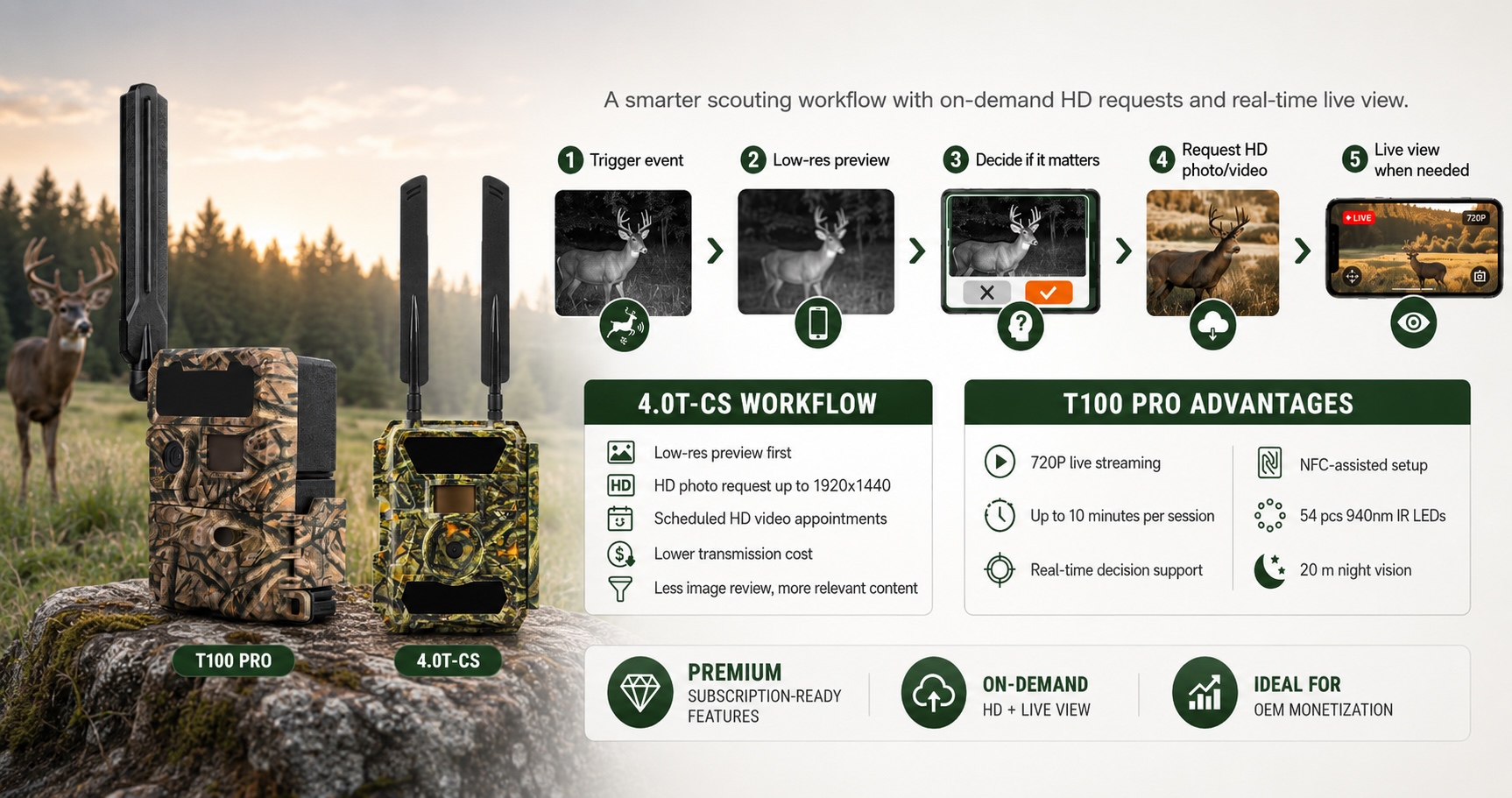
This tier introduces a fundamentally different information model. Rather than receiving every triggered image at a fixed resolution and reviewing all of them, the user receives a low-resolution preview — enough to determine whether the trigger event is worth investigating further — and then requests full HD content on demand for the events that matter.
The 4.0T-CS supports HD photo requests at up to 1920×1440 resolution and HD video appointments — scheduled high-resolution video capture triggered at a specified time. The workflow reduces data transmission costs (low-res previews are small; HD content is only pulled when the preview justifies it), reduces the volume of images to review, and delivers higher-quality content for the events that warrant closer examination.
The T100 Pro extends this workflow with live streaming at 720P for up to 10 minutes per session — the ability to actively observe a location in real time rather than waiting for a triggered event. For hunters who want to monitor a food plot during the evening feed, check whether a buck is working a scrape before making a stand decision, or confirm that a specific animal is still using a location: live view changes the information available at the decision moment. NFC-assisted setup simplifies initial deployment. 54-piece 940nm infrared array at 20 meters delivers the night performance that justifies premium positioning.
For OEM buyers, this tier supports subscription-based monetization more naturally than the protocol tier — on-demand HD requests and live streaming are features that users will pay a premium to access, and the value is immediately tangible rather than theoretical.
Workflow 4: AI-Powered Scouting Intelligence — The Next Generation
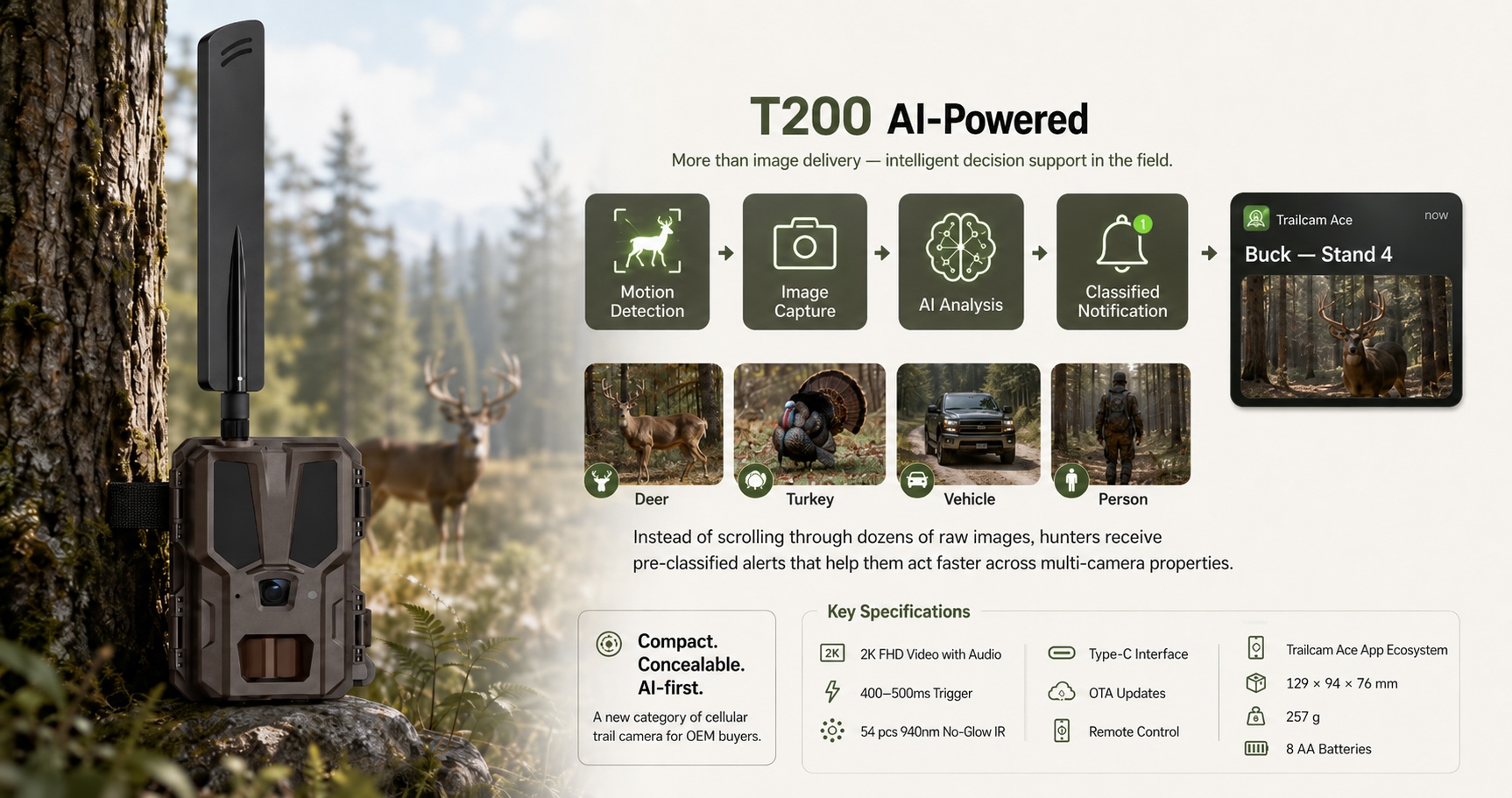
The T200 is a categorically different product. Where every other model in the lineup delivers images and lets the hunter interpret them, the T200's AI-powered platform begins the interpretation process before the image reaches the user.
In practical terms: the camera detects motion, captures the image, runs AI analysis — identifying whether the subject is a deer, turkey, vehicle, or person — and delivers a classified notification rather than a raw image. A hunter managing multiple cameras across a property receives a notification that says "Buck — Stand 4" rather than receiving 40 undifferentiated images to scroll through. The decision support arrives pre-processed.
This is not a marginal improvement over standard cellular cameras. It is a different product category — one that Tactacam, Spypoint, and Bushnell are moving toward but have not yet fully delivered at the hardware level. The T200 gives OEM buyers the ability to enter that narrative now, with working hardware, rather than marketing AI features that are not yet functional.
Specification context for the flagship positioning: 2K FHD video with audio, 400–500ms trigger, 54-piece 940nm no-glow infrared, Type-C interface, OTA updates, remote control, and the full Trailcam Ace app ecosystem — in a 129×94×76mm body at 257g on 8 AA batteries. The compact form factor means the AI-powered flagship is also the most concealable model in the lineup.
The Subscription Layer: Where the Business Model Scales
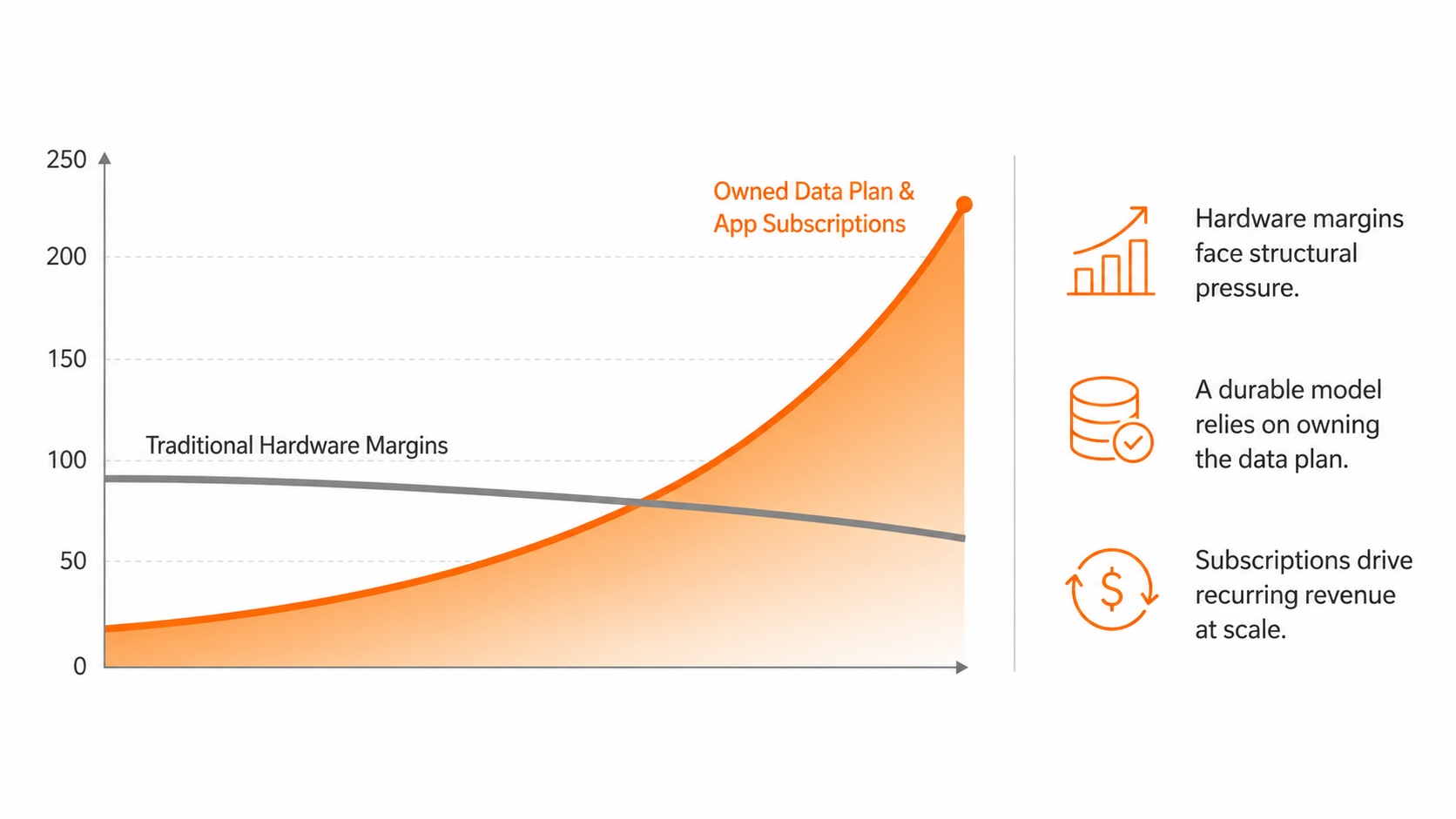
Hardware margins in the trail camera category are under structural pressure. As the cellular segment matures and more manufacturers enter the market, the price compression that has already affected the SD-card segment will move upstream. Brands that depend entirely on device sale margins are building on an eroding foundation.
The OEM brands with durable economics in this category are the ones that own the data plan relationship with their end users. Every activated cellular camera requires a data plan. When that plan is sold and managed by the brand — through a white-label app with brand-controlled pricing — the recurring monthly revenue is structurally different from hardware margin: it compounds with each camera sold, it does not require restocking or logistics, and it continues for the lifetime of the device in the field.
Trailcam Ace supports full white-label deployment. The app carries your brand identity in the iOS and Android stores. Pricing for data plans, HD content requests, cloud storage tiers, and premium feature access is set by the OEM partner, not by Willfine. The backend infrastructure — server, connectivity platform, OTA update management — is maintained by Willfine. The customer relationship, and the recurring revenue it generates, belongs to the brand.
For OEM buyers building a long-term business in this category rather than a single product launch, this is the most commercially significant aspect of the platform.
Who Builds on This Platform
The OEM program is not a catalog. It is a manufacturing and platform partnership — and the brands it serves best are the ones that bring distribution access or an existing customer relationship, and need a partner that handles product execution end to end.
It fits best for hunting and outdoor brands currently reselling established cellular camera brands who want to convert that distribution into a private-label margin structure. It fits for sporting goods distributors whose retail accounts are asking for a cellular trail camera range at multiple price points and need a single supplier who can cover all four workflow tiers. It fits for e-commerce operators who have built an audience in the hunting or property monitoring category and understand that a private-label product with app-based recurring revenue is structurally more valuable than a resale business. And it fits for regional distributors in European markets — Germany, France, Scandinavia, the UK — where North American cellular trail camera brands have limited retail presence and the category is still in early growth.
What it is not suited for is a brand that needs to launch a single SKU at the lowest possible price point and compete on price alone. That is not a durable position in this category, and it is not the kind of partnership this platform is designed to support.
Evaluate the Platform for Your Product Program
OEM evaluation begins with a technical consultation, sample units across the workflow tiers relevant to your target market, and a Trailcam Ace app demonstration including white-label deployment walkthrough. OEM pricing and platform terms are provided under NDA for qualified buyers.
Contact Willfine to request the trail camera platform brief and initiate an evaluation.