
 EN
EN
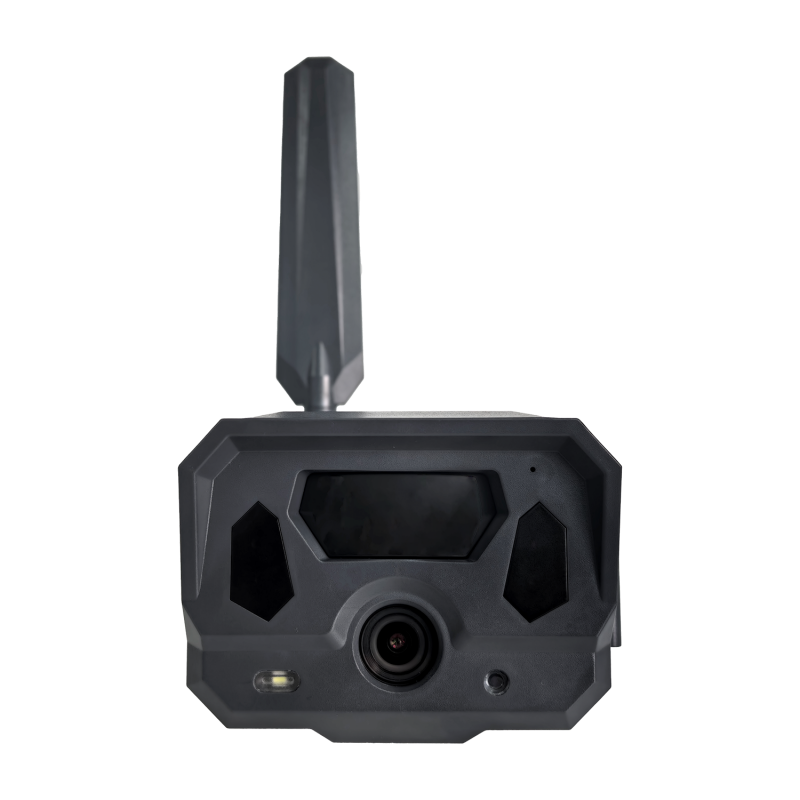
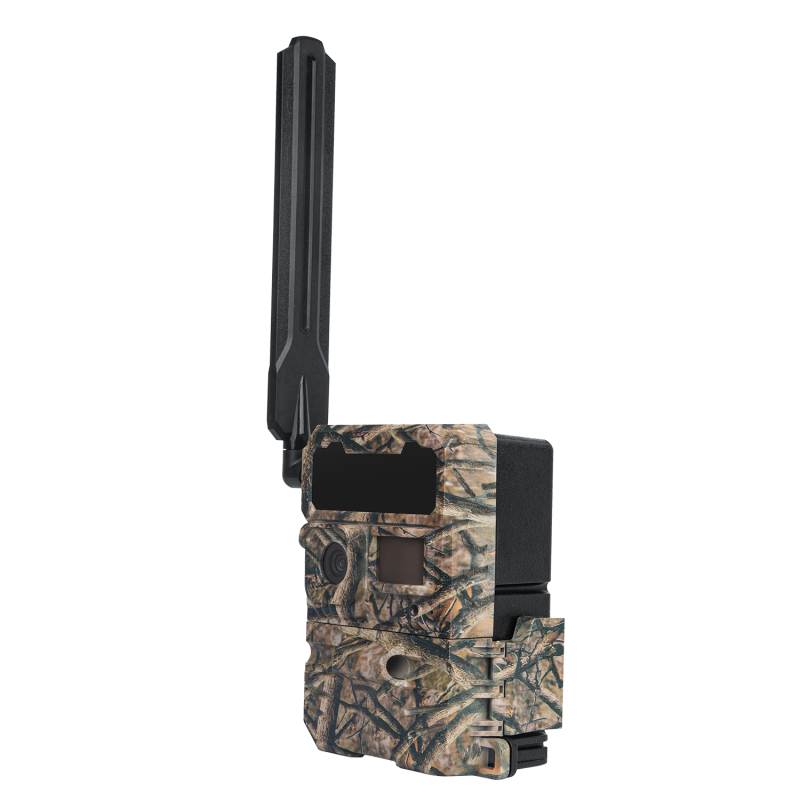
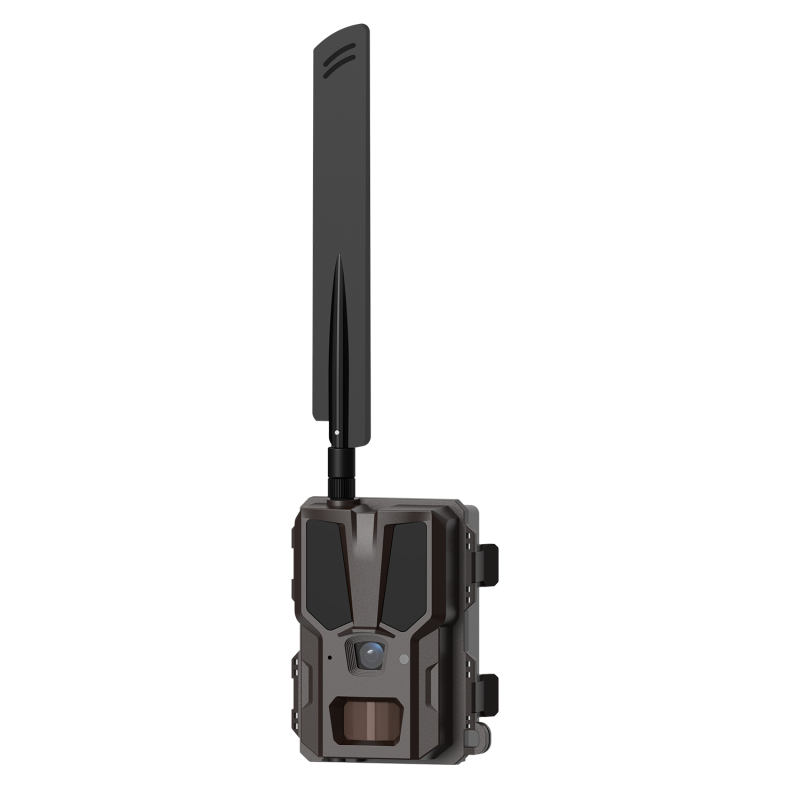
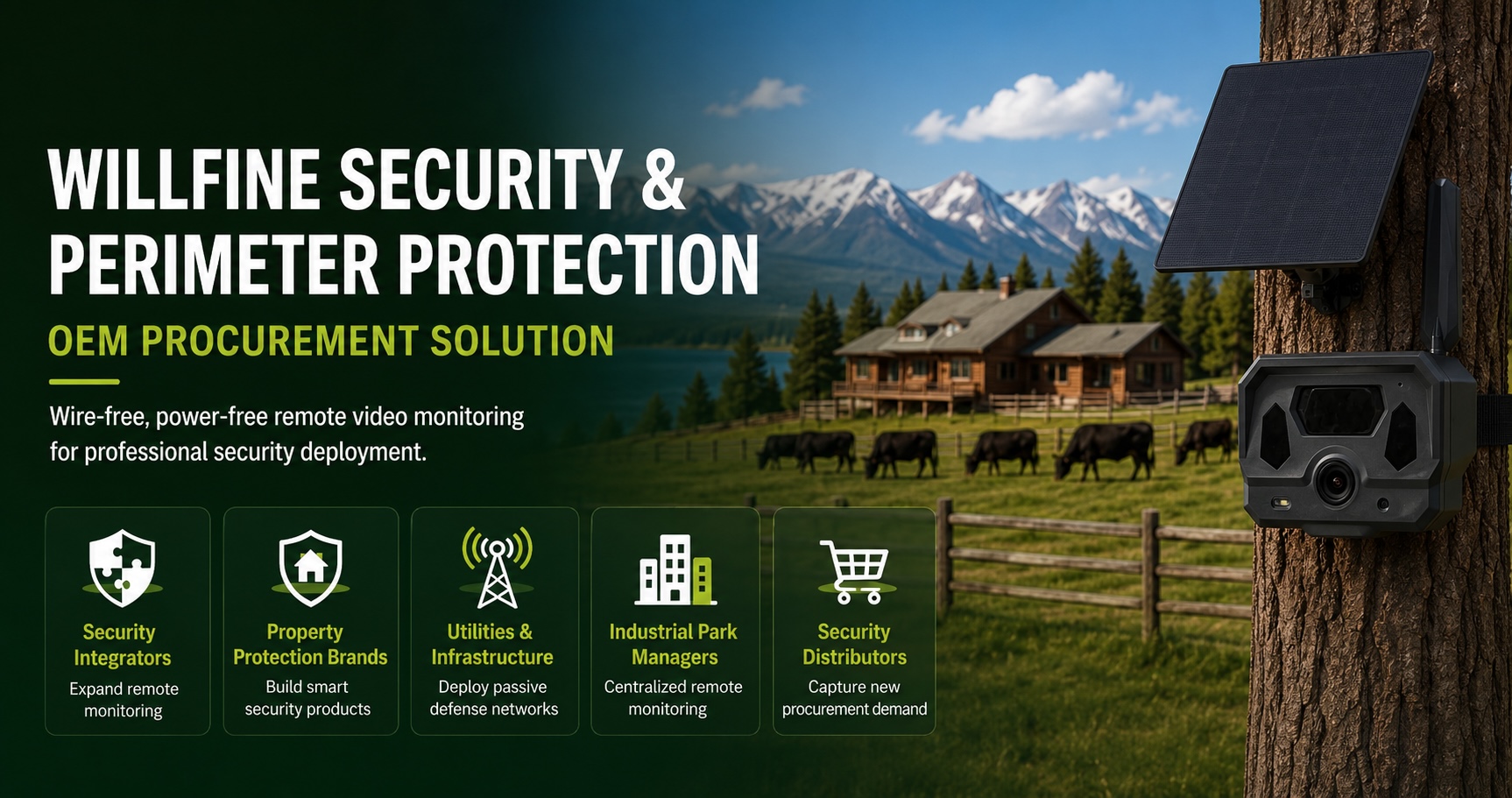
Designed for Remote Sites, Industrial Facilities, Private Property, and Key Infrastructure That Require Continuous Oversight.
The Surveillance Gap That Wired Systems Cannot Close
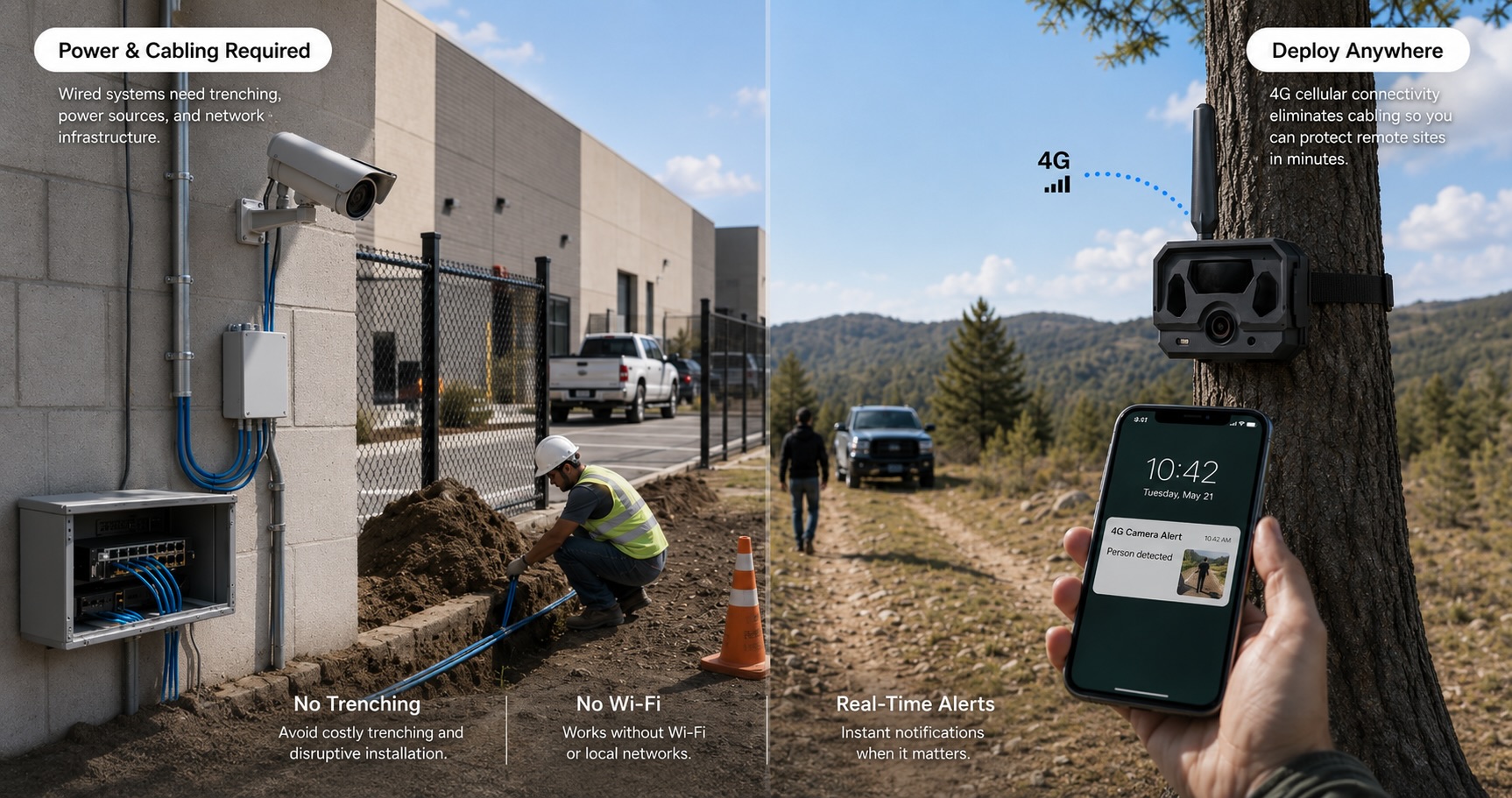
Every security system specification starts from the same assumption: that power is available, that network connectivity exists, and that the location being protected is accessible enough to support installation. For the locations where those assumptions hold — retail stores, office buildings, urban parking structures — conventional CCTV and IP camera systems work well.
The problem is that a significant portion of the locations that most need surveillance are precisely the ones where those assumptions don't hold.
A construction site in the third week of a project has equipment worth hundreds of thousands of dollars sitting in a field with no permanent power, no network infrastructure, and no on-site security presence after hours.
A rural pipeline right-of-way crosses 200 miles of land with no power outlets and no cellular repeaters at half the locations that need monitoring.
A private estate with a 3-mile perimeter has a gate camera and nothing else — because running cable to the back fence line costs more than the equipment it would protect.
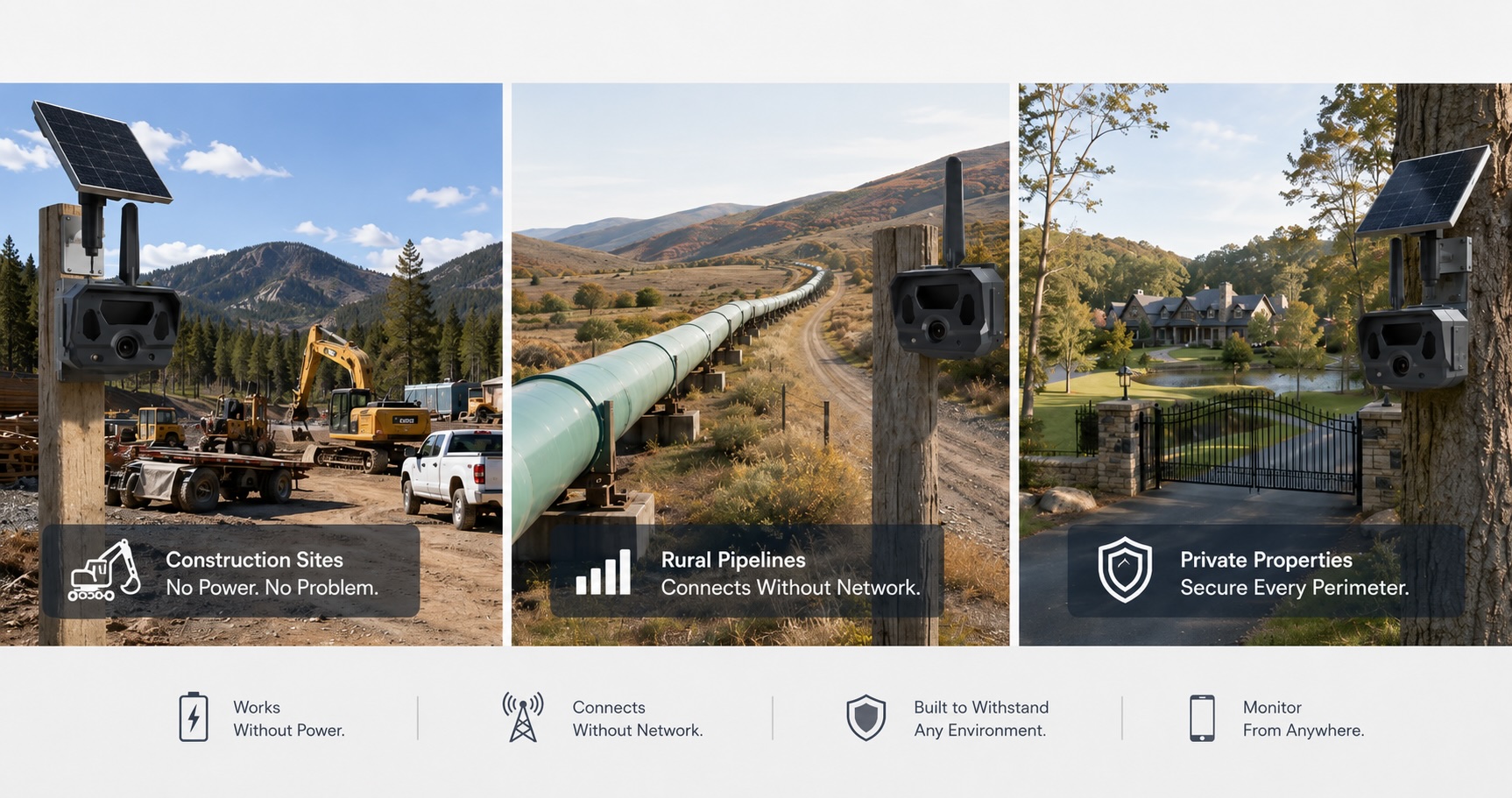
These are not edge cases. They are the normal operating environment for a substantial segment of the security market — one that conventional surveillance infrastructure is structurally unable to serve at reasonable cost.
Cellular trail cameras address this gap not by replacing wired security systems, but by operating where wired systems cannot. No trenching. No electricians. No network installation. A camera, a tree or post, a cellular data plan, and a real-time alert the moment something moves in front of the lens at 3am.
For OEM buyers building security products — physical security integrators, property protection brands, industrial monitoring equipment distributors — this is the market segment that trail camera technology opens that no other product category can access at comparable cost.
What Security Buyers Evaluate Differently Than Hunters
The trail camera category has historically been defined by the hunting market. The specifications hunters prioritize — megapixel count, trigger speed, night vision range — are relevant to security applications, but they are not the whole story. Security buyers evaluate several dimensions that hunting buyers rarely consider, and getting those dimensions wrong is how a hunting-market camera fails in a security deployment.
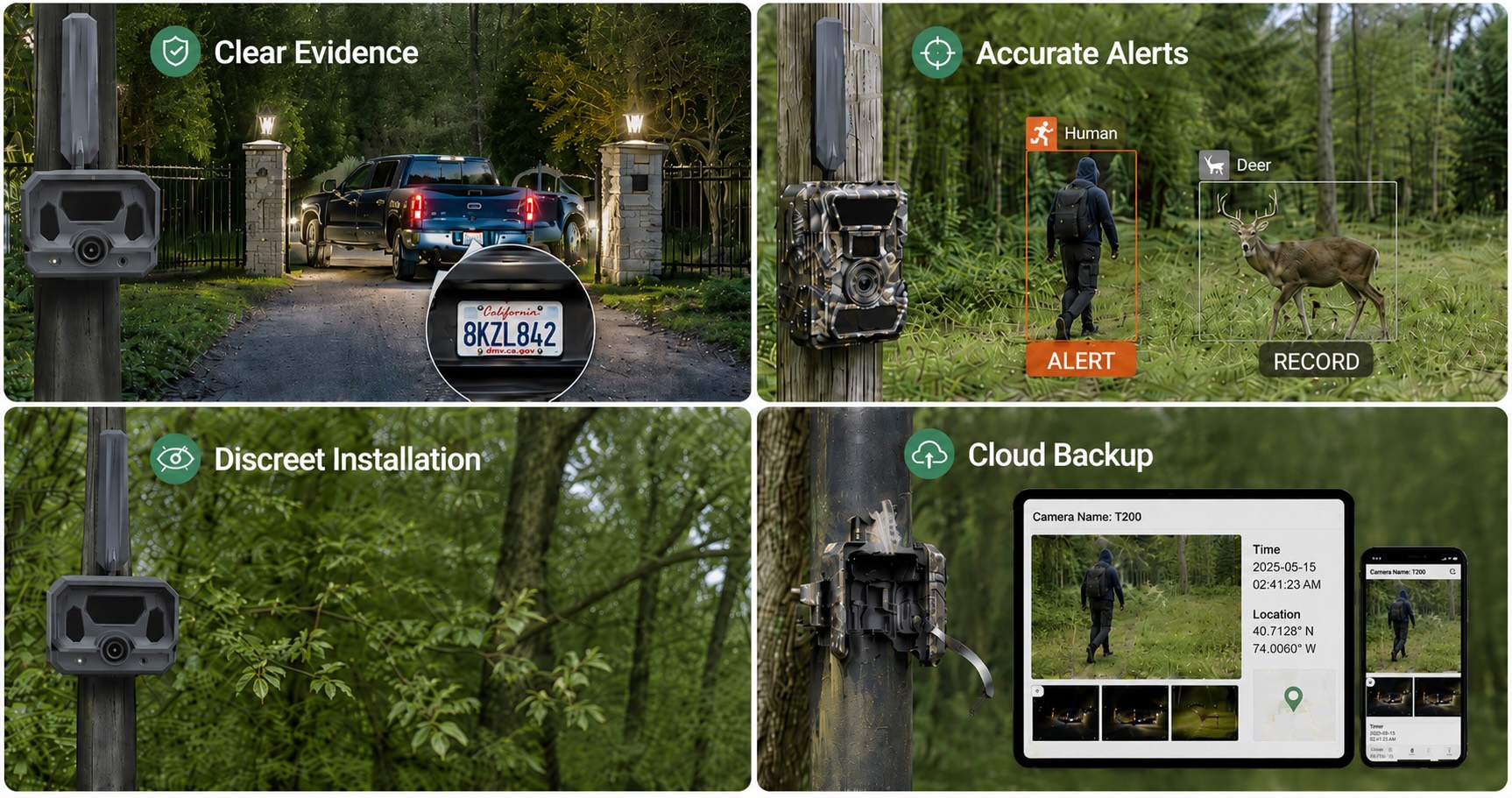
Evidence quality, not just image capture. A hunter needs an image good enough to identify a species and assess a target animal. A security operator needs an image good enough to identify a license plate at 15 meters in low light, or a face at 8 meters, or the make and model of a vehicle on a dark access road. These are different resolution and processing requirements. The 4.0T-CS's HD photo request capability — pulling a 1920×1440 image on demand after a low-resolution alert confirms an event worth examining — is the workflow that serves security evidence requirements, not standard triggered transmission at compressed resolution.
Alert precision, not just alert speed. A camera that sends a notification every time wind moves a branch is not a security tool — it is an alert fatigue generator. Security buyers need a camera whose PIR detection and AI filtering reduce false positives to a level where alerts carry credibility. The T200's AI subject classification — distinguishing human presence from animal triggers — directly addresses this requirement in environments where wildlife activity near a monitored perimeter would otherwise produce an unmanageable alert volume.
Alert precision, not just alert speed. A camera that sends a notification every time wind moves a branch is not a security tool — it is an alert fatigue generator. Security buyers need a camera whose PIR detection and AI filtering reduce false positives to a level where alerts carry credibility. The T200's AI subject classification — distinguishing human presence from animal triggers — directly addresses this requirement in environments where wildlife activity near a monitored perimeter would otherwise produce an unmanageable alert volume.
Tamper resistance and anti-theft design. A hunting camera is typically deployed in locations where theft is unlikely. A security camera is deployed in locations where the motivated actors it is monitoring may also be motivated to remove it. Physical security of the device itself — compact low-profile body, non-reflective housing, mounting flexibility that allows placement out of easy reach — is a product characteristic that security buyers consider and hunting buyers typically do not.
Audit trail and evidence chain. Security deployments often need to produce documentation that meets legal standards — for insurance claims, law enforcement reporting, civil litigation, or regulatory compliance. Timestamped images with GPS location data, stored in cloud infrastructure that cannot be wiped by removing the physical camera, provide an evidence record with chain-of-custody integrity that SD card storage cannot match.
Five Deployment Contexts, One Platform
The security and site protection market is not a monolith. A construction site monitoring requirement is different from a utility infrastructure requirement, which is different from a private estate perimeter requirement. What they share is the underlying infrastructure constraint — no power, no network, no permanent installation — and the need for real-time alert capability. What differs is the specific threat profile and the evidence quality standard.
Construction and job site security
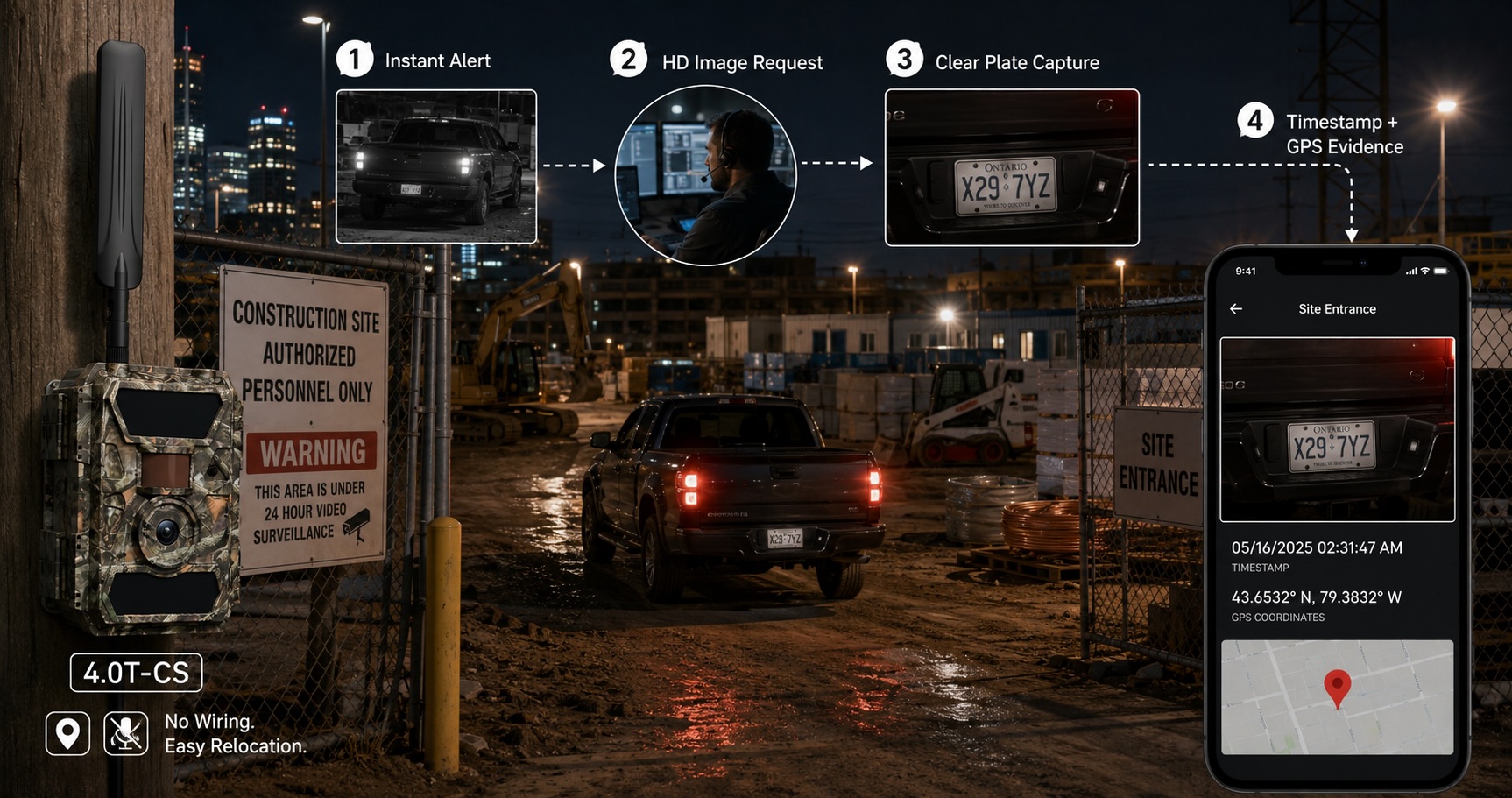
Construction sites represent one of the highest-value theft targets in the property crime landscape. Equipment, copper wiring, fuel, and materials represent concentrations of easily resold value in locations that are routinely unsecured after hours. The National Equipment Register estimates that construction equipment theft costs the US industry over $1 billion annually — with recovery rates below 25% because most theft occurs without witnesses and without documentation.
A cellular trail camera deployed at site access points and equipment staging areas converts after-hours site activity from an undocumented event into a timestamped, GPS-tagged record transmitted in real time. The 4.0T-CS's HD photo request capability means that when a low-resolution alert confirms vehicle approach at 11pm, the operator can immediately request the full-resolution image that captures the license plate before the vehicle leaves the frame.
Construction sites also change configuration weekly — equipment moves, staging areas shift, access points open and close. The cellular trail camera's infrastructure-free deployment model means monitoring coverage can be repositioned as the site evolves, without installation crews or cable runs.
Utility and infrastructure right-of-way
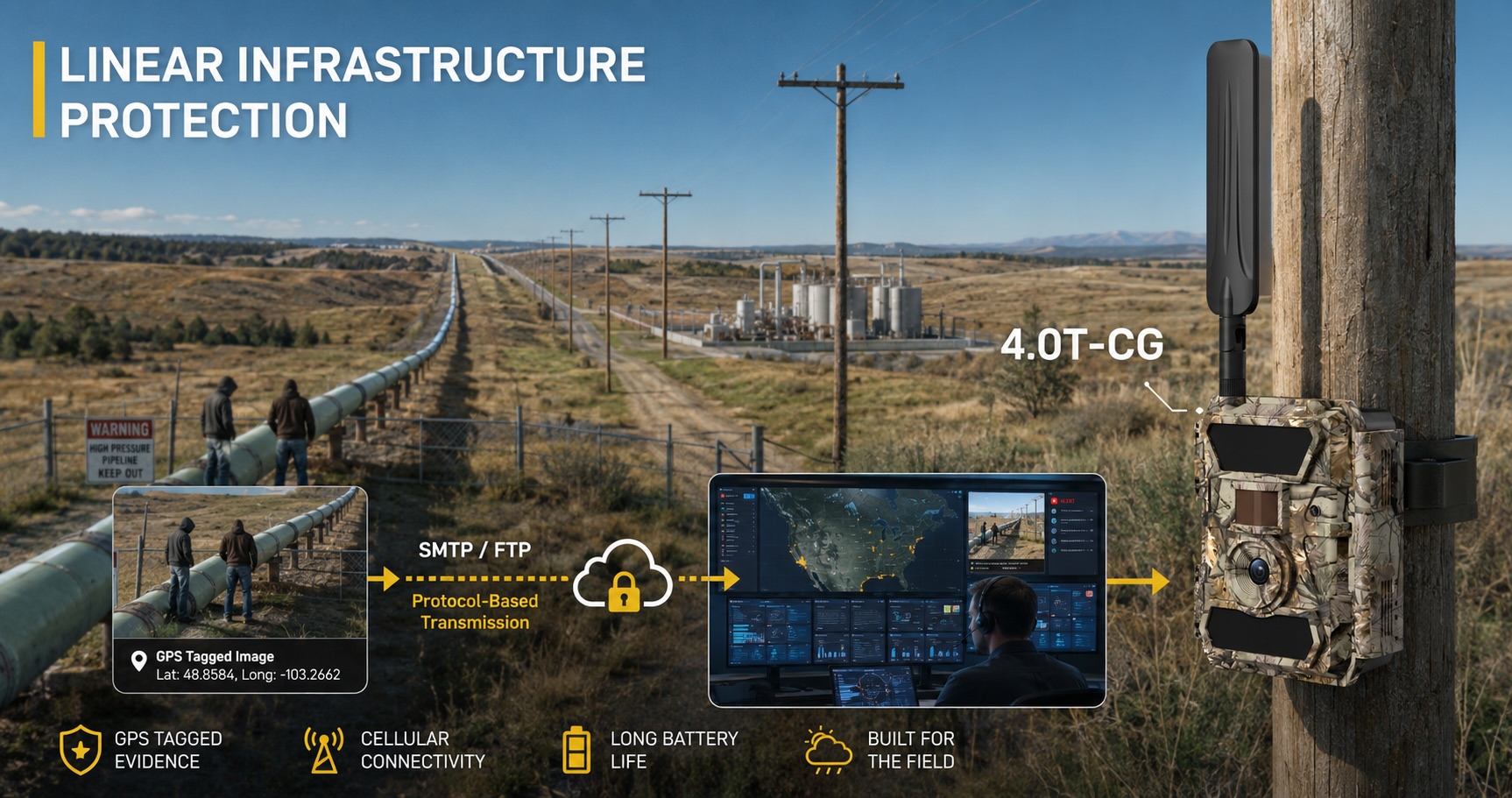
Pipeline operators, power utilities, water authorities, and telecommunications companies manage linear infrastructure across vast geographic areas — hundreds or thousands of miles of right-of-way that cannot be physically patrolled continuously. Unauthorized access, copper theft, vandalism, and encroachment are ongoing operational concerns that conventional surveillance cannot address at right-of-way scale.
A distributed cellular camera network along a right-of-way, transmitting images via SMTP or FTP directly to operations center monitoring infrastructure, provides continuous coverage without requiring app adoption or subscription platform management. The 4.0T-CG's protocol-based transmission architecture is directly suited to this deployment model — compatible with existing utility monitoring systems, operable without a proprietary app ecosystem, and maintainable by field technicians who are not consumer electronics users.
GPS tagging on every transmitted image provides the location data that allows operations center staff to immediately identify which section of a right-of-way is being accessed — a capability that matters when the monitored territory spans multiple counties.
Private estate and rural property
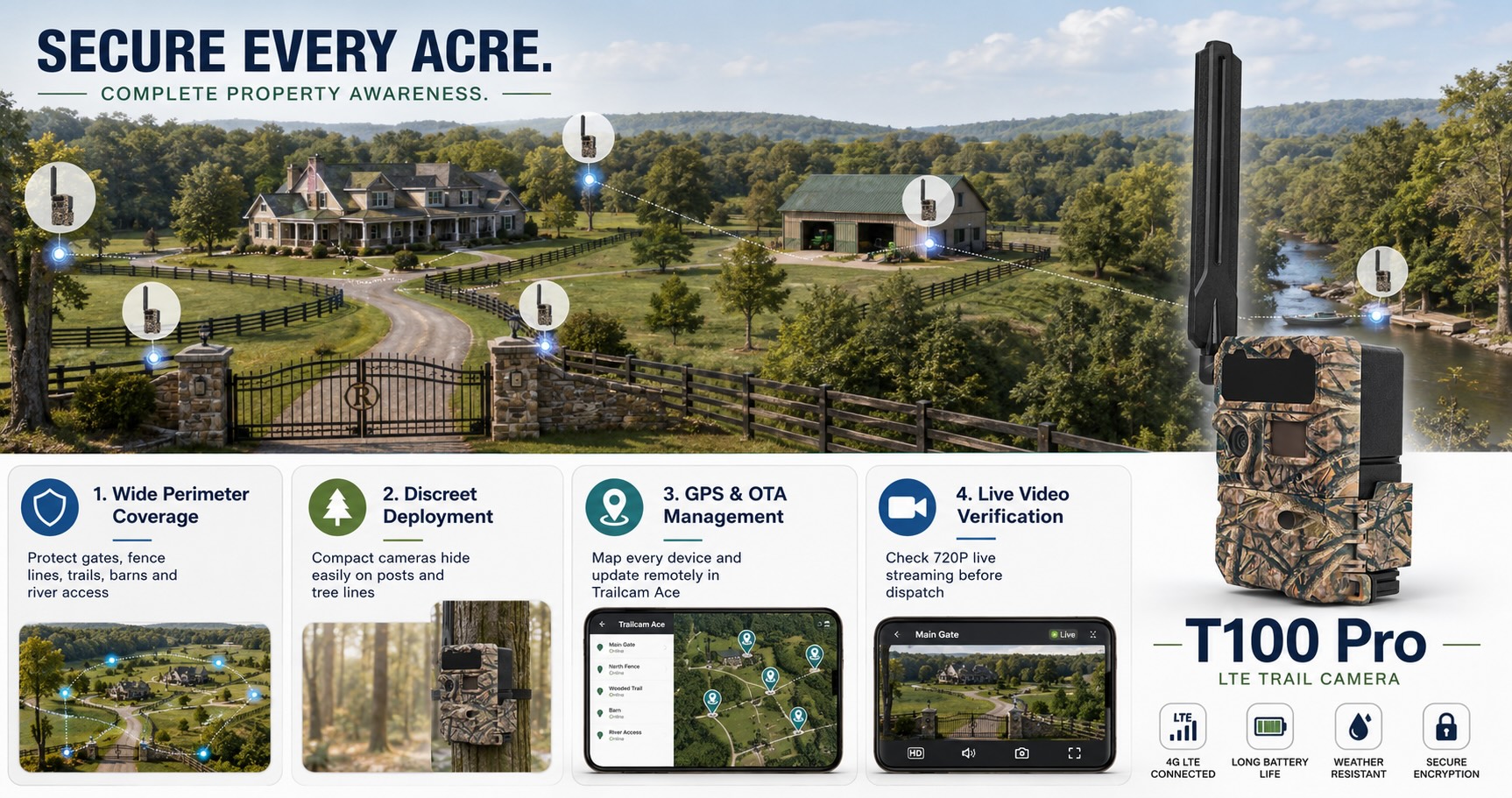
Large rural properties — estates, country houses, ranches, rural retreats — present a perimeter monitoring challenge that conventional security infrastructure addresses only partially. A gate camera and a perimeter alarm cover the obvious access points. The back fence line, the woodland trail, the river access point three miles from the house, the equipment barn in the far field — these are the locations where wired infrastructure is impractical and where determined trespassers know the coverage gaps exist.
The 5.8T-CS's compact body and app-connected management make it the natural fit for distributed private estate perimeter coverage: small enough to mount discreetly on fence posts and tree lines, connected to the Trailcam Ace platform for GPS-mapped network management, with OTA update capability that allows security feature improvements without site visits across a large property.
For estate owners who want higher-evidence capability at key access points — gates, outbuildings, vehicle storage — the T100 Pro's live streaming capability adds active monitoring: the ability to check a location in real time before deciding whether to call security personnel, rather than relying solely on triggered image alerts.
Industrial and commercial remote facilities
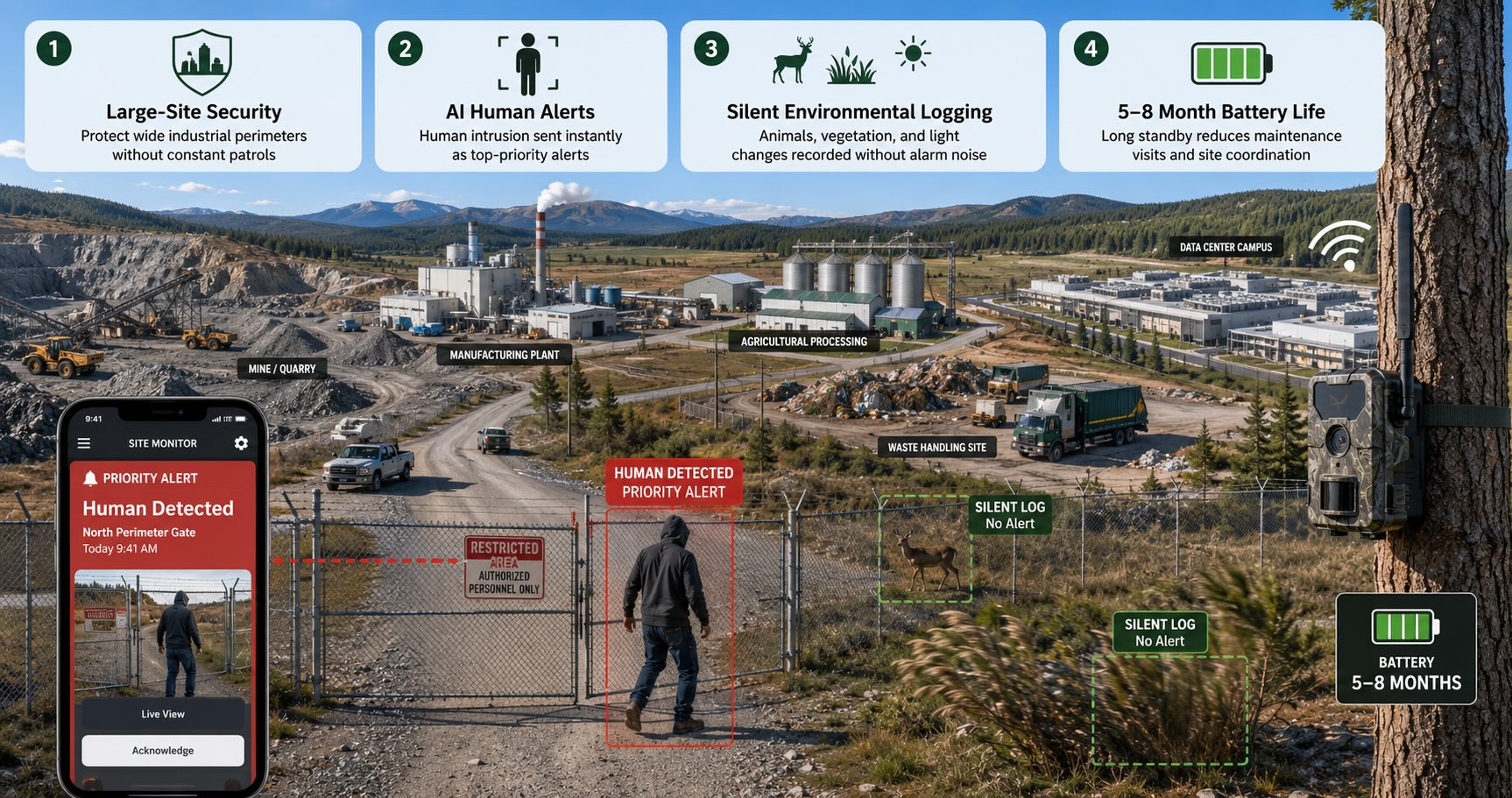
Quarries, mining operations, remote manufacturing facilities, agricultural processing plants, waste management sites, and data center campuses all share a common monitoring requirement: detection of unauthorized access to high-value or high-risk facilities in locations where physical security staffing is not cost-effective around the clock.
The AI-driven alert filtering of the T200 is particularly relevant in industrial contexts, where the goal is not to document every triggered event but to ensure that human presence events are flagged immediately while environmental triggers — wildlife, vegetation movement, lighting changes — are logged without generating alerts that overwhelm a security operations center's response capacity.
The 4.0P-CS's 12 AA battery configuration, rated for 5–8 months standby, reduces the maintenance visit frequency for facilities where camera access requires coordination with site operations — a practical consideration for quarries or processing plants where ad hoc maintenance visits are operationally disruptive.
Forestry and land management
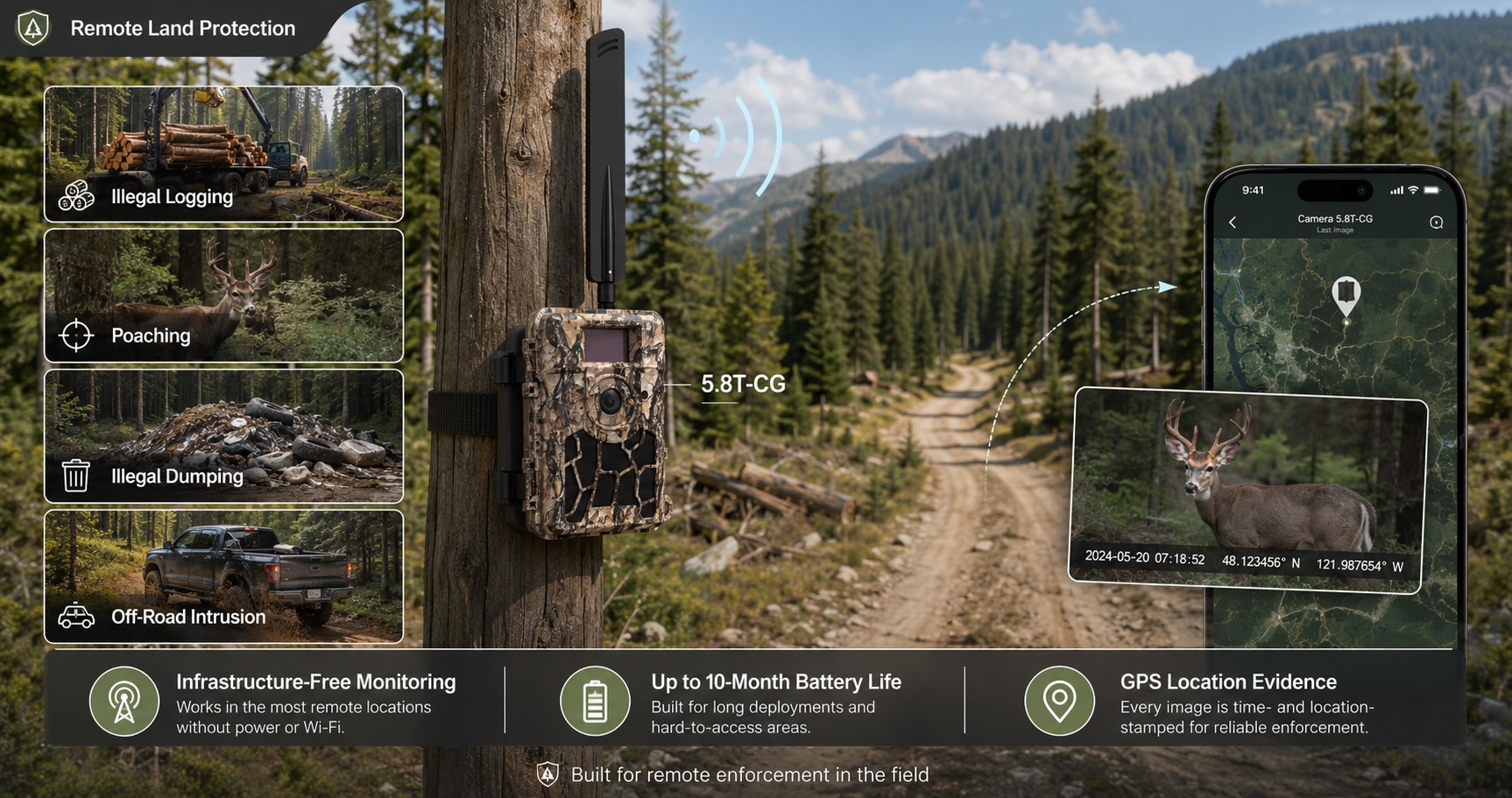
Illegal logging, poaching, unauthorized dumping, and off-road vehicle trespass represent ongoing enforcement challenges for forestry operations, national parks, and large land management organizations. These threats occur in locations that are definitionally remote — if they were easily accessible, enforcement would be straightforward — and require monitoring infrastructure that can operate without any fixed installation.
The 5.8T-CG's low-power Cat1 bis architecture and 10-month battery standby on 8 AA batteries makes it the lowest-maintenance option for deep-forest deployment where battery replacement visits require significant field logistics. GPS tagging on transmitted images provides the location intelligence that enables enforcement personnel to respond to documented events efficiently rather than searching a large area for the incident site.
Matching the Camera to the Security Context
| Security context | Recommended model | Key rationale |
| Construction site access monitoring | 4.0T-CS | HD photo request for license plate capture; cloud evidence storage; OTA updates as site configuration changes |
| Utility right-of-way distributed network | 4.0T-CG | Protocol-based SMTP/FTP transmission compatible with operations center infrastructure; GPS tagging for location identification |
| Private estate perimeter coverage | 5.8CS | Compact discreet body; Trailcam Ace GPS network mapping; OTA management without site visits |
| Estate key access points with live view | T100 Pro | Live streaming for active monitoring; HD request for event documentation; NFC-simplified deployment |
| Industrial facility with high wildlife activity | T200 | AI subject classification filters human presence from animal triggers; 2K video with audio for comprehensive documentation |
| Remote forestry and land management | 5.8T-CG | 10-month battery standby minimizes remote site visit frequency; GPS tagging for enforcement response coordination |
| Multi-site commercial property network | 4.0P-CS | 12 AA battery for extended standby; full Trailcam Ace platform for GPS-mapped network management |
What OEM Buyers in the Security Market Need From a Manufacturing Partner
Security integrators and property protection brands evaluate manufacturing partners differently from consumer outdoor brands. The questions that determine supplier selection in the security market are distinct from those in the hunting or birdwatching markets.
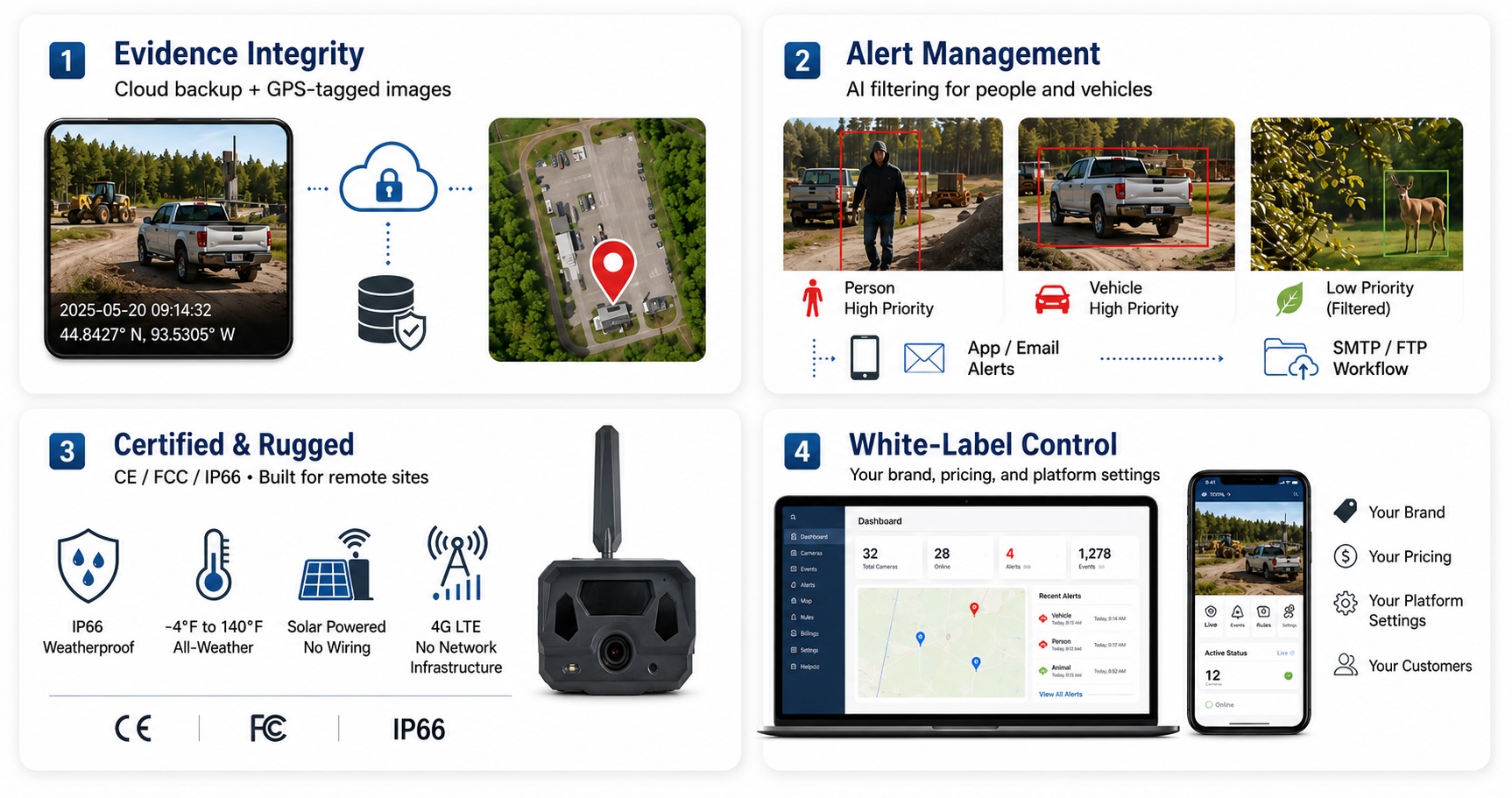
Evidence chain integrity: Does the platform support cloud storage that preserves image records independent of the physical device? Does GPS tagging meet the documentation standards required for insurance and law enforcement purposes? Willfine's cloud infrastructure and GPS metadata on transmitted images address both requirements.
Alert management at scale: Can the platform manage alert volume across a multi-site deployment without overwhelming security operations staff? The T200's AI filtering and the Trailcam Ace platform's notification management capabilities address this for app-connected deployments. Protocol-based models integrate directly with existing security monitoring infrastructure via SMTP and FTP.
Infrastructure-free deployment certification: CE, FCC, and IP66 certification across the lineup confirms that the hardware meets regulatory requirements for commercial security deployments in North American and European markets — without requiring buyers to manage separate certification processes.
White-label platform control: Security integrators building proprietary monitoring solutions need platform infrastructure they control — not a consumer app with third-party branding. Trailcam Ace's white-label deployment option allows security-market OEM partners to present the full platform capability under their own brand identity, with partner-controlled pricing and feature configuration.
Operational durability: IP66 weatherproofing, -20°C to 55°C operating range, and field-tested battery endurance across Willfine's lineup reflect the continuous outdoor deployment conditions that security applications impose — not the seasonal recreational use conditions that consumer trail cameras are typically validated against.
Product Specification Summary
| T200 | T100 Pro | 4.0T-CS | 4.0T-CG | 5.8CS | 5.8T-CG | 4.0P-CS | |
| Connectivity | Cat1 | Cat1 + NFC | Cat1 | Cat1 | Cat.4 | Cat1 bis | Cat.4 |
| AI filtering | ✓ | — | — | — | — | — | — |
| HD on demand | — | ✓ Photo + Video | ✓ Photo + Video appt | — | — | — | — |
| Live streaming | — | ✓ 720P / 10 min | — | — | — | — | — |
| Cloud storage | — | — | ✓ | — | — | — | — |
| Protocol transmission | — | — | — | ✓ SMTP/FTP | — | ✓ SMTP/FTP | — |
| GPS | — | ✓ | ✓ | ✓ | ✓ | ✓ | ✓ |
| OTA | ✓ | ✓ | ✓ | — | ✓ | — | ✓ |
| Battery | 8 AA | 12 AA · 6–8 mo | 12 AA | 12 AA | 8 AA · 6 mo | 8 AA · ~10 mo | 12 AA · 5–8 mo |
| Night vision | 54pc 940nm | 54pc 940nm | 940nm | 59pc no-glow | 60pc 940nm | 60pc IR | 57pc 940nm |
| Trigger | 0.4–0.5s | 0.5–0.6s | ~0.4s | 0.4–0.5s | 0.4s | 0.4–0.5s | 0.4s |
| Waterproof | IP66 | IP66 | IP66 | IP66 | IP66 | IP66 | IP66 |
| Body | 129×94×76mm · 257g | 141×114×94mm · 470g | 152×116×72mm · 363g | 152×116×72mm · 363g | 128×96×76mm · 260g | 128×96×76mm · 260g | 148×117×78mm · 448g |
Who Builds on This Platform
Willfine's security-market OEM program is structured for buyers who bring established relationships in physical security, property protection, industrial monitoring, or facilities management — and need a manufacturing partner that delivers hardware, platform infrastructure, and certification readiness suited to commercial security deployment standards.
The program fits physical security integrators adding infrastructure-free remote monitoring to their solution portfolio; property protection and estate management brands building private-label camera products for rural and semi-rural markets; utility and infrastructure operators evaluating distributed monitoring for right-of-way coverage; industrial property management companies building internal monitoring programs for multi-site facility networks; and regional distributors in European markets where rural property protection and critical infrastructure monitoring are regulated investment priorities.
Request the Site Security Platform Brief
OEM evaluation begins with a technical consultation, sample units across the relevant model configurations, and platform demonstration including white-label deployment walkthrough. OEM pricing and platform terms are provided under NDA for qualified buyers.
Contact Willfine to request the security monitoring platform brief.