
 EN
EN
Made for Backyard Birdwatching, Outdoor Observation, Breeding Records, and a Closer Connection with Nature.
The Birding Camera Market: What Buyers Expect
Backyard birdwatching has grown from a quiet hobby into one of the most active categories in outdoor consumer electronics. An estimated 45 million Americans feed wild birds regularly, and a growing segment of that audience is willing to invest in hardware that does more than simply take a photo when something moves past the sensor.
What today's birdwatching consumer expects has shifted substantially. A camera that captures a blurry 1080P image of a bird at the feeder and stores it to an SD card is not a competitive product. The buyer in wants to know what species just visited, wants to watch it in slow motion, wants to receive a push notification on their phone, and wants the footage to look good enough to share. The experience has become the product — not just the hardware.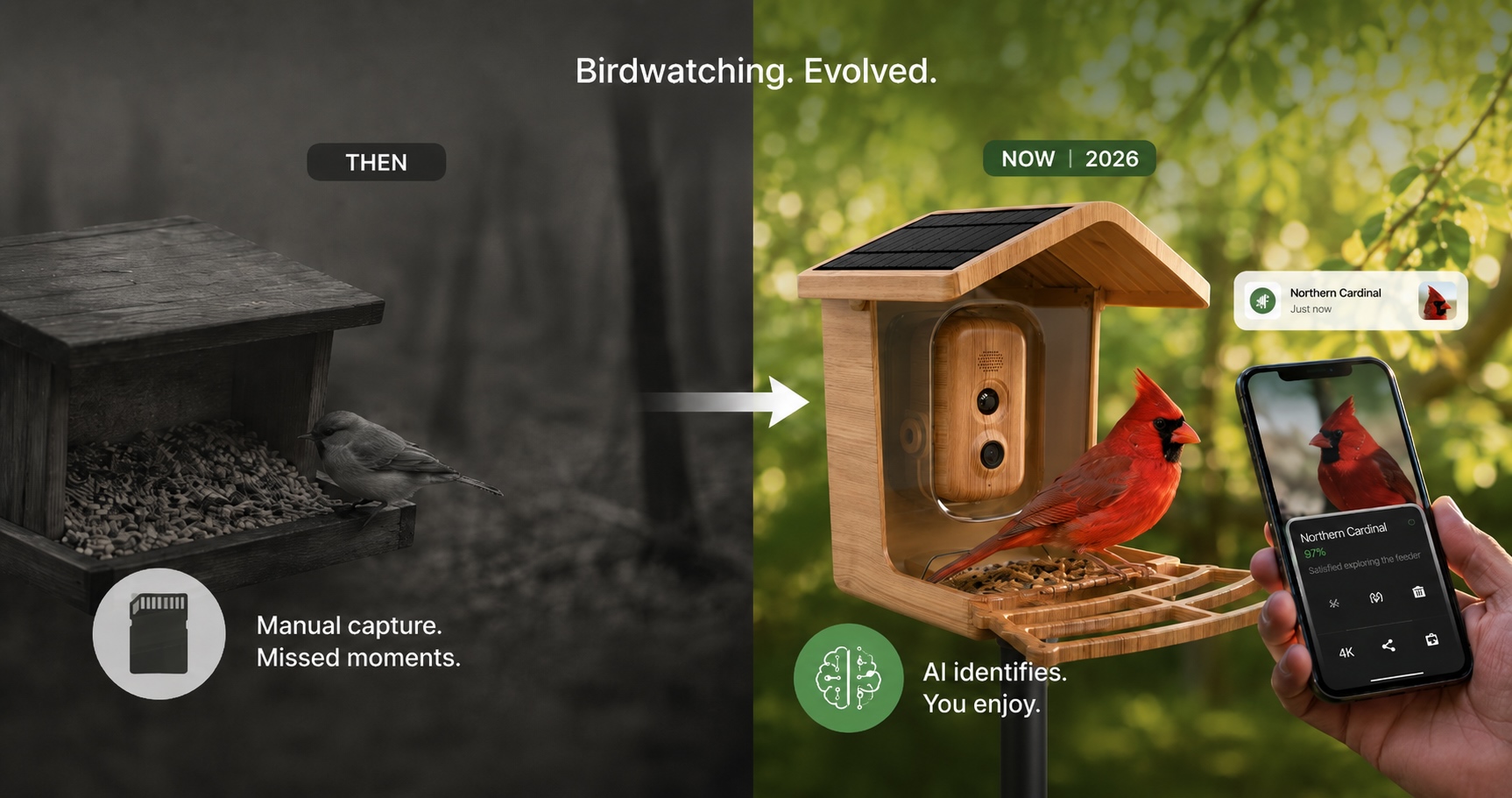
For OEM brands and private-label buyers entering or expanding in this category, that shift has a direct implication: the underlying technology platform determines whether the end product meets that experience expectation or falls short of it. Camera hardware that cannot deliver on AI identification, image quality, and app connectivity will not hold its review score past the first season of use.
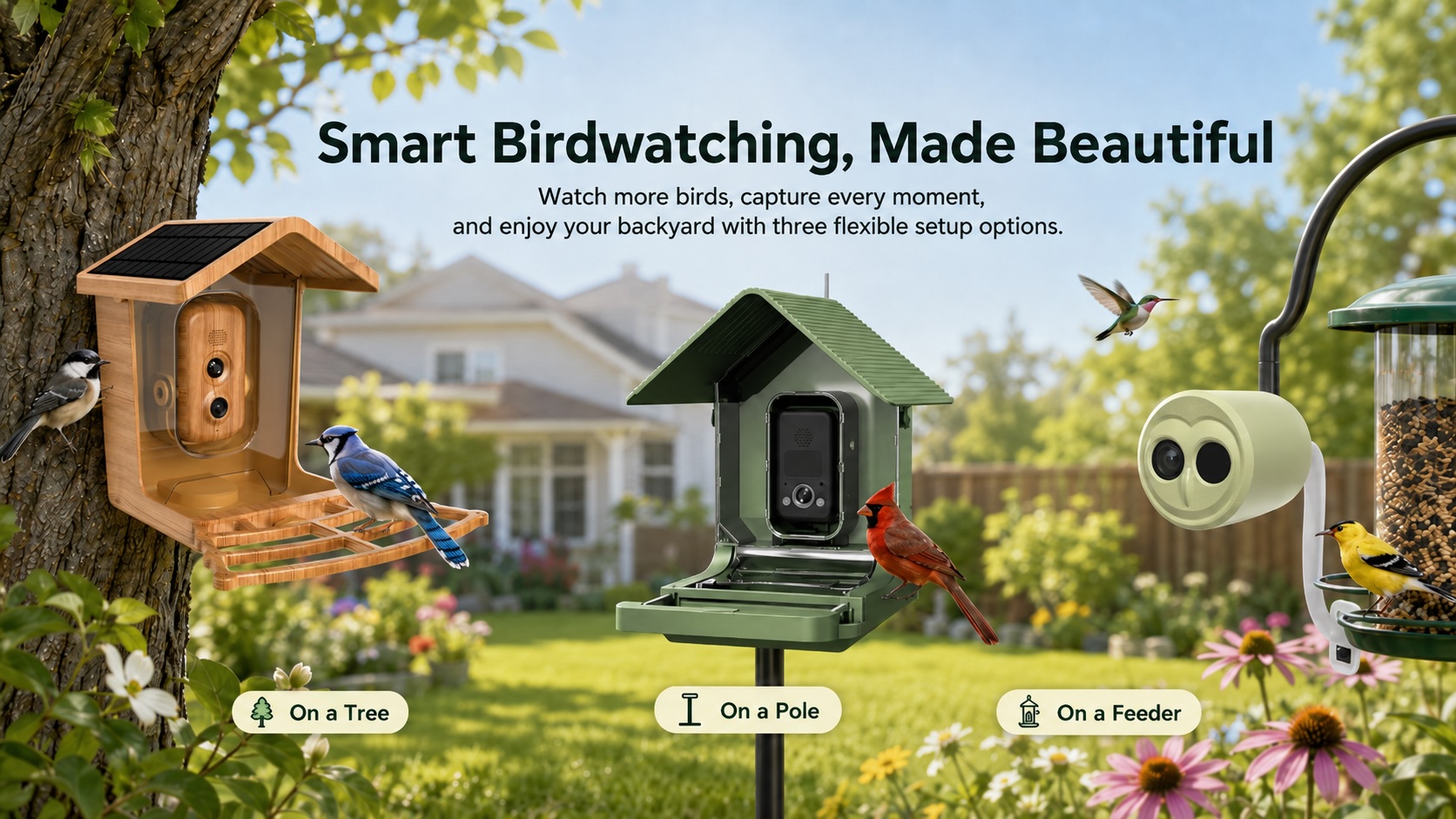
Willfine's birding camera platform is built around that buyer reality. The K600, K750, and K800 represent three distinct product positions within the category, all running on a shared technology foundation that includes 4K imaging, AI-powered species recognition, slow-motion capture, and the BirdKam app platform.
Why the Existing Market Has Gaps Your Brand Can Fill
The two most visible brands in the smart bird feeder camera category — Bird Buddy and Birdfy — have established the concept and built consumer awareness. What they have also done is define the ceiling of what the category is assumed to deliver, and that ceiling has limitations.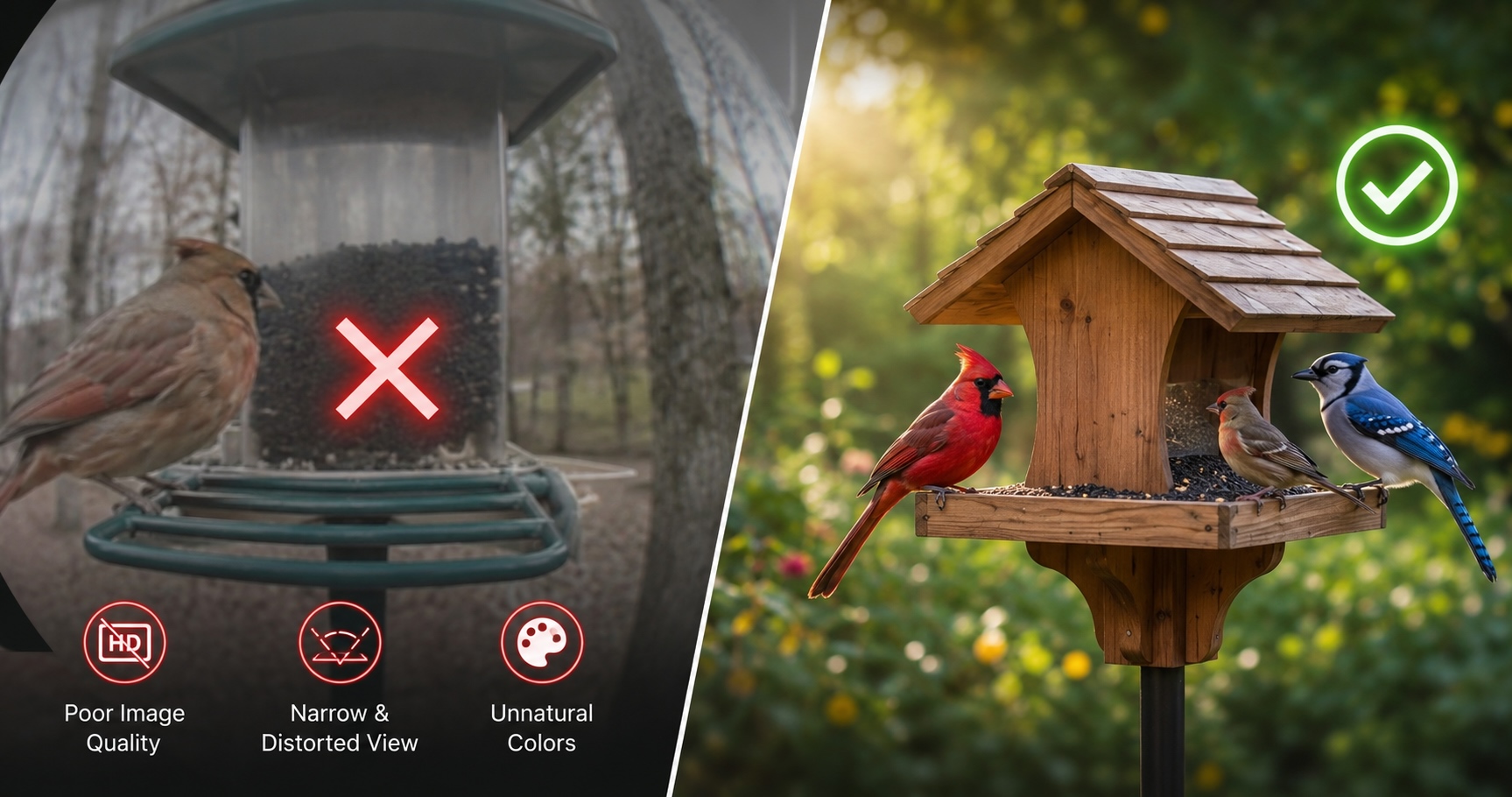
Image quality is the most consistent complaint in the public review record for existing market leaders. Users who purchase a premium-priced smart bird feeder camera expect the footage to match what they see with their own eyes at the feeder — accurate color, sharp feather detail, usable slow-motion. When it doesn't, the disappointment is proportional to the price paid.
Wide-angle coverage is a secondary gap. Feeders attract multiple birds simultaneously, and a narrow field of view means the camera captures one bird clearly while the more interesting group behavior happening at the edge of the frame is missed entirely. Distortion compounds this problem: wide-angle lenses that stretch and warp subjects at the edges produce footage that experienced birdwatchers recognize immediately as low-quality optics.
For an OEM brand positioning against established names, these gaps are the entry point. A product that demonstrably outperforms on image quality, field of view, and AI identification accuracy — at a competitive price — has a clear and defensible retail position.
The Willfine Birding Platform: Three Products, One Technology Foundation
Shared technology across the K600, K750, and K800:
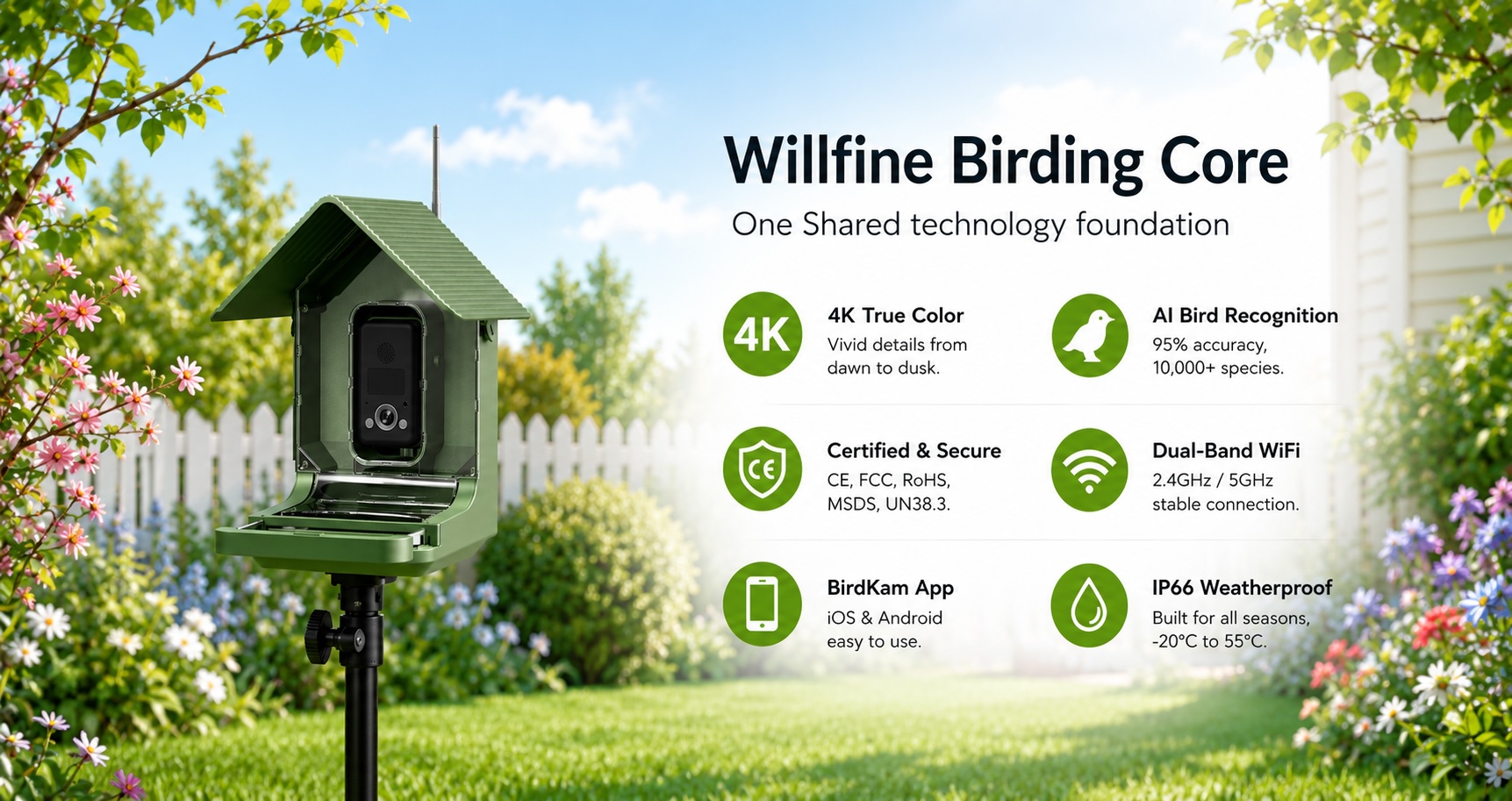
— AI species recognition: Identifies over 10,000 bird species at 95% accuracy. Identification happens at the moment of capture and pushes directly to the BirdKam app with species name and information. No manual lookup required.
— 4K imaging with true color reproduction: All three models capture at 4K resolution with image processing calibrated for accurate color rendering across variable outdoor light conditions — dawn light, direct midday sun, and dusk. The Blue Jay's blue and the Northern Cardinal's red appear as they do to the human eye, not as the camera's auto-processing decides they should look.
— 6x slow-motion capture: High frame-rate recording extends wingbeats, feeding behavior, and mid-flight moments into footage that can be reviewed frame by frame. In a category where most competitors offer standard video only, slow-motion is a differentiating feature that users notice immediately and reference consistently in positive reviews.
— BirdKam app platform: iOS and Android app supporting live streaming, push notifications, photo and video library, species identification history, and cloud storage. Available as a white-label deployment for OEM partners — the app carries your brand, not Willfine's.
— 2.4GHz / 5GHz dual-band WiFi: Automatic band switching maintains stable connectivity in backyard and garden environments where signal conditions vary. Live stream latency is minimized even in weaker signal areas.
— IP66 weatherproofing: Rated for continuous outdoor exposure across the operating temperature range of -20°C to 55°C. All three models are designed for year-round deployment without seasonal retrieval.
— Certifications: CE, FCC ID, FCC SDOC, RoHS, MSDS, UN38.3, IP66 — covering North American and European market requirements.
Product Positions Within the Lineup
K750 — The High-End Feeder Station
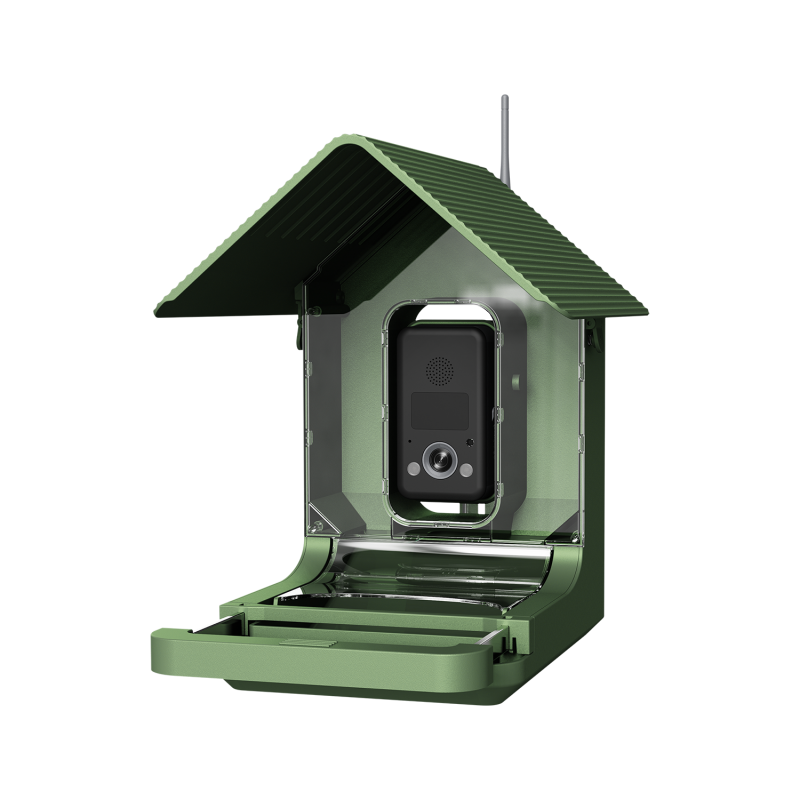
The K750 is built around a Sony 8MP sensor and positioned as the premium offering in the lineup. The integrated bird feeder design — a full feeder station with camera embedded — means the end product is a complete backyard installation rather than an add-on accessory. Key specifications that support a premium retail position: 10,000mAh battery for extended deployment without recharging, full-color night vision (night mode in color, not black-and-white), two-way audio, and 4K video with 1080P live transmission. For OEM brands targeting the upper end of the smart feeder category, the K750 provides the hardware baseline to compete directly with Bird Buddy and Birdfy at equivalent or superior specification.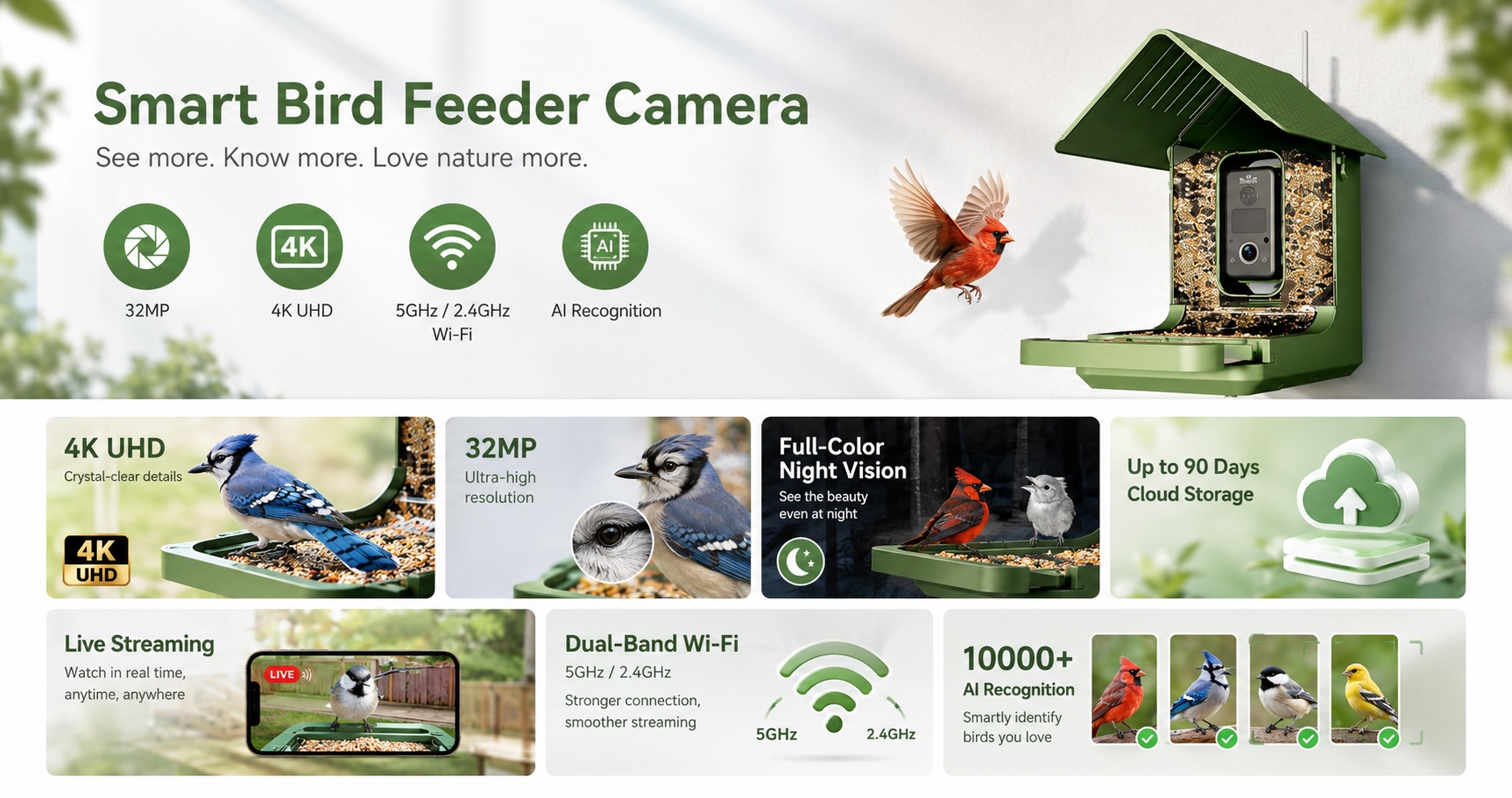
K800 — The Compact Universal Camera
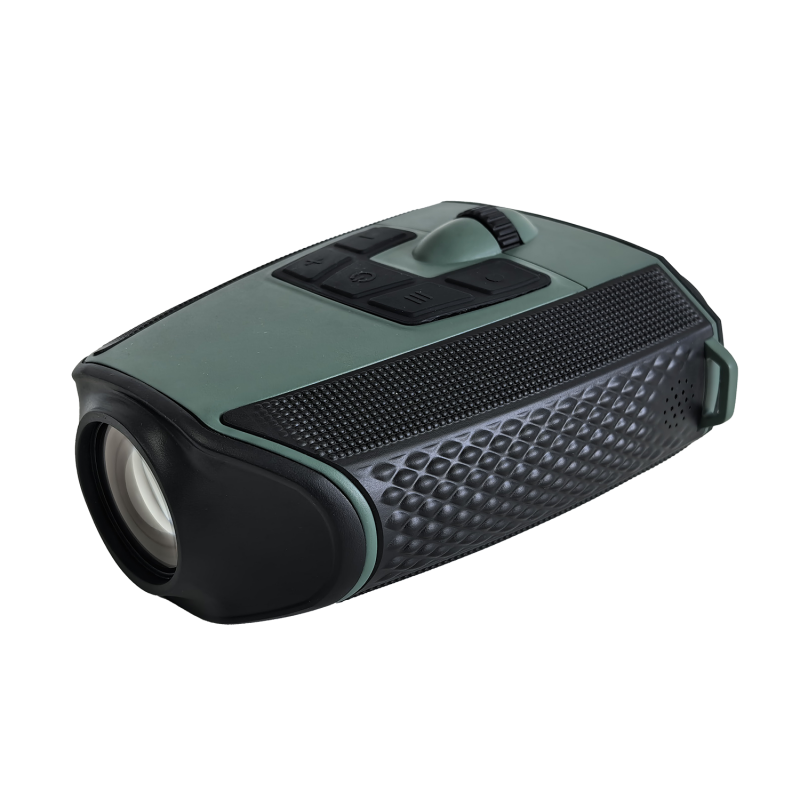
The K800 takes a different approach to the category: instead of an integrated feeder station, it is a palm-sized camera — smaller than a human hand at 5.9 × 5.9 × 6.28cm and 140g — that attaches to any existing bird feeder via a flexible mounting bracket. This form factor has a specific commercial advantage: it sells into a buyer segment that already has feeders and wants to add camera capability without replacing the entire setup. It also opens distribution channels that feeder station cameras cannot access, including birding specialty retailers and wildlife garden suppliers who sell to existing feeder owners. The BK800 features 4K video, slow-motion capture, 400ms trigger time, and the full BirdKam AI identification platform in a format that disappears into the feeder environment rather than dominating it.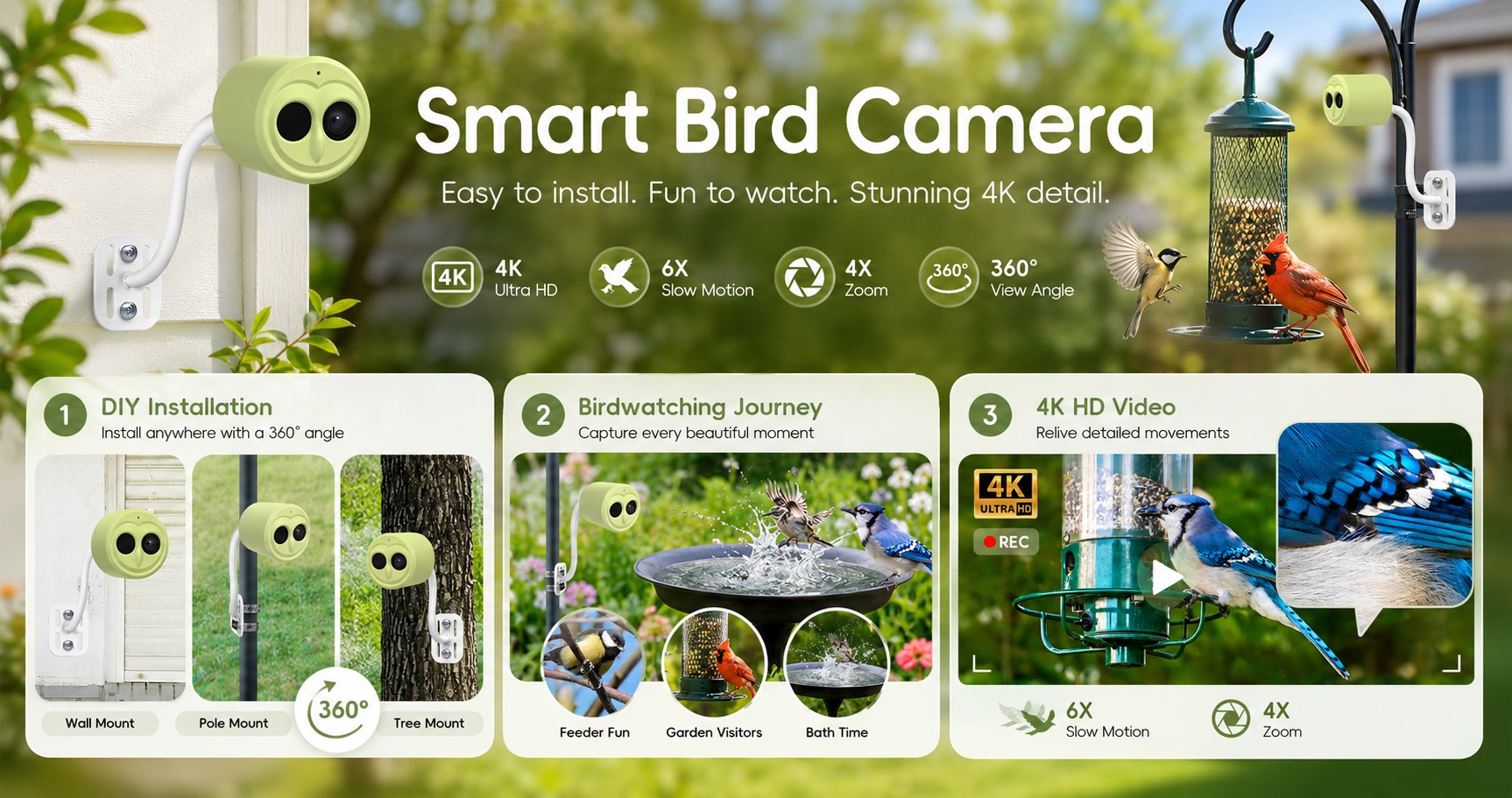
K600 — The Wide-Angle Solar Feeder
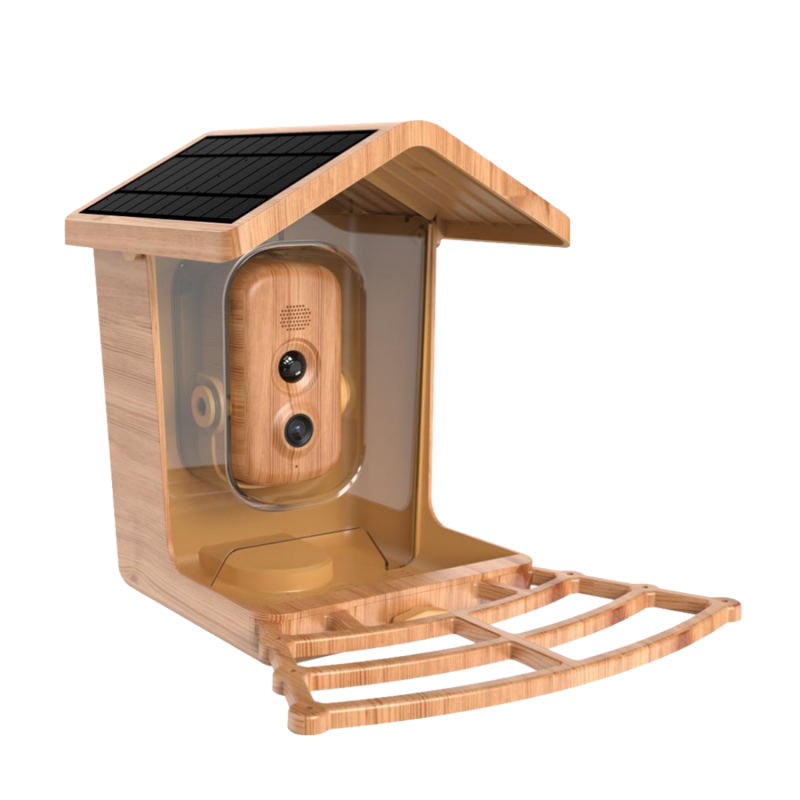
The K600 is differentiated by two specifications that address specific gaps in the existing market: a 130° ultra-wide-angle lens with optical distortion correction, and integrated solar charging. The 130° field of view — paired with a 120° PIR trigger angle — captures the full feeding area, including group behavior, simultaneous multi-bird visits, and the surrounding environment that gives birdwatching footage its natural context. The distortion correction is the critical qualifier: wide-angle lenses without correction produce the stretched, warped edges that experienced birdwatchers recognize as cheap optics. The BK600's correction algorithm maintains natural subject proportions across the full frame. The 5W solar panel paired with a 5000mAh battery addresses a consistent pain point in outdoor camera deployment — users who want to install the camera in a location away from power outlets without managing battery replacement cycles. For OEM brands targeting the value-to-mid segment of the market, the K600 offers a technically differentiated product at a price point that supports broader retail distribution.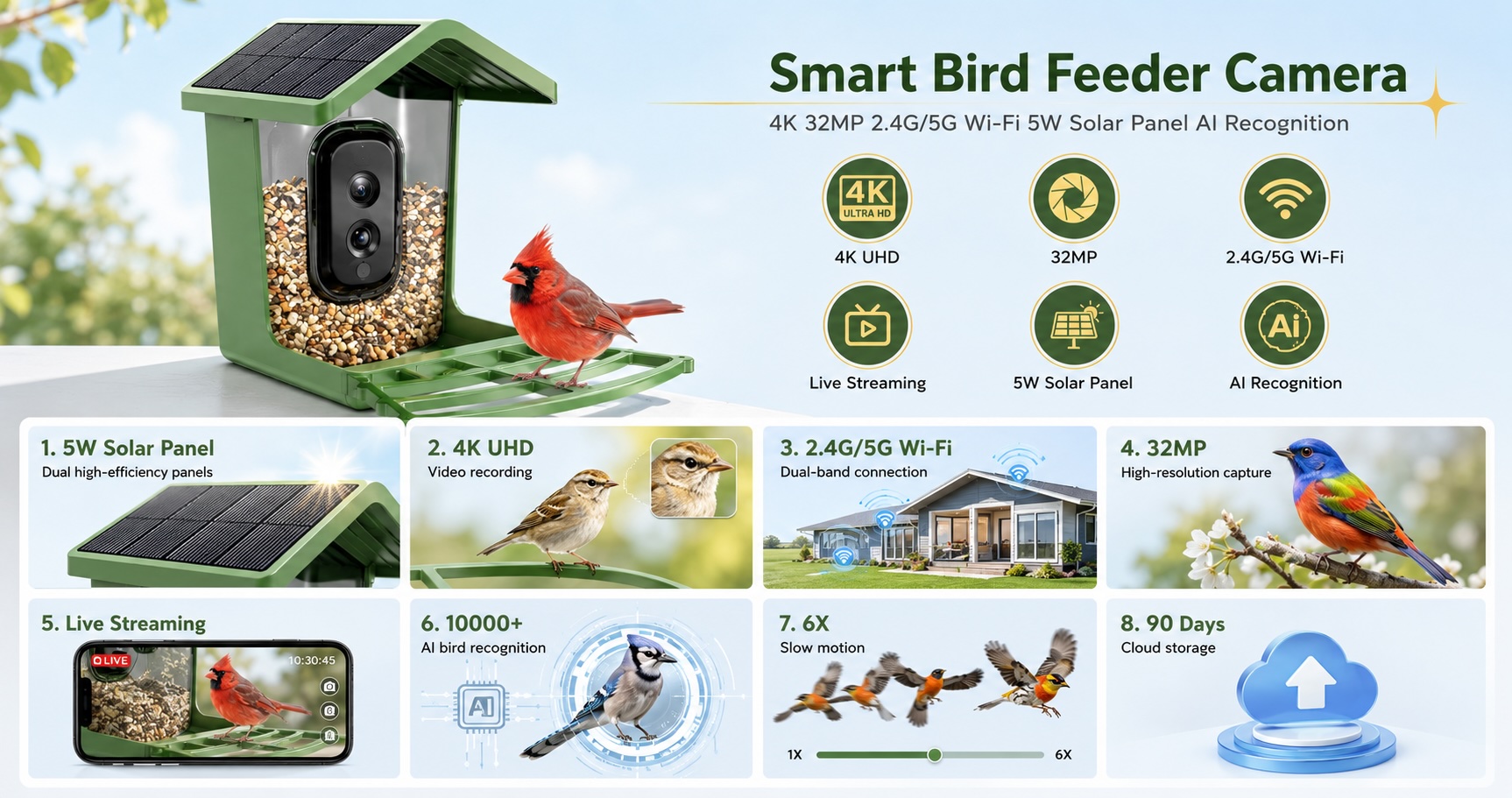
The BirdKam App: What It Means for OEM Brands
The app is not a secondary feature. In the smart bird feeder camera category, the app experience is the primary interface through which users interact with the product after the initial setup. A camera with strong hardware and a weak app loses users at the point where engagement should be building.
BirdKam provides the full platform: live streaming, AI identification with push notification, photo and video library with cloud backup, and species history log. For OEM partners, the app is available as a white-label deployment — your brand name, your brand identity, running on Willfine's identification and connectivity infrastructure.
This matters commercially because the app is where subscription revenue potential lives. Data plan subscriptions, cloud storage tiers, and premium feature unlocks are all revenue streams that operate through the app layer. OEM brands that own the app relationship own the recurring revenue relationship with the end user.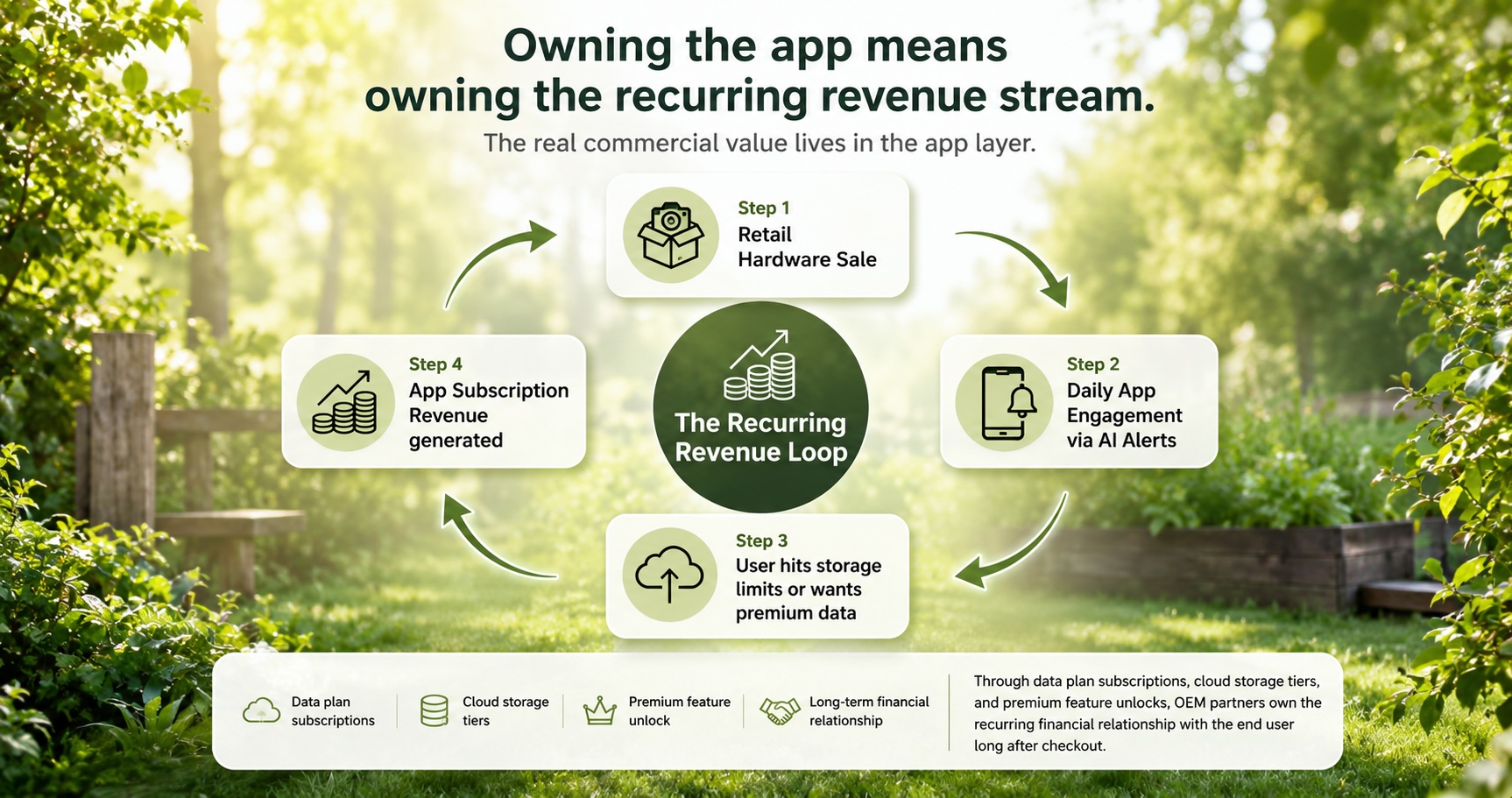
What OEM Buyers Are Actually Evaluating
For a brand assessing Willfine's birding platform as the basis for a private-label product, the relevant evaluation covers five areas:
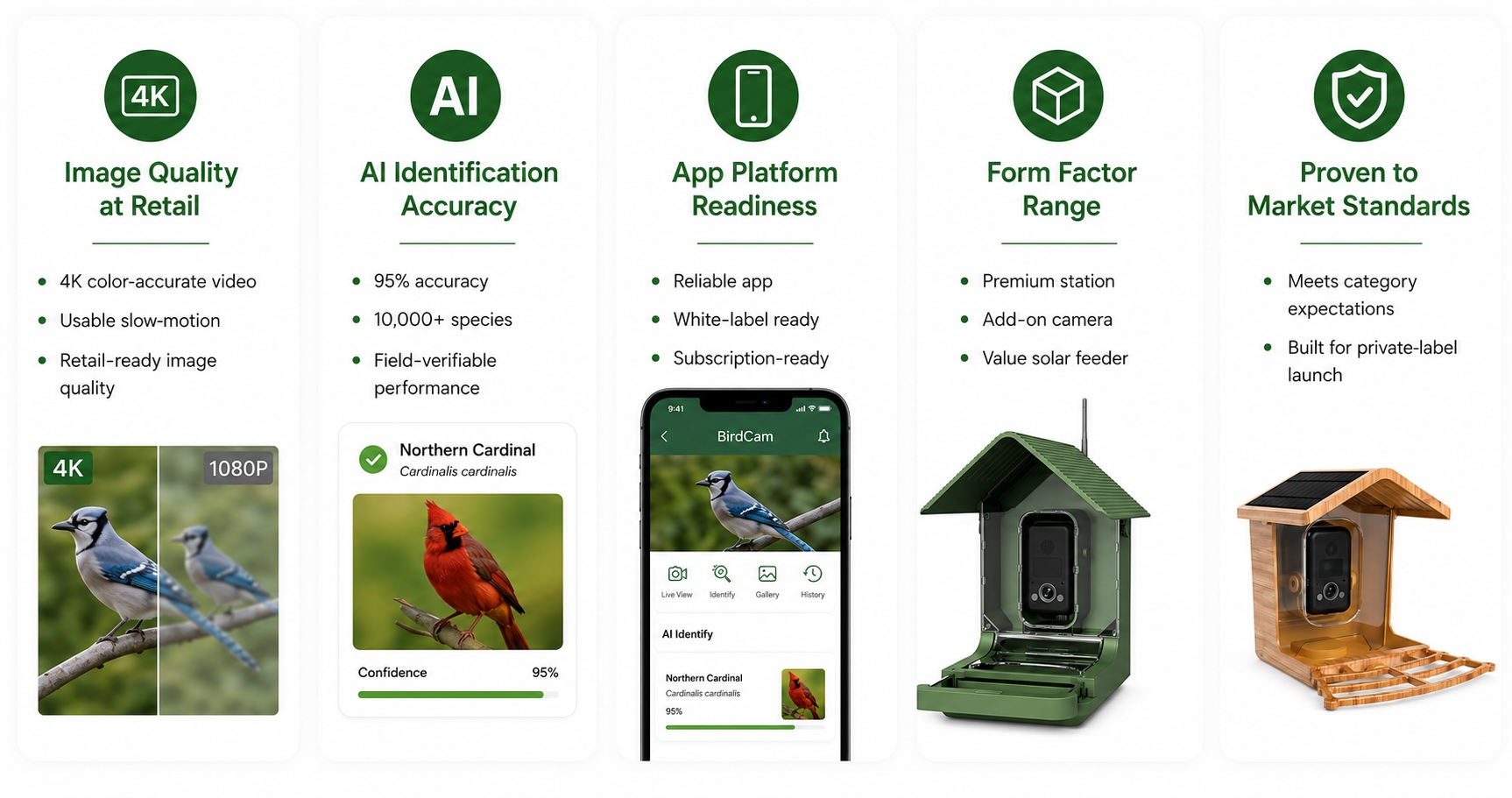
Image quality at retail: Does the camera produce footage that holds up to the comparisons buyers make on Amazon, at retail, and in YouTube reviews? 4K with accurate color and usable slow-motion does. 1080P with standard video does not, regardless of how it is marketed.
AI identification accuracy: 95% accuracy across 10,000+ species is a specification that can be stated in marketing and verified by users in the field. It is also a specification that the primary competitors have established as the category expectation — a product that identifies birds at lower accuracy generates negative reviews quickly.
App platform readiness: Does the app work reliably, does it support white-label deployment, and does it enable the subscription revenue model that makes the long-term unit economics work? BirdKam does.
Form factor range: Does the manufacturer offer products that can address multiple positions in the market — premium integrated station, universal add-on camera, value-segment solar feeder — or does the OEM buyer need to find multiple suppliers to build a complete lineup? Willfine's three-model platform covers all three positions.
Production and certification readiness: CE and FCC certification is a market entry requirement, not a differentiator. Willfine's products ship with full certification for both North American and European markets, which means the OEM buyer is not managing a separate certification process before launch.
Product Specification Summary
| K600 | K750 | K800 | |
| Form factor | Solar wood feeder station | Metal feeder station | Compact universal camera |
| Sensor / Resolution | 4K / 2K / 1080P / 720P | Sony 8MP · 4K | 4K / 2K / 720P |
| Field of view | 130° (distortion-corrected) | 94° | 94° |
| PIR trigger angle | 120° | 80° | 80° |
| Trigger time | 400ms | 0.4s | 400ms |
| Night mode | Black & White | Full Color | Black & White |
| Battery | 5000mAh + 5W solar | 10000mAh | 3000mAh |
| Two-way audio | Yes | Yes | — |
| Slow motion | Yes | Yes | Yes |
| Local storage | SD card 8–128GB | SD card 8–32GB | Internal 64GB eMMC |
| Cloud storage | Supported | Supported | Supported |
| WiFi | 2.4GHz / 5GHz | 2.4GHz / 5GHz | 2.4GHz / 5GHz |
| Waterproof | IP66 | IP66 | IP66 |
| App | BirdKam (white-label available) | BirdKam (white-label available) | BirdKam (white-label available) |
| Certification | CE · FCC · RoHS · UN38.3 | CE · FCC · RoHS · UN38.3 | CE · FCC · RoHS · UN38.3 |
| Operating temp | -20°C to 55°C | -20°C to 55°C | -20°C to 55°C |
Who This Platform Is Built For
Willfine's birding camera OEM program is suited to a specific buyer profile: brands that bring distribution access, retail relationships, or an existing customer base in the outdoor, garden, wildlife, or optical categories, and need a manufacturing partner that can deliver the hardware, software, and certification infrastructure to support a competitive product launch.
The program is particularly relevant for:
— Outdoor and garden brands looking to extend into smart home wildlife products without building a hardware development program from scratch
— Optical and birding specialty brands whose customers are already asking for connected camera products to complement binoculars and spotting scopes
— E-commerce brands with established audiences in the birdwatching, nature photography, or backyard wildlife categories
— Regional distributors in European markets where Bird Buddy and Birdfy have limited retail penetration and the category is in earlier stages of development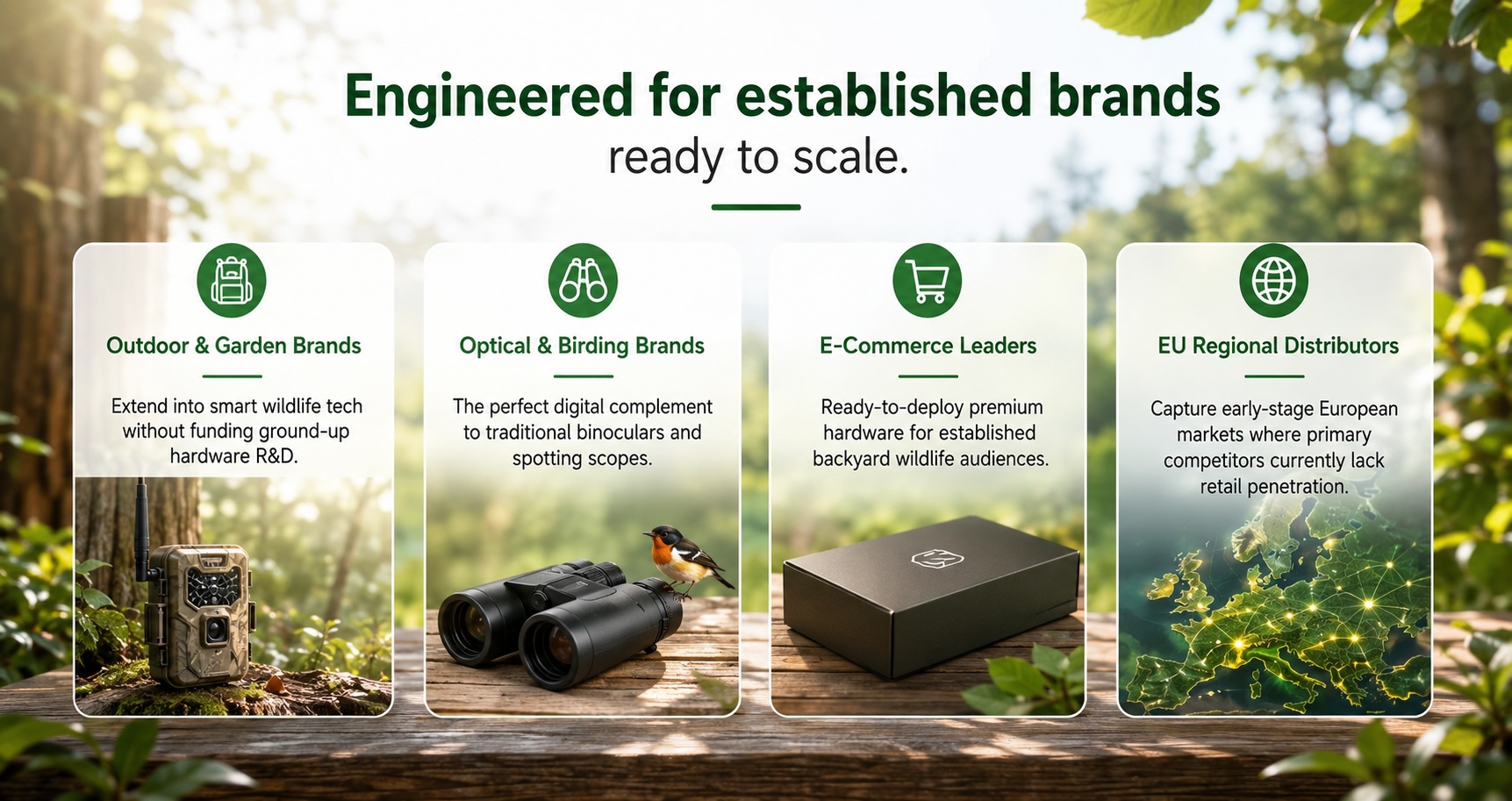
Next Steps
OEM evaluation of Willfine's birding platform begins with a technical consultation, sample unit access across the K600, K750, and K800, and a BirdKam app demonstration. White-label app deployment terms and OEM pricing are provided under NDA for qualified buyers.