EN
EN
How to Build a Profitable 4G Cellular Trail Camera Brand — Without Starting from Zero

A practical guide for distributors, brand owners, and OEM buyers entering the cellular wildlife monitoring market in 2025.
The market for 4G cellular trail cameras has shifted from early-adopter novelty to mainstream demand. Hunters want real-time game alerts without hiking to check an SD card. Farmers want perimeter visibility without running cable. Property managers want remote surveillance that works where Wi-Fi doesn't reach. The use case is proven — what the market still lacks is an adequate supply of quality brands to serveit.
Thatgap is where distributors and private-label brands have a clear opening. This article explains the market dynamics, what buyers expect from a cellular game camera in 2025, and why your choice of manufacturing partner determines whether your brand succeeds or stalls.

The market in numbers: why 4G trail cameras, why now
Trail cameras have been a fixture in hunting and wildlife monitoring for decades, but the category is in the middle of a meaningful technology transition. Motion-triggered cameras that store locally to SD cards are being displaced by always-connected models that push images to a mobile app the moment they're captured.
$375M+
Projected trail camera market value by 2034
18M+
Hunters worldwide using trail cameras in 2024
~60%
Of use cases are wildlife monitoring — the core segment
The drivers are structural, not cyclical. Cellular network coverage has expanded into rural and wilderness areas that were previously too remote for reliable connectivity. Smartphone penetration means every end-user already has the device needed to receive push alerts. And the proliferation of outdoor recreation — hunting, wildlife photography, farm management, conservation research — keeps the addressable buyer pool growing.
What hasn't kept pace is brand supply. A small number of established names dominate retail shelf space and online search rankings. That concentration is an opportunity: the buyers are there, and the category keywords remain less competitive than consumer electronics categories of equivalent market size.
What end-users actually expect from a cellular trail camera in 2025
Understanding the end-user requirement is essential before evaluating manufacturers. The feature floor has risen over the past two years. A brand entering the market today with a camera that was competitive in 2022 will face immediate credibility problems.
Current buyer expectations across the core segments:
- HuntingTrigger-to-transmission speed measured in seconds, not minutes. High-resolution night images (IR flash, no white glow that spooks animals). App with geo-tagged camera management across multiple units on a single property.
- AgricultureLong battery life or solar charging. Weatherproofing rated for sustained outdoor exposure. Reliable transmission across carrier bands common in rural areas (not just urban-optimized LTE bands).
- SecurityMotion classification to reduce false alerts (distinguishing vehicles from animals from humans). Immediate push notification with image preview. Optional video clip transmission for event verification.
- ConservationInstitutional purchasing requires bulk pricing, data export formats compatible with research tools, and documented hardware reliability for multi-year deployments.
A brand that can confidently address all four segments — with the same hardware platform, differentiated by app features and positioning — has a significant advantage over niche-only competitors.
Willfine Tank200: what the hardware delivers
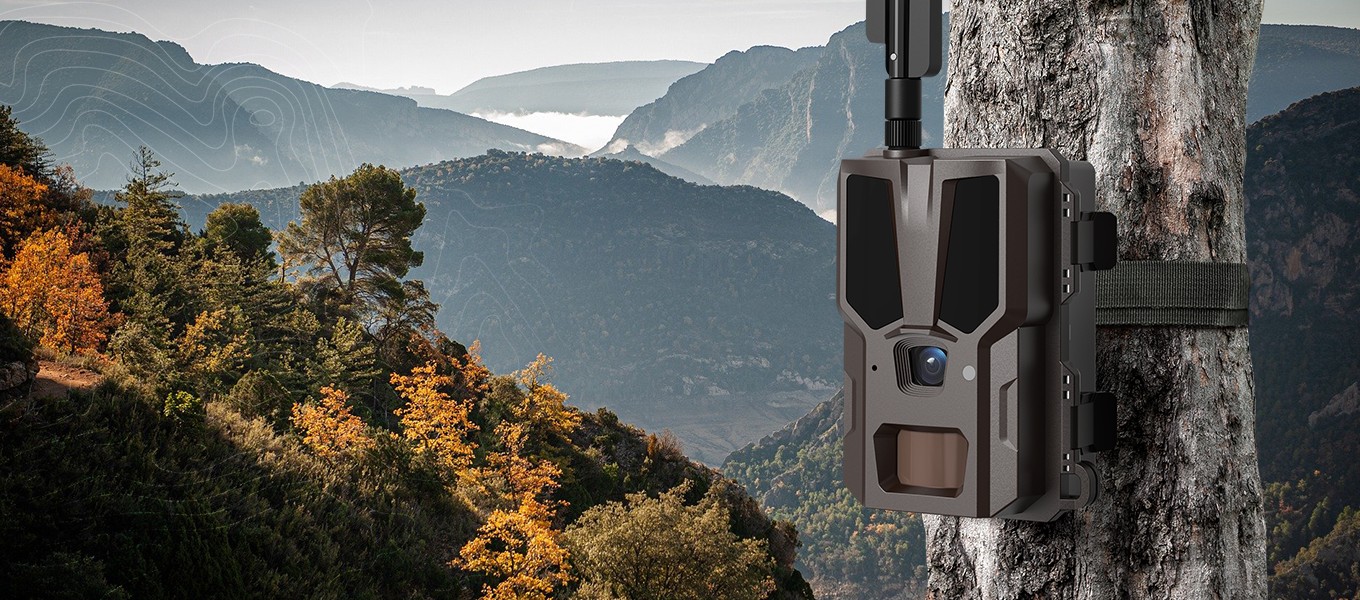
The Willfine Tank200 is a purpose-built 4G LTE trail camera designed for OEM and private-label programs. Unlike many factory offerings that treat the software layer as an afterthought, the Tank200 ships as part of an end-to-end system: hardware, firmware, server infrastructure, and a branded app.
4G LTE connectivity
Multi-band support for reliable transmission across North American and European carrier networks, including in areas with partial coverage.
High-resolution imaging
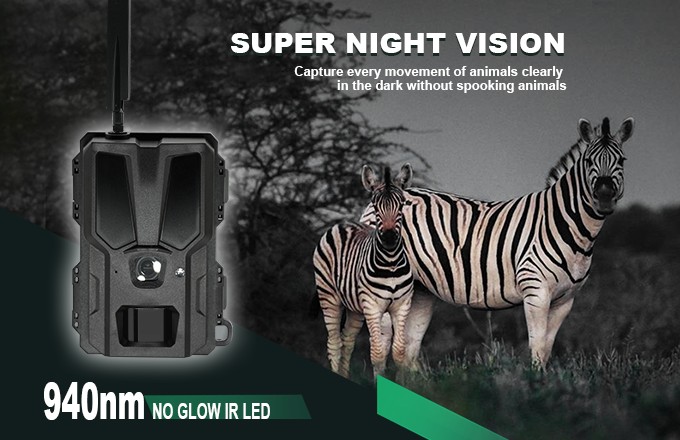
Photo and video capture engineered for low-light and night conditions — the performance window that defines user satisfaction in hunting and security applications.
Smart dashboard
Operator-facing analytics covering device activation, data usage, alert volume, and user engagement — inputs needed to manage a growing camera fleet.
Remote deployment grade
Designed for environments where physical access is infrequent. Extended battery cycles, weather sealing, and field-replaceable components reduce service overhead.
The R&D team behind the Tank200 includes more than 100 engineers and holds over 20 active patents across imaging, connectivity, and power management. For OEM buyers, that depth translates into a hardware baseline that avoids the common failure modes — dropped transmissions, accelerated battery drain, night image quality degradation — that generate returns and negative reviews.
Three revenue streams, not one
Most wildlife monitoring camera brands model their business entirely around hardware margins. The Tank200 platform enables a different structure — one where hardware is the customer acquisition vehicle and recurring subscription revenue is the margin engine.
Device sales
One-time margin per unit. Competitive but bounded — the camera market benchmarks pricing against established brands. Entry point for the customer relationship.
Data plan subscriptions
Monthly recurring per active camera. When the plan is owned and managed by the brand rather than passed through to a carrier, margins can reach 80%. Every camera sold is a subscription enrolled.
App-layer upsells
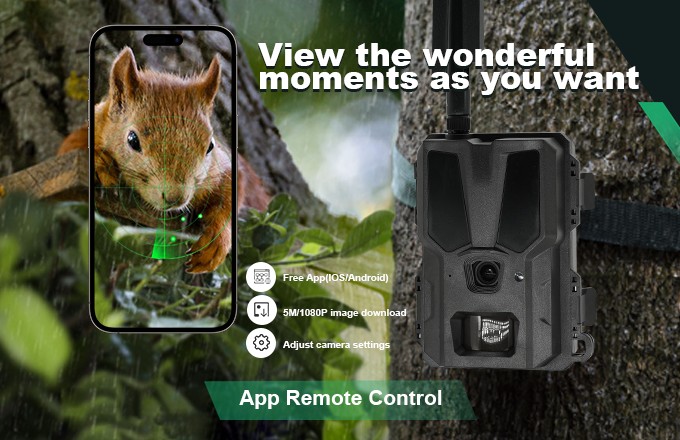
Premium storage tiers, advanced alert logic, multi-camera management packs, and fleet analytics for commercial buyers. The app platform Willfine provides enables these without custom development.
For buyers building a distribution business, the subscription layer fundamentally changes the unit economics. A camera that generates $15/month in data plan revenue over a 3-year active life produces more total revenue from that single activation than most hardware margins permit.
OEM program specifics: timelines, customization, and scale
The factors that most often determine whether a brand launch succeeds are not the ones that get the most attention in product briefs. Component specs matter, but what actually creates or destroys margin are: how quickly you reach market, how reliably you fulfill volume, and how much you spent getting there.
Willfine's OEM program is structured around three practical commitments:
Time to market: Customized trail camera white label products — including hardware configuration, brand identity, packaging, and app deployment under the partner's name — are delivered to market-ready status within 90 days. For a category with seasonal demand peaks (North American hunting seasons concentrate in Q3–Q4), a manufacturer that requires 6–9 months for customization is not a usable option.
Production capacity: Willfine manufactures in excess of 100,000 units per month, a throughput level maintained through supply chain disruptions including the semiconductor shortage period. Capacity claims from factories are only meaningful when they've been stress-tested; this one has been.
Full customization scope: Hardware aesthetics, feature configuration, firmware, branded app, server environment, and packaging are all within scope. A partner brand does not share infrastructure or app space with competing brands on the Willfine platform.
Who this partnership is built for
The Tank200 OEM program is relevant to a specific profile of buyer. It is not the right fit for every inquiry Willfine receives, and the program works best when the partner brings distribution or market access and lets Willfine own the product execution.
The program is designed for: established outdoor sporting goods distributors looking to add a private-label hardware line; e-commerce brands with existing customer bases in hunting, farming, or security that want to extend into connected hardware; regional distributors in markets where the major North American cellular camera brands have limited presence; and investment-backed startups targeting the outdoor tech segment with a branded platform play.
The trail camera market window for new brands is open now — but market share in categories like this consolidates quickly once one or two names establish review volume and search presence. The brands that enter in the next 12–18 months will have a meaningful structural advantage over those that follow.
To evaluate the Tank200 for an OEM program, the next step is a technical consultation and sample unit request. Willfine provides hardware specifications, app demo access, and OEM pricing under NDA for qualified buyers.
Contact Willfine to initiate the conversation.