EN
Key Hardware and Software Specs Brands Must Verify Before Sourcing Smart Bird Feeder Cameras

The global smart bird feeder market has expanded rapidly, evolving from basic backyard novelty items into fully connected IoT imaging platforms. However, for hardware brands, OEM buyers, and regional distributors entering this category, launching a product line comes with hidden sourcing and technical risks. High false-trigger rates, rapid battery depletion, unstable Wi-Fi throughput, and inaccurate AI species identification remain the primary drivers of negative end-user reviews and costly product returns.
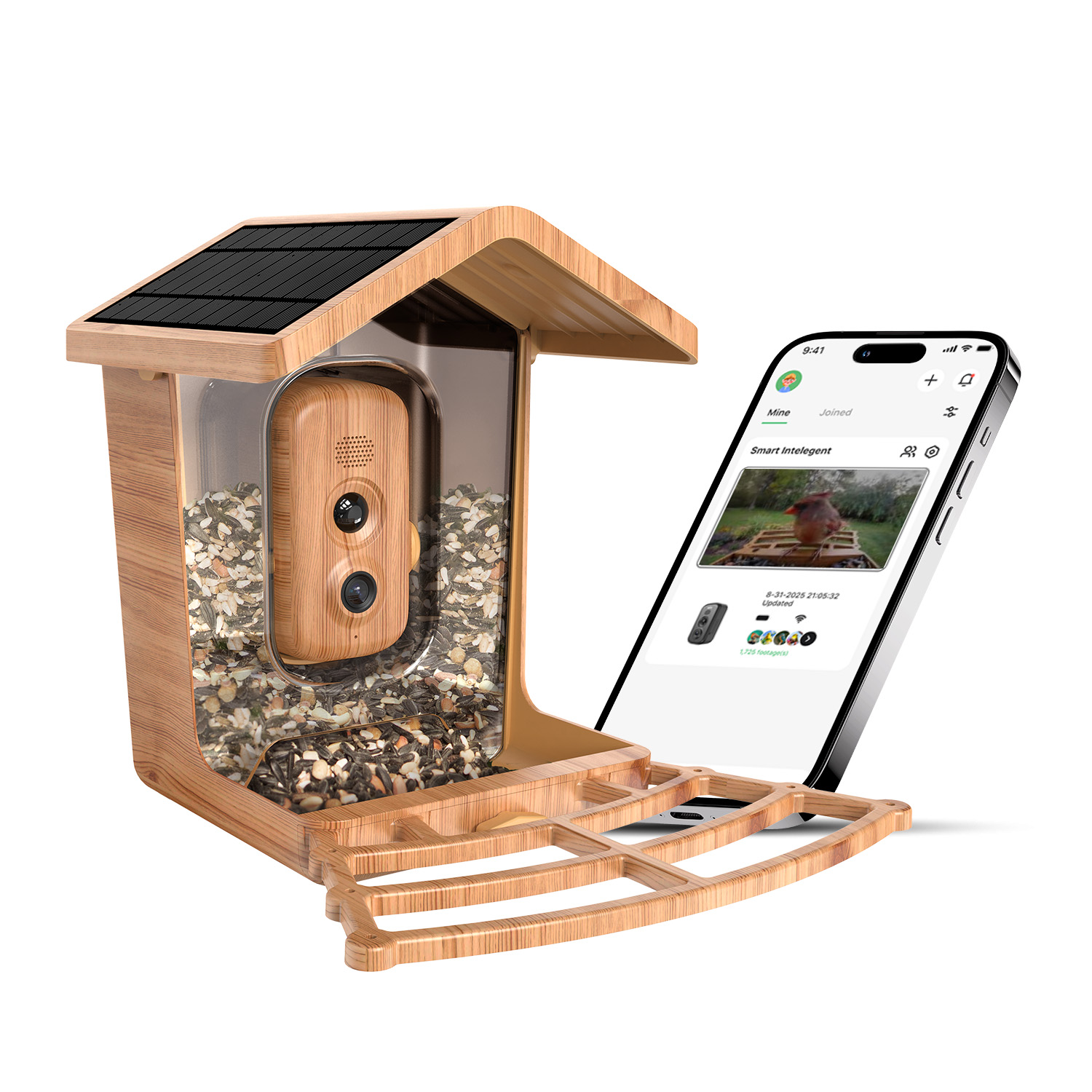
Evaluating a smart bird feeder camera requires product managers to look far beyond generic factory spec sheets. Before committing to an OEM or ODM manufacturing agreement, brand teams must systematically verify critical hardware performance parameters, optical calibration, AI processing architecture, and software ecosystem scalability. This guide outlines the essential dimensions brands must evaluate to build a resilient, high-margin smart birding product line.
1. Imaging System and Optics: Engineered for Daylight Birding
Unlike stationary home security cameras designed for broad area coverage or night illumination, smart bird feeder cameras operate at extremely close optical focal distances. Furthermore, because wild birds are strictly diurnal creatures, daytime optical clarity, shutter response speed, and focus precision take absolute priority over superfluous infrared night-vision LEDs.
When reviewing optical assembly specifications with an ODM supplier, demand verification on three core engineering elements: 。
Resolution and Sensor Pipeline: A true 4K Ultra-HD sensor provides the pixel density required to capture fine feather textures and subtle species identification markings. High-end flagships should also support advanced features such as 4K slow-motion video capture and 4x digital zoom, providing end users with engaging, shareable content for social media loops.
Field of View (FOV) and Sensor Matching: The optical wide-angle lens (typically around 130° FOV) must be precisely matched with the passive infrared (PIR) motion sensor’s detection envelope (such as a 120° PIR zone). Poor sensor alignment results in late recordings, cropped subjects, or missed bird visits.
Close-Focus Calibration: Feeder perches are positioned mere inches away from the camera lens. Ensure the optical module incorporates custom distortion-correction algorithms and a fixed focus tuned explicitly for close-range macro birding.
2. Real-World Power Efficiency and Weatherproof Housing
Smart feeder cameras operate outdoors year-round, exposed to driving rain, UV degradation, and severe seasonal temperature swings.
Power Management Architecture: Factory standby battery figures can be misleading. Product teams should evaluate power consumption under high-frequency PIR trigger scenarios involving live streaming, 5W solar panel charging efficiency, and battery capacities ranging from 5000mAh to 10,000mAh.
Enclosure Standards: An IP66 weather-resistance rating is mandatory to survive multi-season exposure without internal moisture buildup or lens fogging. Additionally, housings should utilize UV-stabilized polymers or powder-coated die-cast alloys with chew-resistant cabling to withstand wildlife interaction.
3. AI Species Accuracy and Edge-Cloud Architecture
AI bird species identification is the hero feature driving consumer subscription conversion and brand loyalty. However, marketing claims advertising databases of 10,000+ species mean very little if regional recognition fails in local backyards.
Edge AI vs. Cloud AI Inference: A hybrid AI processing architecture—utilizing low-latency on-device Edge AI for rapid motion filtering and cloud servers for deep neural classification—drastically reduces cloud bandwidth overhead while suppressing false alerts caused by swaying branches, rain, or squirrels.
Target-Market Validation: Verify that the AI engine achieves validated accuracy (up to 95%) on the common backyard bird species native to your target sales regions, such as North America or Western Europe.
4. App Ownership and White-Label Software Ecosystem
The mobile application serves as the primary daily touchpoint between your brand and the consumer. Sourcing hardware from a partner with a mature software infrastructure—such as WILLFINE’s proprietary BirdKam platform—enables brands to launch fully customized, white-label iOS and Android apps.
A complete white-label software strategy ensures brand ownership over:
· Brand visual identity, App Store publishing, and custom user interface (UI) themes.
· End-user account management and customer database retention.
· Flexible recurring subscription billing models (Free vs. Premium tiers) and over-the-air (OTA) firmware update roadmaps.
5. Data Governance, GDPR, and Cloud Security
For brands selling connected hardware internationally, cloud server architecture carries significant regulatory implications.
Regional Compliance: Products distributed across the European Union and EEA must comply with strict GDPR frameworks regarding user video storage, privacy disclosures, and validated cross-border data transfer mechanisms.
Vendor Lock-In Mitigation: Confirm whether user account databases and media assets can be exported, ensuring your brand retains long-term commercial independence.
Partnering for OEM/ODM Success
Selecting the right smart bird feeder platform requires balancing optical precision, power management, AI recognition, and white-label software ownership.
WILLFINE is a leading outdoor imaging platform developer offering turnkey OEM/ODM solutions. Its comprehensive hardware lineup—including the solar-powered BK600, the 4K Ultra-HD BK750, and the compact 4K slow-motion/zoom BK800—combines IP66-rated enclosures with the BirdKam cloud and app ecosystem. Supported by accessible MOQ thresholds (100–200 units for logo branding; 500 units for custom packaging), WILLFINE helps global brands build scalable, high-margin smart birding lines.
Contact WILLFINE today to request test samples and discuss your OEM/ODM product brief.