EN
TEST——How to Evaluate PIR Motion Detection in Cellular Trail Cameras: An OEM Guide

Motion detection is one of the most important factors in the performance of a cellular trail camera. A camera may offer high-resolution imaging, reliable 4G connectivity, and advanced AI features, but if its motion detection system misses important activity or captures too many irrelevant events, the overall user experience suffers.
For hunting camera brands and OEM/ODM buyers, this creates challenges beyond image quality. Poor motion detection performance can lead to unnecessary cellular data consumption, shorter battery life, excessive notifications, and increased customer support requests.
Yet evaluating motion detection is not as simple as comparing advertised detection ranges or counting PIR sensitivity settings. Real-world performance depends on how the passive infrared (PIR) sensor, camera optics, embedded firmware, image processing, and cellular transmission system work together.
This guide explains how to evaluate PIR motion detection in cellular trail cameras, establish practical field-testing procedures, and identify the technical capabilities that matter when selecting an OEM/ODM camera platform.
1. Understanding PIR Motion Detection in Cellular Trail Cameras
How Does a PIR Sensor Work?
A passive infrared (PIR) sensor detects changes in infrared radiation within its field of view. When a person or animal moves across the monitored area, the changing thermal pattern can generate a trigger signal that wakes the camera and initiates image or video capture.
Unlike a conventional video-based motion detection system, a PIR sensor does not continuously analyze visible images to identify movement. It responds to changes in infrared energy.
This distinction matters because PIR performance depends on the temperature contrast between the moving subject and its surroundings, the direction of movement, the subject's size, and the detection characteristics of the sensor.
An animal moving across the sensor's detection zones may generate a stronger signal than one moving directly toward the camera. Similarly, an animal can become more difficult to detect when its thermal contrast with the background is low.
For OEM buyers, understanding these characteristics is essential before comparing sensor specifications.
Four PIR Performance Parameters That Buyers Should Evaluate
Detection range
Detection range describes the maximum distance at which the system is designed to respond to a qualifying target under specified conditions.
However, an advertised maximum range is not a guarantee that every animal will be detected at that distance. Detection probability varies with subject size, temperature contrast, movement direction, and environmental conditions.
A useful supplier evaluation should therefore measure detection performance at multiple distances, rather than relying exclusively on a maximum-range specification.
PIR sensitivity
PIR sensitivity determines how readily the system responds to changes in infrared signals. Depending on the sensor and firmware architecture, sensitivity may be adjusted through different threshold levels or detection parameters.
Higher sensitivity can improve responsiveness to weaker thermal signals, but it can also increase unwanted triggers in challenging environments.
Detection range and sensitivity are distinct but interrelated parameters. Changing the sensitivity setting can affect the effective distance at which certain subjects are detected.
The number of available sensitivity levels is less important than whether those settings produce predictable, measurable differences in field performance.
Detection angle
The PIR detection angle defines the sensor's thermal detection coverage, while the camera lens field of view determines the visible scene recorded in images.
These two areas should be evaluated together.
If the PIR detection coverage extends beyond the camera's imaging area, the camera may respond to movement that does not appear in the captured frame. Conversely, a wider camera view does not necessarily mean the PIR sensor can detect subjects throughout that entire image.
The relationship becomes particularly important when an OEM platform supports multiple lens configurations.
Trigger speed
Trigger speed describes the time between a qualifying detection event and a defined point in the camera's capture process.
Buyers should confirm exactly how this parameter is measured. A manufacturer's trigger-speed specification does not necessarily represent the time required to obtain a usable image of a moving animal.
For fast-moving wildlife, effective performance depends on the combined behavior of the PIR sensor, wake-up process, image sensor, exposure settings, and camera orientation.
OEM evaluation principle: Do not assess detection range, sensitivity, detection angle, and trigger speed independently. Evaluate how these parameters work together to capture the intended subject under realistic deployment conditions.
2. Why False Triggers Matter More in Cellular Trail Cameras
Unwanted captures are frustrating on any trail camera. On a cellular trail camera, they can also affect operating costs and battery endurance.
Depending on the device architecture and upload policy, a motion event may initiate several processes:
-
The PIR sensor detects a qualifying infrared change.
-
The camera wakes its image sensor and captures a photo or video.
-
The processor compresses or analyzes the captured content.
-
The system determines whether the content should be stored, transmitted, or discarded.
-
If an upload is required, the cellular subsystem transmits data to the designated destination.
Each operation consumes energy. Cellular communication can add substantial power demand, although the actual consumption depends on the modem state, signal quality, transmission duration, and network behavior.
Not every capture necessarily results in an upload. Some cameras store images locally, transmit thumbnails, upload only selected events, or apply AI filtering before transmission.
For this reason, buyers should distinguish between three different problems:
-
PIR false activations: The sensor triggers when no intended target event has occurred.
-
Irrelevant captures: A real movement event is detected, but the captured content is not useful for the intended application.
-
Unwanted uploads or alerts: The system transmits or notifies the user about content that could have been filtered or deprioritized.
These problems may require different solutions.
Common Environmental Causes of Unwanted Triggers
Sunlight and changing thermal backgrounds
Direct sunlight can heat vegetation, rocks, and other surfaces. As the temperature distribution changes, moving objects or changing thermal patterns may produce signals that activate the PIR system.
Moving vegetation
Branches and tall grass can create unwanted activations under certain thermal conditions. The problem is more likely when vegetation occupies sensitive parts of the detection area.
Low thermal contrast
When background temperatures approach the temperature of the target animal, detection may become less reliable. Raising sensitivity may help in some circumstances, but its effectiveness must be verified rather than assumed.
Camera placement
Improper mounting height, camera angle, and orientation can create unnecessary background coverage or reduce the time a moving animal remains within the effective detection area.
The objective is not to eliminate every unwanted event. It is to achieve an appropriate balance between target detection, missed events, data usage, and battery consumption.
How to Evaluate the Cost of Unwanted Captures
For a cellular camera program, the operational impact of motion detection should be measured at the system level.
A practical evaluation can track:
Daily cellular data usage = Total uploaded data during the test ÷ Number of test days
Daily unwanted upload count = Unwanted uploaded events ÷ Number of test days
Average data per uploaded event = Total uploaded data ÷ Number of uploaded events
These figures can be combined with the actual cellular pricing model to estimate data-related operating costs.
However, the financial impact depends on whether a service plan uses pooled data allowances, fixed monthly subscriptions, usage-based charges, or additional fees for particular content types.
An unwanted event does not always create a separate monetary charge.
Battery impact should also be measured directly. Fewer uploads may reduce cellular transmission energy, but the camera may still consume power during PIR activation, sensor wake-up, image capture, and local AI processing.
For OEM buyers developing subscription-based products, the best motion detection architecture is the one that balances capture reliability with the overall cost of operating the device.
3. How to Test and Calibrate PIR Detection Performance
A supplier's specification sheet provides a starting point. It does not replace structured field validation.
Effective PIR evaluation requires repeatable testing, clear performance metrics, and realistic deployment conditions.
Step 1: Define the Intended Detection Scenario
Before adjusting sensitivity, identify what the camera is expected to detect.
For example, a cellular hunting camera positioned along a narrow game trail has different detection requirements from one monitoring an open feeding area.
The evaluation should specify:
-
Target subjects, such as deer, smaller mammals, people, or vehicles.
-
Expected subject sizes and movement patterns.
-
Required detection distances and image coverage.
-
Typical mounting height and installation conditions.
-
Daytime, nighttime, and seasonal operating conditions.
-
Desired photo, video, and notification behavior.
These requirements establish what constitutes a successful capture.
A high detection rate is not meaningful unless the test reflects the target application's actual operating conditions.
Step 2: Establish a Consistent Test Configuration
Start with a documented baseline.
Record the camera model, hardware revision, firmware version, lens configuration, PIR sensitivity, trigger interval, mounting position, and power supply.
For cellular cameras, also record the network provider, signal conditions, transmission settings, and data upload policy.
Only change one major test variable at a time when evaluating its effect.
For example, compare several sensitivity settings while maintaining the same camera position, test subject, distance, and movement path.
This helps distinguish the impact of sensitivity from environmental and installation differences.
Step 3: Test Multiple Distances and Movement Directions
A robust PIR test should include subjects moving across the detection area and subjects approaching the camera.
Lateral movement often produces different detection behavior from direct approach because of how the target crosses the sensor's detection zones.
Tests should also cover near, intermediate, and distant positions relevant to the intended application.
At each position, record whether the event was detected and whether the resulting image contains a usable view of the subject.
For controlled tests, repeat each movement pattern enough times to assess consistency.
A single successful trigger at the advertised maximum range is not sufficient evidence of reliable field performance.
Step 4: Evaluate Environmental Performance
Laboratory tests can provide repeatable comparisons, but they do not represent every outdoor condition.
Field validation should include the environments in which the final product is expected to operate.
| Test condition | What to evaluate |
|---|---|
| Open trail | Detection consistency across different distances and movement directions |
| Dense vegetation | Frequency of unwanted triggers and visibility of target subjects |
| Direct or changing sunlight | Response to changing thermal backgrounds |
| Warm weather | Detection behavior when the target-to-background temperature contrast is reduced |
| Cold weather | Detection performance, camera operation, and battery endurance |
| Day and night | Capture reliability and usable image quality under different lighting conditions |
| Variable cellular coverage | Upload success, delivery delay, retries, and transmission-related power consumption |
A short initial pilot, such as a 72-hour deployment, can help reveal obvious problems. However, this should be treated as an initial screening exercise rather than a universal industry acceptance standard.
Formal product validation may require longer observation periods, repeated testing, and coverage of different weather and seasonal conditions.
Step 5: Measure Detection Accuracy and Unwanted Events
The evaluation should use consistent performance definitions.
| Metric | Measurement method | Why it matters |
|---|---|---|
| Target detection rate | Detected target events ÷ Total verified target events | Measures how reliably the camera responds to intended subjects |
| Missed-event rate | Missed target events ÷ Total verified target events | Identifies gaps in detection coverage |
| Unwanted-trigger frequency | Unwanted activation events ÷ Monitoring hours | Measures nuisance triggering under defined conditions |
| Usable capture rate | Target captures meeting image-quality requirements ÷ Total target captures | Evaluates whether detections generate useful content |
| Average cellular data consumption | Total uploaded MB ÷ Monitoring days | Supports connectivity cost planning |
| Battery energy consumption | Measured energy use over a defined test period | Supports endurance comparison |
| Event delivery time | Time from qualifying event to content availability | Evaluates system responsiveness beyond the PIR sensor |
To calculate target detection and missed-event rates accurately, evaluators need an independent record of actual target activity.
This may involve synchronized reference video, controlled movement tests, or another reliable method of establishing when qualifying events occurred.
The test protocol should also define how repeated detections of the same animal are grouped into events.
There is no single false-trigger percentage that determines whether a trail camera is acceptable for every application. Acceptance criteria should reflect the product's positioning, intended use, target subjects, and operating environment.
Step 6: Compare Settings and Confirm the Trade-Offs
After gathering baseline results, repeat the evaluation using alternative PIR sensitivity levels or trigger configurations.
Compare the resulting detection rate, unwanted-trigger frequency, usable captures, and energy consumption.
The goal is not simply to find the lowest possible false-trigger count.
An overly restrictive configuration may reduce unwanted activity while also missing important wildlife events.
The preferred settings should meet the required detection performance without creating unnecessary operational overhead.
4. How Installation and Detection Settings Affect Results
Not every detection problem requires a different sensor or a more sophisticated algorithm.
Camera placement and configuration can substantially influence field performance.
Position the Camera for the Intended Movement Path
For animal trail monitoring, evaluate whether the mounting position allows the target to remain within the effective detection and imaging area long enough for a useful capture.
A camera aimed across a narrow trail may respond differently from one positioned along the direction of animal travel.
The preferred orientation depends on the target's movement speed, camera trigger behavior, available mounting positions, and field of view.
During testing, verify both where detection occurs and where the animal appears in the captured image.
Adjust Sensitivity Based on Field Evidence
Higher sensitivity is not automatically better.
In environments with strong thermal contrast and predictable movement paths, moderate settings may provide reliable detection without unnecessary activations.
More challenging conditions may benefit from greater sensitivity, but this should be established through testing.
For products with multiple sensitivity levels, buyers should evaluate whether the differences between settings are meaningful and repeatable.
Optimize Trigger Intervals and Burst Capture
The trigger interval determines how soon the camera can respond to another event after a previous capture.
A shorter interval can capture more activity, but it may generate repeated images of the same subject. A longer interval can reduce redundant captures while increasing the risk of missing additional activity.
Burst capture introduces another trade-off.
Multiple images can improve the chances of recording a useful animal position, but they also increase the amount of content generated.
For cellular products, the upload policy should be evaluated separately from the capture policy. A camera may store multiple images locally while transmitting a smaller preview or a selected image.
These capabilities depend on the specific product architecture and firmware configuration.
5. The Role of Edge AI, Detection Zones, and Remote Configuration
Advanced cellular trail cameras may combine PIR triggering with software-based event analysis, remote settings, and configurable content delivery.
These capabilities can improve the user experience, but buyers should understand which part of the system each feature controls.
PIR Detection Versus AI Event Filtering
PIR and AI perform different functions.
The PIR sensor detects changes in infrared radiation and can initiate camera capture.
AI algorithms may then analyze captured images or video to identify animals, people, vehicles, or other relevant subjects.
Depending on the implementation, AI filtering may help prevent irrelevant content from being transmitted or delivered as notifications.
However, AI filtering performed after a PIR event does not eliminate the energy already consumed during sensor activation and image capture.
Buyers should ask suppliers to explain where AI processing occurs, when the cellular module is activated, and which operations can be skipped when an event is rejected.
Physical Detection Coverage Versus Software-Defined Zones
A software-defined detection zone or virtual exclusion area should not automatically be interpreted as a change to the physical PIR sensor's coverage.
In a typical PIR-triggered imaging workflow, the sensor may still activate the camera when movement occurs outside the software-selected area.
Image-processing rules can then determine whether the captured event should be retained, classified, uploaded, or reported.
Some hardware designs may offer different methods of restricting physical detection coverage, but these should be verified separately.
For OEM buyers, the important question is not merely whether a product offers "detection zones."
It is whether the feature operates before capture, after capture, or before cellular transmission—and how that affects missed events, energy consumption, and data usage.
Time-Based Profiles and Remote Management
Scheduled operation can help align camera behavior with the intended monitoring scenario.
Possible functions include scheduled camera activation, time-lapse capture, detection interval settings, and sensitivity profiles that vary by time period.
However, these are separate capabilities.
A camera that supports scheduled photo capture does not necessarily support hourly PIR sensitivity adjustments.
Likewise, general remote control through an app does not guarantee that every detection parameter can be changed remotely.
For multi-camera deployments, brands should verify which settings are available through the device, mobile application, or cloud platform.
They should also evaluate how configuration updates are handled when a camera is temporarily offline.
6. What OEM Buyers Should Verify Before Selecting a Platform
Motion detection performance should be part of the technical acceptance process for a cellular trail camera OEM/ODM project.
A supplier should be able to explain not only the stated specifications but also how the system behaves under realistic conditions.
The following checklist provides a practical basis for evaluation.
| Evaluation area | Questions to ask the supplier |
|---|---|
| PIR hardware | What sensor architecture is used, and what are the specified detection range and angle? |
| Sensitivity control | Which sensitivity levels are available, and how are their effects verified? |
| Sensor-to-lens alignment | How is PIR coverage evaluated against different camera lens configurations? |
| Trigger performance | How is trigger speed defined and measured? |
| Environmental validation | What test conditions, target types, and field results are available? |
| False-trigger management | What measures reduce unwanted activations, captures, uploads, or alerts? |
| AI event processing | Is filtering performed on-device or in the cloud, and at what stage? |
| Capture and upload policies | Can burst capture, upload resolution, and event transmission be configured independently? |
| Remote management | Which parameters can be adjusted through an app or cloud service? |
| Energy and connectivity | How are battery consumption, network retries, and cellular data usage evaluated? |
| Product consistency | How are detection performance and firmware behavior checked across production batches? |
For a serious OEM evaluation, request test records with defined conditions rather than relying on isolated performance claims.
It is also important to establish whether a requested function is already available in a production model, supported through firmware customization, or requires additional hardware and software development.
This distinction affects engineering schedules, development costs, certification requirements, and time to market.
7. An Example of Model-Level PIR Specifications: WILLFINE 4.0T-CS
A useful starting point for supplier evaluation is a clearly documented product configuration.
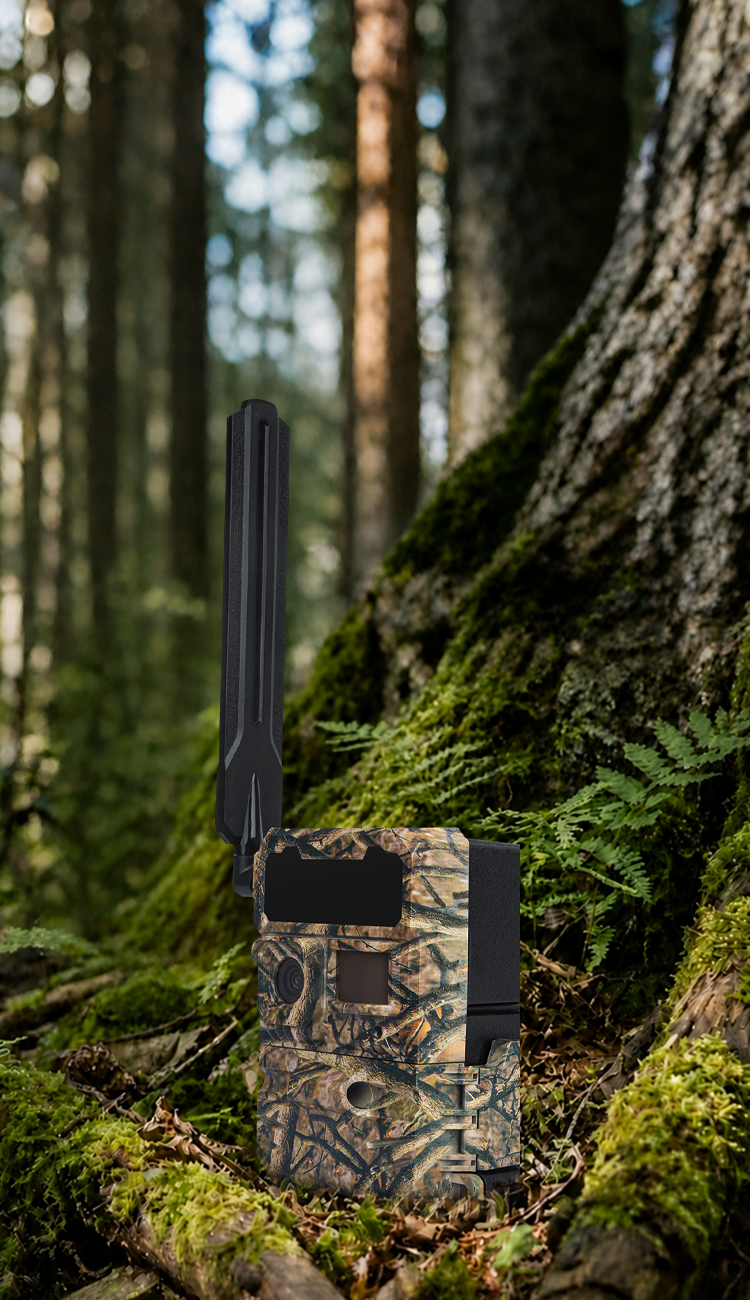
For example, the WILLFINE 4.0T-CS cellular trail camera publishes the following PIR-related specifications:
| Parameter | Published specification |
|---|---|
| PIR sensor | Digital PIR |
| Sensitivity settings | L1–L9 |
| Maximum stated detection range | 20 meters |
| PIR detection angle | 60° |
| Multi-shot capture | 1–5 images per trigger |
| Connectivity | 4G LTE |
These specifications provide a useful reference for defining a test configuration. For example, an OEM buyer could compare detection behavior across selected L1–L9 sensitivity settings, verify effective coverage at different distances, and evaluate how burst capture influences content volume.
However, published specifications are not a substitute for field-test results. The maximum detection range should not be treated as a guaranteed distance for every subject or environmental condition.
Likewise, the presence of multiple sensitivity settings does not establish which configuration is most suitable for a particular deployment.
WILLFINE's broader AI and technology capabilities include embedded imaging, device-side intelligence, and connected camera system development. The availability of individual AI or remote-management features should be confirmed against the selected model and OEM/ODM project requirements.
For brand partners, the objective is to identify a camera architecture that meets the intended detection, connectivity, power, and content-delivery requirements—not simply to select the product with the largest number of advertised features.
8. Frequently Asked Questions
Is higher PIR sensitivity always better for a trail camera?
No. Higher sensitivity may improve detection of weaker thermal changes, but it can also increase unwanted activations under certain conditions. The appropriate setting depends on the target subject, distance, background temperature, movement pattern, and installation environment.
What is the difference between PIR detection range and detection angle?
Detection range describes how far the system is designed to respond to a qualifying target under specified conditions. Detection angle describes the angular coverage of the PIR sensor. Both must be considered alongside the lens field of view and actual capture performance.
Can AI eliminate all false triggers in a cellular trail camera?
No. AI can help classify captured events and filter unwanted content, depending on the product architecture. It does not guarantee perfect classification or prevent every PIR activation. Buyers should separately measure detection accuracy, AI classification performance, upload frequency, and energy use.
What is an acceptable false-trigger rate for an OEM trail camera?
There is no universal percentage suitable for every product. Acceptance thresholds should be defined according to the intended application and measured using a consistent test protocol. Both unwanted-trigger frequency and missed target events should be considered.
Does 4G connectivity improve PIR detection accuracy?
Not directly. PIR detection is primarily governed by the sensor, hardware design, firmware, and deployment environment. Cellular connectivity affects how captured events are transmitted and how remote functions operate. Network conditions can influence delivery delays, retries, data usage, and energy consumption.
Can cellular trail camera settings be adjusted remotely?
Some cellular trail cameras support remote configuration through a mobile app or cloud platform. The available controls vary by model and firmware. OEM buyers should verify whether PIR sensitivity, capture intervals, upload settings, and operating schedules can be changed remotely, and how those changes are applied when connectivity is limited.
Conclusion: Evaluate Motion Detection as a Complete System
Reliable PIR motion detection is not defined by a single range specification or sensitivity setting.
For cellular trail cameras, performance depends on the interaction between sensor design, camera optics, embedded firmware, capture behavior, event filtering, power management, and network transmission.
OEM/ODM buyers should evaluate these elements through repeatable tests that reflect the intended deployment environment.
That means measuring not only whether the camera detects movement, but whether it captures the intended subject, avoids unnecessary content, manages cellular data efficiently, and delivers a dependable experience throughout the product's operating life.
A well-designed evaluation process also helps brands define clearer product requirements, compare technical platforms more objectively, and reduce the risk of discovering performance limitations after launch.
Develop a Cellular Trail Camera Platform for Your Market
WILLFINE works with outdoor imaging brands on hardware, embedded software, Edge AI, cellular connectivity, and connected camera solutions.
If you are developing a new cellular trail camera or evaluating an existing platform, share your target subjects, deployment environments, detection requirements, connectivity needs, and power constraints.
Our team can help you review suitable platform options, discuss customization requirements, and define a practical sample evaluation process before moving toward volume production.