EN
EN
What AI Super-Resolution Actually Means for a Camera Product — and Why It Matters to Your Brand

A technical brief for OEM buyers adding AI image processing to trail camera, birdwatching camera, and wildlife monitoring product lines.
The image quality ceiling that hardware alone can't break
In outdoor and wildlife monitoring cameras, image quality is squeezed between two forces that pull against each other: the physical limits of the sensor and lens, and the conditions the camera gets deployed into. Bigger sensors and better lenses drive up unit cost. Harsh light, low-light dawn-and-dusk windows, and fast-moving subjects create conditions that even well-specified hardware handles inconsistently.
The result is a product category where a large share of captured images — across trail cameras, birdwatching cameras, and remote monitoring devices — come out technically marginal. Not unusable, but not what the buyer expected. Soft detail. Noise in the shadows. Color that reads accurate in controlled light and washed-out in direct sun. These aren't edge cases. They're the conditions that define most outdoor camera sessions.
For OEM brands, the commercial consequence is predictable: a user who captures a marginal image blames the brand, not the weather. Review scores show it. Return rates show it. And in a category where image quality is the number-one stated reason to buy, an average imaging experience is a structurally weak product position — no matter how sharp the price.
Hardware upgrades fix part of this and add cost pressure that eats margin. AI-based image processing fixes it differently: it improves output from the sensor you already have, rather than requiring a more expensive sensor — so the gain comes without a proportional jump in bill-of-materials cost. In Willfine's implementation, it adds no processing load to the camera at all.

What Willfine's AI super-resolution engine does, technically
Willfine's AI super-resolution runs in the companion app, not on the camera. The camera captures the image and sends it; the app rebuilds it. That split is deliberate: the heavy computation runs on a phone or tablet — where processing power is plentiful — instead of on a battery-powered camera, where it isn't.
For the user, it's automatic. No editing software. No export step. No manual workflow. They open the app and the enhanced image is already there, processed in the background as captures sync.
The engine performs three distinct functions.
-
Resolution reconstruction
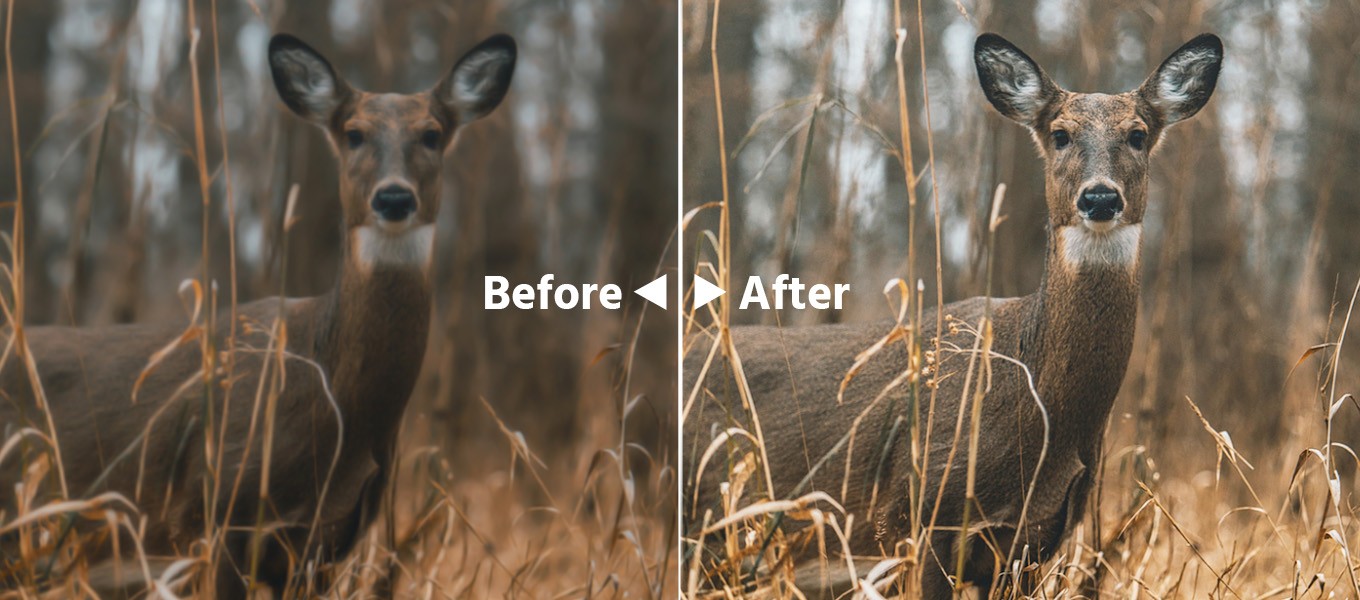
The system uses trained deep learning models to reconstruct high-resolution output from lower-resolution sensor input. The difference between AI upscaling and conventional interpolation matters: interpolation estimates missing pixels from their neighbors using fixed mathematical rules; the AI model draws on patterns learned across large image datasets to reconstruct detail that was never in the original sensor data. In practice that means sharper edges, recovered feather and fur texture, and legible fine structure in subjects that would look soft or blurred at native sensor resolution.
For OEM buyers, the implication is direct: it stretches the effective imaging performance of a given sensor tier, so the product can compete on image-quality metrics against hardware carrying a more expensive sensor spec.
-
Noise reduction and artifact removal
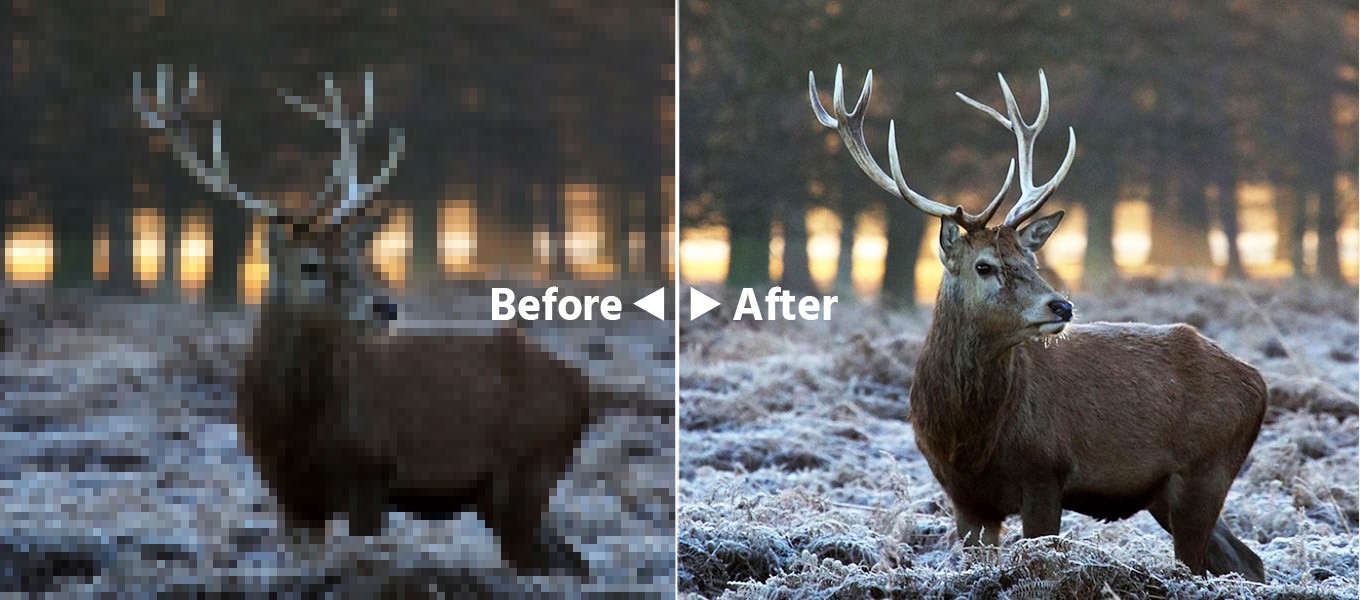
Noise is the dominant image-quality failure in low light — the grain, color speckle, and lost detail that show up when a sensor runs at high ISO to compensate for limited light. Conventional noise reduction suppresses noise by blurring, trading one failure for another.
Willfine's deep learning noise reduction tells noise apart from genuine image information, stripping the former while preserving the latter. The output is cleaner without going soft — a distinction that matters in wildlife applications, where subject detail is the whole point of the capture.
Edge enhancement runs alongside it, finding and sharpening structural boundaries in the image. In birdwatching and wildlife monitoring, that preserves the subject-background separation and fine detail that decide whether a capture is usable.
-
Adaptive exposure and color correction
Outdoor lighting isn't static. A camera watching a forest clearing moves through direct sun, deep shade, and transitional light within minutes. Dawn and dusk — the peak activity windows for most wildlife — produce mixed, fast-changing light that a single setting can't serve.
The app analyzes each captured frame and corrects brightness, contrast, and tonal balance image by image. Output stays consistent and readable across a session whose light shifts shot to shot: highlights blown out in direct sun get recovered, subjects buried in shade get lifted.
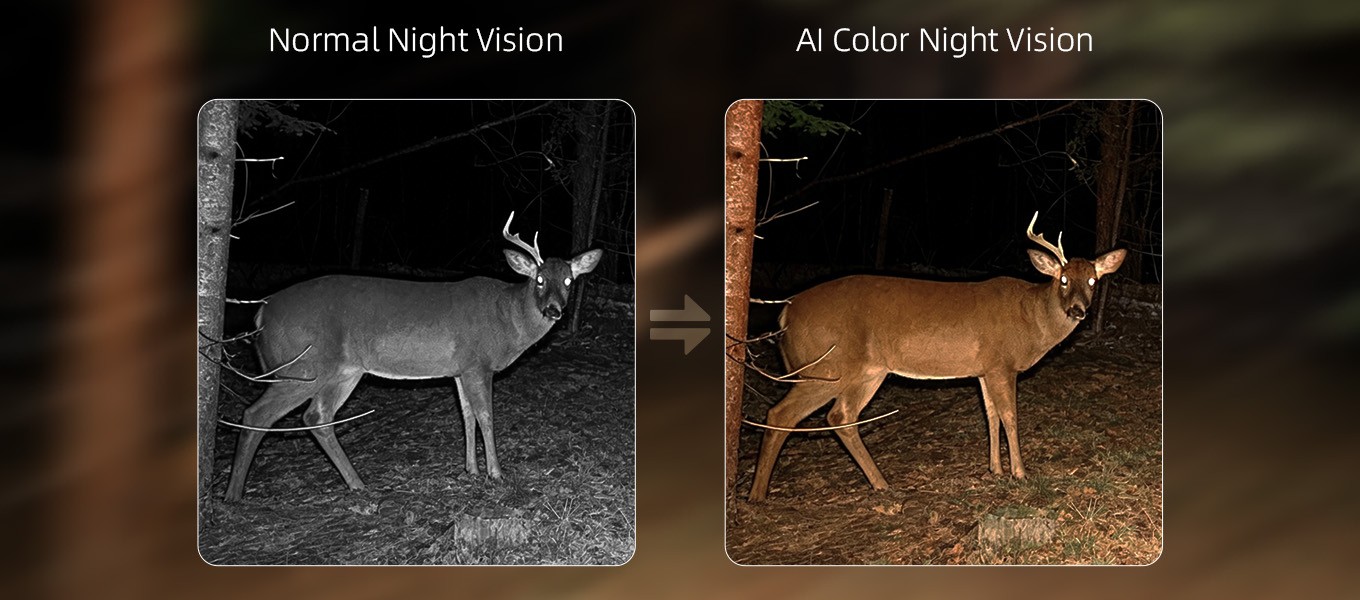
Color correction runs in parallel. In low light, where cameras tend to produce desaturated or color-shifted output, the app rebuilds accurate color from its training data — replacing the grey-green cast common to low-light wildlife captures with something that looks natural
Where the processing runs: the OEM case for app-side enhancement
Willfine runs the entire AI imaging pipeline — super-resolution, noise reduction, exposure and color correction — in the companion app, not on the camera. For a battery-powered field device, that's the stronger architecture, for three reasons.
It adds no compute cost to the camera. The AI work runs on the user's phone or tablet, so the camera needs no higher-spec processor, draws no extra power for image processing, and carries no BOM increase for the AI capability. On the hardware side, the enhancement is effectively free.
It runs better models. A phone or tablet has processing headroom an edge chip doesn't. App-side processing can run heavier, higher-quality reconstruction models than anything that would fit a low-power camera SoC — better output, not just cheaper output.
It improves over the product's life. The models ship and update through the app, not the camera firmware. Imaging quality can get better across the deployed fleet with an app release — no firmware reflash, no recall, no change to hardware already in the field.
The tradeoff is worth stating plainly, and for these categories it's the right one: the enhanced image lives in the app, not on the camera's own screen or SD card. That fits how these products are actually used. Trail, birdwatching, and monitoring cameras get reviewed in the app or through cellular delivery — not by reading a two-inch display in the field. The viewing surface is the app, so that's where the enhancement belongs.
Application contexts for OEM buyers
The super-resolution and image enhancement system is relevant across the primary categories Willfine serves.
Trail and game cameras: Low-light dawn-and-dusk performance and noise reduction hit the exact window where most wildlife activity happens — and where conventional trail cameras produce their weakest output. Resolution reconstruction makes captures more legible for animal identification and pattern recognition.
Birdwatching cameras: Fine-detail reconstruction and edge enhancement apply directly to plumage and feather structure — the detail birdwatching users judge most critically. Color accuracy in variable outdoor light fixes a consistent pain point in current market offerings.
Remote surveillance and monitoring: Captures are enhanced as they reach the app, so monitoring users review clean, readable images in near real time rather than waiting on a post-session pass. Consistent output across lighting conditions reduces false negatives where light transitions are frequent.
Conservation and ecological research: Cleaner, higher-resolution images reduce the manual review burden on research teams and improve the accuracy of downstream analysis, whether manual or AI-assisted. Enhanced output is available in the app for review and export.
The OEM case: what this technology adds to a product program
The commercial argument for integrating Willfine's AI imaging technology is straightforward: it improves the camera's output without a sensor or lens upgrade — and, because the processing runs in the app, without adding any hardware cost to the camera at all. The same problem solved with hardware alone costs far more per unit.
More to the point, it attacks the specific failure modes — noise in low light, resolution limits on fine detail, exposure inconsistency across changing light — that drive the negative reviews and return rates holding back brand growth in this category. A camera that reliably produces usable captures in the conditions users actually meet in the field holds its review score, earns the repeat purchase, and supports the brand positioning that justifies the retail price.
Willfine makes the super-resolution and image enhancement system available as an integrated part of its OEM camera-and-app platform. Partners building private-label products on Willfine hardware get the processing capability as part of the core system — no separate licensing, no separate integration.
Evaluate the technology for your product program
Willfine provides technical documentation, sample units, and processing performance benchmarks for OEM buyers evaluating AI imaging integration. The evaluation includes side-by-side output comparison across low-light, high-contrast, and standard conditions.
Contact Willfine to request the AI imaging technology brief and OEM program details.