EN
EN
Why the Birdwatching Camera Market Has a Resolution Problem — and How the BK750 Solves It for OEM Brands

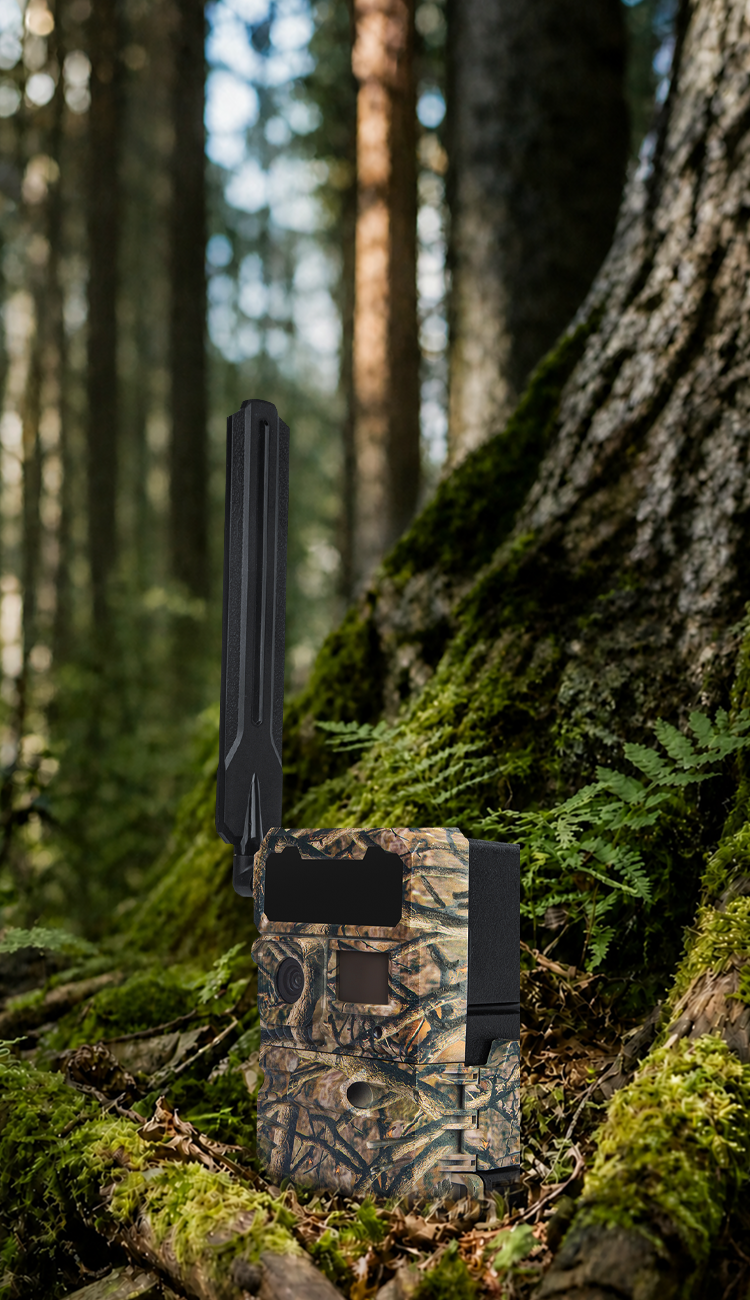
A product brief for distributors, private-label buyers, and brand owners evaluating 4K birdwatching camera manufacturing partners.
The category is growing. The hardware hasn't kept up.
Birdwatching has expanded well beyond its traditional enthusiast base. What was once a niche hobby now commands a market that includes serious amateur photographers, conservation volunteers, wildlife researchers, and an increasingly image-conscious general outdoor audience. These users share one expectation: the footage they capture should reflect what they actually saw.
Most cameras on the market today still can't deliver that. The majority of birdwatching cameras ship at 1080P — a resolution ceiling that was acceptable five years ago and is now a liability in a retail environment where buyers routinely compare specifications before purchase. The minority that have moved to 2K often do so without addressing the underlying optics and image processing issues that determine whether a higher pixel count actually translates to better images.
For OEM buyers and private-label brands, this gap is commercially significant. A product that underdelivers on image quality in a category where image quality is the primary purchase driver generates returns, negative reviews, and lost repeat business. The specification on the box has to match what comes out of the camera.
The Willfine BK750 is built around closing that gap.
What the BK750 delivers: four technical differentiators
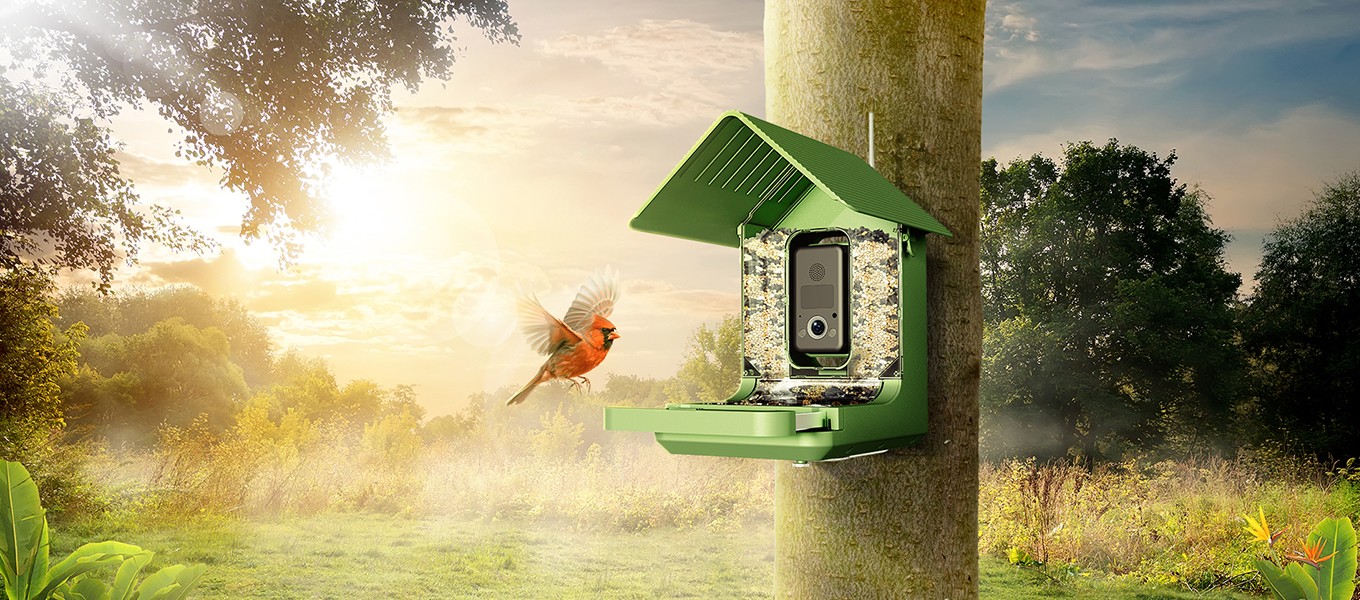
True 4K resolution — not interpolated, not upscaled.
The BK750 captures at genuine 4K resolution. In the birdwatching context, that distinction matters more than in many other camera categories. Bird plumage is fine-detail subject matter: individual feather structure, subtle color gradients, and iridescence that disappears entirely at lower resolutions. Reviewers and enthusiast communities notice the difference immediately, and that perception shapes brand reputation at the retail level.
For OEM buyers, a camera that demonstrably outperforms 1080P and 2K competitors on the specification that buyers prioritize most creates a defensible product position — one that is not easily undercut by lower-cost alternatives that have not made the same imaging investment.
Close-focus and mid-range performance, without compromise between the two.
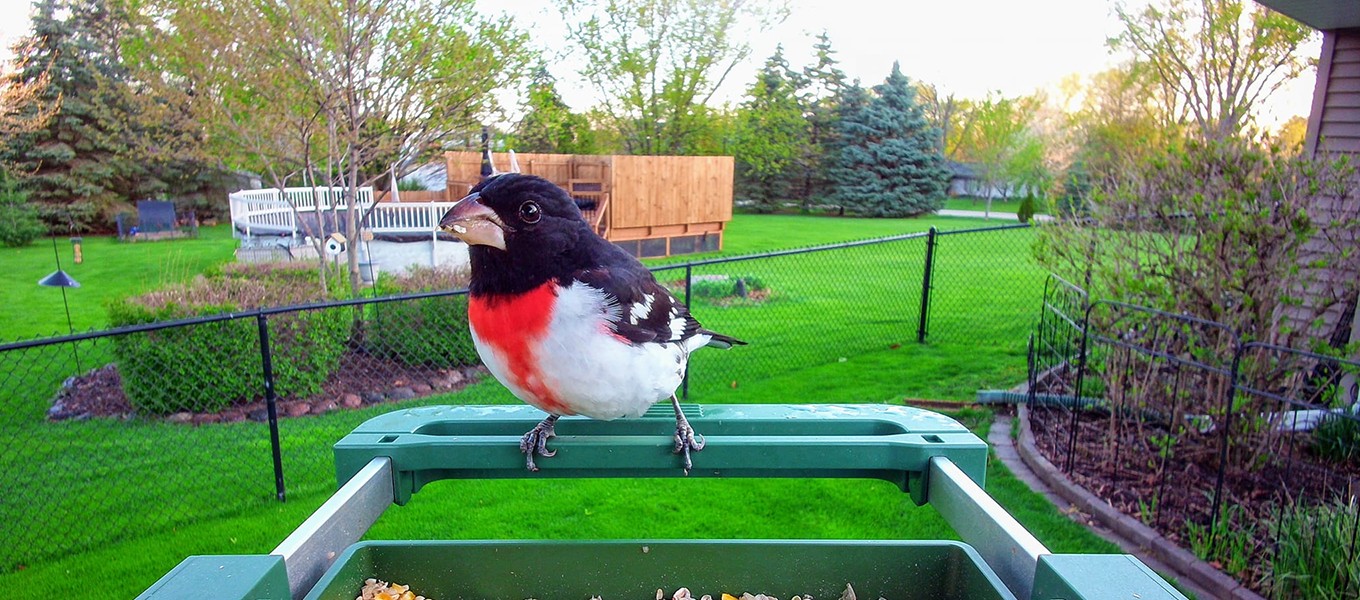
A consistent limitation with competing products is the trade-off between close-focus sharpness and mid-range clarity. Cameras optimized for tight shots lose detail and color fidelity as distance increases; cameras calibrated for mid-range subjects produce soft or indistinct close-up images. Birdwatchers encounter both scenarios in every session — a bird on a nearby branch and the same species in flight thirty meters away.
The BK750 maintains consistent sharpness and color accuracy across both focal distances. This is not a minor refinement. It directly reduces the number of unusable captures per session, which is a measurable variable for users who evaluate cameras based on keeper rate.
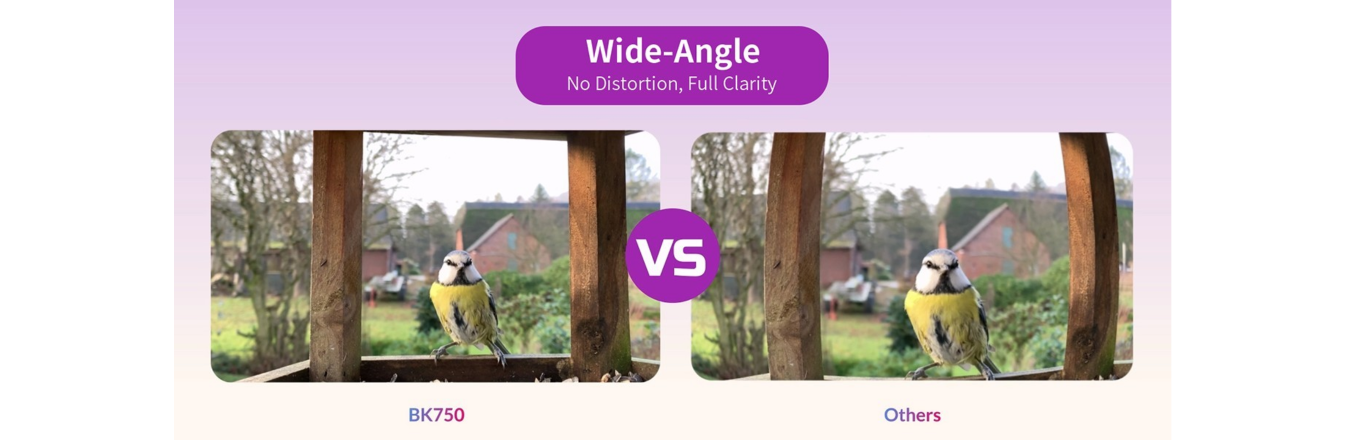
Distortion-free wide-angle optics.
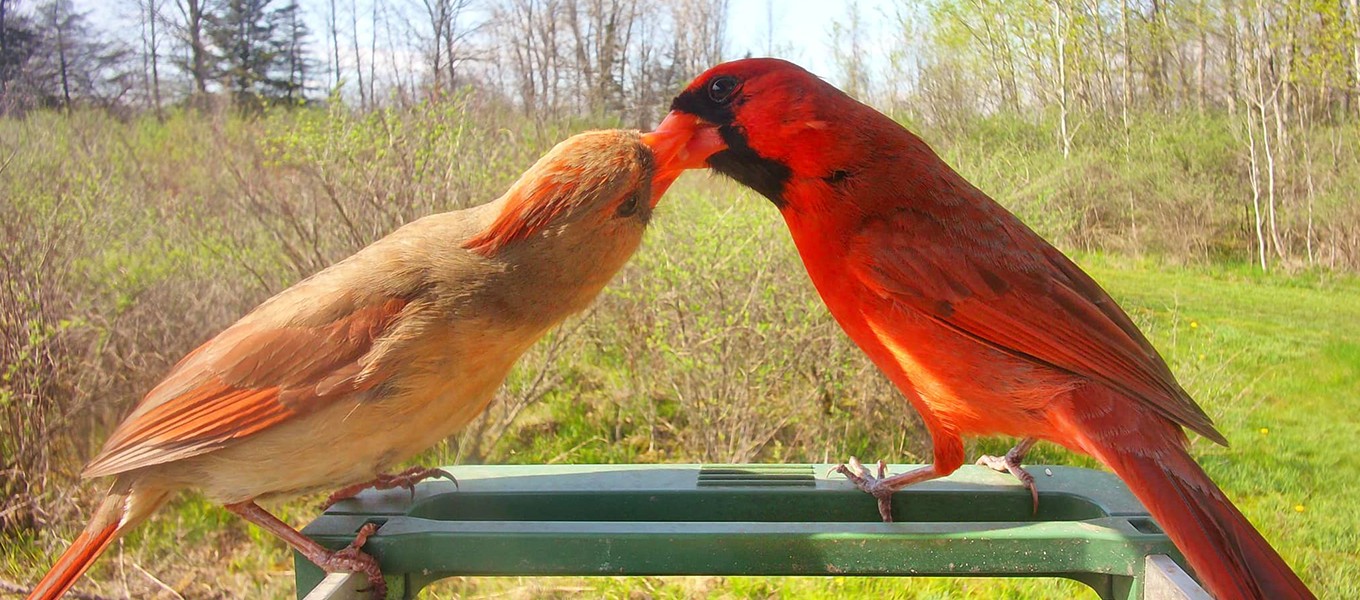
Wide-angle lens distortion is among the most common complaints in user reviews of birdwatching cameras — particularly for cameras capturing birds in open environments, in flight, or against complex backgrounds where warping becomes immediately visible. The distortion is not an issue users overlook; it undermines the visual quality of captures that would otherwise be technically strong.
The BK750 uses a wide-angle lens engineered to eliminate geometric distortion. Subjects are rendered with natural proportions, regardless of where they fall within the frame. For brands positioning a product against competitors with established distortion complaints in public reviews, this is a direct and verifiable advantage.
All-condition light handling — bright sun and low light, without overexposure or grain.
Natural light is neither consistent nor cooperative. Birdwatching sessions span sunrise to dusk, often moving between dense canopy, open sky, and low-contrast morning light within a single outing. The BK750's image processing handles both ends of that range: it avoids the overexposure and color washout that affects many cameras in direct sunlight, and maintains clean, low-noise output in dim conditions without the grain that makes low-light birdwatching footage unusable.
Specification comparison
| Willfine BK750 | Typical market alternatives | |
| Resolution | True 4K | 1080P (majority); limited 2K options |
| Close-focus quality | High sharpness; accurate feather-level detail | Frequently soft or inconsistent |
| Mid-range clarity | Consistent sharpness and color fidelity | Color muting and detail loss common |
| Wide-angle distortion | Distortion-free | Geometric distortion reported across competing models |
| Strong-light performance | Overexposure-resistant; preserves highlight detail | Overexposure with color and detail loss |
| Low-light performance | Low noise; maintains color and sharpness | Grain and noise at reduced light levels |
The commercial case for OEM buyers
Image quality is the category's primary purchase driver, and it is increasingly the primary source of negative reviews when it underdelivers. A private-label birdwatching camera brand built on hardware that cannot reliably produce usable captures in the conditions birdwatchers actually encounter is structurally exposed to churn at the point of first use.
The BK750 addresses each of the specific failure modes that generate those outcomes: insufficient resolution for detailed subject matter, focal-range inconsistency, wide-angle distortion, and light-handling limitations. For a brand investing in product development, marketing, and retail distribution, the underlying hardware has to be capable of sustaining the customer relationship past the first session.
Willfine supports the full OEM program: hardware customization, branding, packaging, and after-sales infrastructure. Production capacity and quality control processes are designed for brands that need consistent output at commercial volumes, on defined delivery timelines.
Next steps
OEM inquiries for the BK750 begin with a technical consultation and sample unit evaluation. Willfine provides full product specifications and OEM program details for qualified buyers.
Contact Willfine to request the BK750 specification sheet and OEM pricing.